INSIGHTS FROM CFA SOCIETY SINGAPORE

Gold and gas oil are helping to build India’s economic resilience

Gold-backed credit lines and refining power fundamentally change how macroeconomic pain is absorbed
Summarise
    • Indian households hold the world’s largest private stock of gold in the form of jewellery, coins and bars.
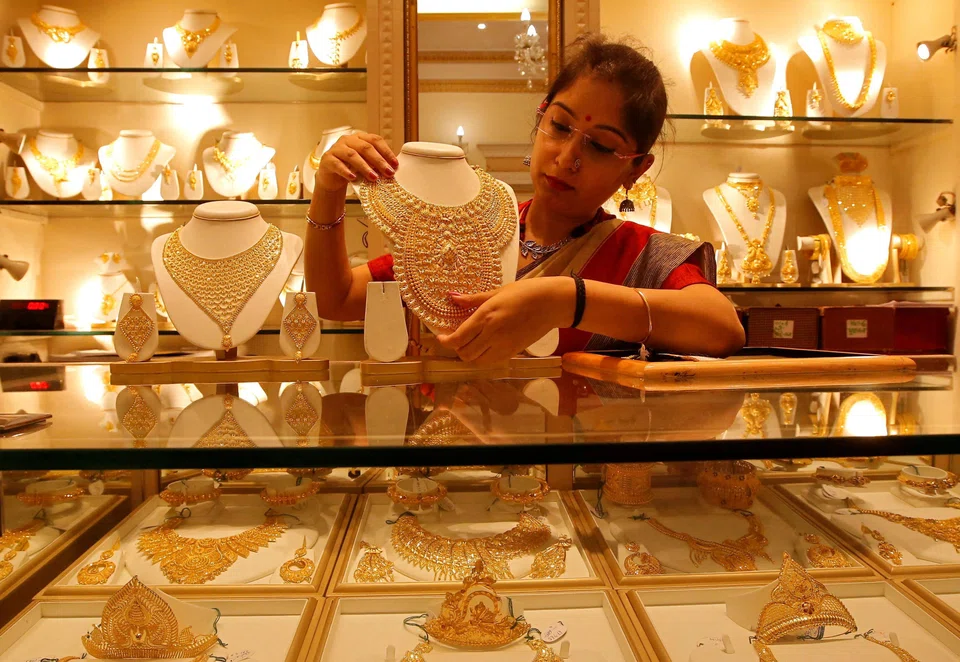
    • Indian households hold the world’s largest private stock of gold in the form of jewellery, coins and bars. PHOTO: REUTERS
    Published Tue, Sep 15, 2026 · 03:37 PM

    WHEN the next global recession arrives, most analysts will still expect India to behave like a typical fragile emerging market. They will picture a weakening currency, softer consumption and renewed pressure on the country’s external accounts. That view is increasingly outdated.

    Two structural buffers, one financial and one industrial, are fundamentally changing how India absorbs macroeconomic shocks.

    The first is the monetisation of household gold, which drives a unique golden wealth effect to the bottom of the socio-economic pyramid. The second is India’s expanding refining advantage in a distorted global diesel market. This yields remarkable geo-economic leverage irrespective of the crude oil prices that dominate headlines.


    Officials in Washington, Brussels and Beijing may well be surprised at India’s resilience as these underappreciated forces quietly rewire the Indian economy. Together, gold and gas oil create a profound structural cushion, suggesting that when the next global downturn comes, India may bend without breaking.

    Gold, the hidden stimulus

    Gold is the first and most uniquely pervasive of these forces. Indian households hold the world’s largest private stock of gold in the form of jewellery, coins and bars. The World Gold Council’s estimates put this domestic household stock at roughly 25,000 tonnes, a massive concentration of private wealth that no other nation enjoys.

    For comparison, the official gold reserves of the US stand at 8,133 tonnes. Traditionally locked away in vaults as an inert legacy asset, this private wealth is now being systematically monetised through formal, rapidly scaling gold loan programmes.

    Gold loans have become one of the fastest-growing segments of consumer credit in India, outpacing traditional sectors such as mortgages and car loans.

    Stricter central bank rules on unsecured lending, combined with surging global gold prices, have made secured borrowing against jewellery highly attractive to households and exceptionally safe for financial lenders. Families seamlessly pledge these assets for small business loans, medical expenses and home improvements, or to bridge temporary income gaps.

    In advanced economies, the wealth effect is a luxury of the affluent. It typically refers to rising consumption triggered when equity portfolios or housing markets appreciate.

    In India, gold revaluation and asset-backed lending create a parallel financial transmission mechanism that plays uniquely to the country’s demographic strengths. More significantly, this golden wealth effect extends directly to the lower-middle class and low-income segments, which represents a demographic that traditionally lacks access to equity or real estate investments.

    At scale, this systemic monetisation acts as a democratic stimulus, sustaining consumerism and stabilising spending across the broader economy even during severe downturns. The result is a domestic consumer base that is far more layered, asset-backed and resilient than outside analysts assume.

    Gas oil, the structural leverage

    The second structural engine is gas oil, or diesel, which has handed India material geo-economic leverage. India remains a major importer of raw crude oil, a dependence that has historically been viewed as a core vulnerability.

    Yet, that traditional weakness is becoming less relevant because modern energy crises are less about crude extraction and more about refined petroleum products. While the world has vast strategic petroleum reserves of unrefined crude, there is an alarming global scarcity of finished products such as diesel and jet fuel.

    This global supply crunch is directly reflected in the widening crack spread, which is the profit margin realised between raw crude oil and processed fuels.

    India is uniquely positioned to capture this margin as the world’s fourth-largest refiner and second-biggest exporter of refined petroleum products. The crack spread has hit an all-time high of approximately US$70 per barrel, granting India a distinct structural advantage in the global energy calculus.

    Crucially, this advantage persists completely independent of the volatile crude oil prices that drive mainstream media headlines. When the oil chokepoints of the Strait of Hormuz and the Red Sea eventually reopen, raw crude prices will adjust relatively quickly. However, the refining capacity permanently impaired by global conflicts will take many years to restore.

    This structural shift transforms India from a passive victim of global energy shocks into an active participant that captures immense upside margins during supply chain disruptions.

    By pocketing these processing premiums, India successfully decouples its fiscal health from raw crude volatility and solidifies its position as an indispensable stabiliser of the global energy supply chain.

    India’s new cushions

    None of these makes India completely invincible. The country still faces stubborn domestic hurdles, and a global recession will inevitably pressure exporters and strain public finances. There is no version of a global slump in which India sails through entirely unscathed.

    But gold-backed credit lines and the refining power fundamentally change how macroeconomic pain is absorbed. While traditional analysts focus on external vulnerabilities, gold-backed liquidity safeguards consumer spending at the bottom of the pyramid, and expanding refining margins insulate the nation’s fiscal core.

    Recessions are ultimately defined not just by how hard a country is hit, but by the structural mechanisms it possesses to absorb the blow. Through this unique decoupling, India possesses the concrete financial and industrial fortitude to weather global storms without fracturing.

    The writer, CFA, is global head and chief executive officer, UTI International