

Jupiter Asset Management to expand outside the UK, including Singapore
It has registered seven funds in the Republic, of which four are income-generating funds

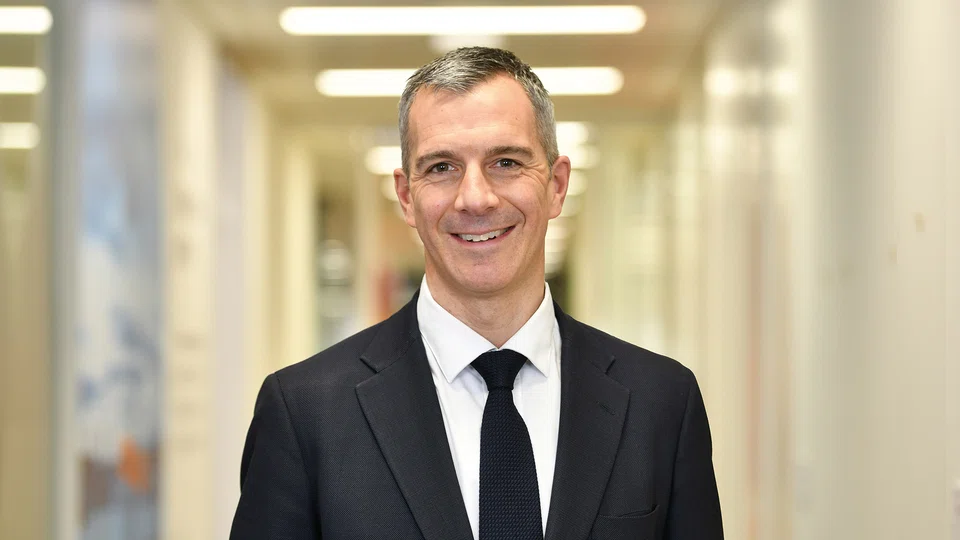
[SINGAPORE] UK-based Jupiter Asset Management’s assets under management (AUM) are a fraction of trillion-dollar firms such as BlackRock, but chief executive Matt Beesley believes the company offers an edge in the form of a strong balance sheet and differentiated offerings.
“Our strategy has been to continue to diversify away from the UK retail market, where we are very strong and a recognised leader. We see opportunities to grow from a lower base in other non-UK markets – and that includes Singapore. We’ve also been trying to build the business more institutionally, and that plays very well into our physical presence in Asia,” he said.
“Our industry is still all about scale, but scale is a relative term. While we’re scaled in many places, we’re not as scaled as we could or should be. In Asia, we can be a more scaled player – that’s why in the last year or so, we’ve moved to get a capital markets services licence in Singapore.”
In Singapore, it registered seven funds – of which four are income-generating funds. One is a market-neutral fund that may offer portfolios diversification benefits.
Jupiter has AUM of about £50 billion (S$85.7 billion) as at end-September. The assets are roughly two-thirds retail and a third institutional. Achieving greater scale is a strategic objective, alongside cost reduction. As at 2024 in terms of client assets, the UK accounts for 66 per cent; Europe, Middle East and Africa 23 per cent; and Asia 7 per cent.
Suffering a setback
Last year, however, it suffered a setback in AUM due to the departure of its value team. That resulted in net outflows of about £6.2 billion as some institutional clients pulled funds. But flows have since improved in the first half of this year, thanks to “ongoing institutional momentum and an improving retail picture” in the second quarter, said its results statement. Net outflows for the six months of 2025 came to £200 million. At end-June, AUM was up 4 per cent at £47.1 billion, compared to £45.3 billion at end-December 2024.
Earlier this year, it agreed to acquire CCLA Investment Management, the UK’s largest asset manager focused on the non-profit sector. The company is expected to add £15 billion in AUM to the group.
Jupiter positions itself as an active, high-conviction manager, with a “differentiated” offering. Beesley said: “We want to achieve an active investment outcome that’s different in some element. It may be a more concentrated investment portfolio; or a portfolio that can effectively remove style biases; or one that has a better risk-return outcome because of a team’s skill in blending good stock picking with appropriate portfolio management.”
As at end-June, its aggregate performance improved for one-, three- and five-year periods. As at end-June, 64 per cent of its mutual fund AUM delivered above-median performance against its peer group over three years, compared to 61 per cent at end-December 2024.

Over five years, 68 per cent of its mutual fund AUM achieved above-median performance; over one year, the proportion was 62 per cent.
Beesley said the outlook for 2026 is “very encouraging” despite ongoing uncertainty and geopolitical tensions. “Investor sentiment towards risk assets is generally better than it has been for many years. I think a relatively unstable geopolitical environment has become the new normal. First, we’re seeing appetite towards risk assets, away from cash.
“Second, we’re seeing an increase in focus on active management. We have much higher dispersion of returns in many asset classes, much lower correlations with higher levels of volatility in markets, and really importantly, what I would call intra-sector volatility. This is volatility inside individual asset classes and sectors that creates a fertile environment for active management. You’re seeing (the impact) not just in our performance numbers, which are strong, but also across the industry as well.”
Concentration risk remains high, thanks to the dominance of mega-cap stocks. “This is when you have to be thoughtful about not just individual companies, but also sectors and wider thematic trends that can undermine returns relative to a benchmark. This is where the skill of the active manager really comes to the fore. An active manager may be dealing with the issues of concentration and stocks that are very expensive in the context of an index. Our job is to have differentiated views. That might lead to periods of poor performance but our approach is to invest for the long term.”
Investors are also waking up to opportunities outside the US. “It has been a multi-decade trend to allocate more towards US assets and stocks. It’s the right thing to do, given how well the US has performed. I don’t expect this trend to unwind quickly; it will be a slow unwinding.”
Jupiter’s specialities include systematic equities, which accounts for about 22 per cent of its AUM. The strategy uses a data-led, quantitative approach to exploit market inefficiencies. In 2024, it attracted gross flows of more than £3 billion, with net inflows of more than £500 million into the Global Equity Absolute Return (Gear) strategy. The firm has registered the Jupiter Merian Gear fund in Singapore.
Decoding Asia newsletter: your guide to navigating Asia in a new global order. Sign up here to get Decoding Asia newsletter. Delivered to your inbox. Free.
Copyright SPH Media. All rights reserved.