Mega IPOs could turn the tide in public equity issuance: Fidelity manager

George Efstathopoulos says private debt faces headwinds, such as higher interest rates

Summarise
Genevieve Cua
Published Tue, Jun 23, 2026 · 04:58 PM
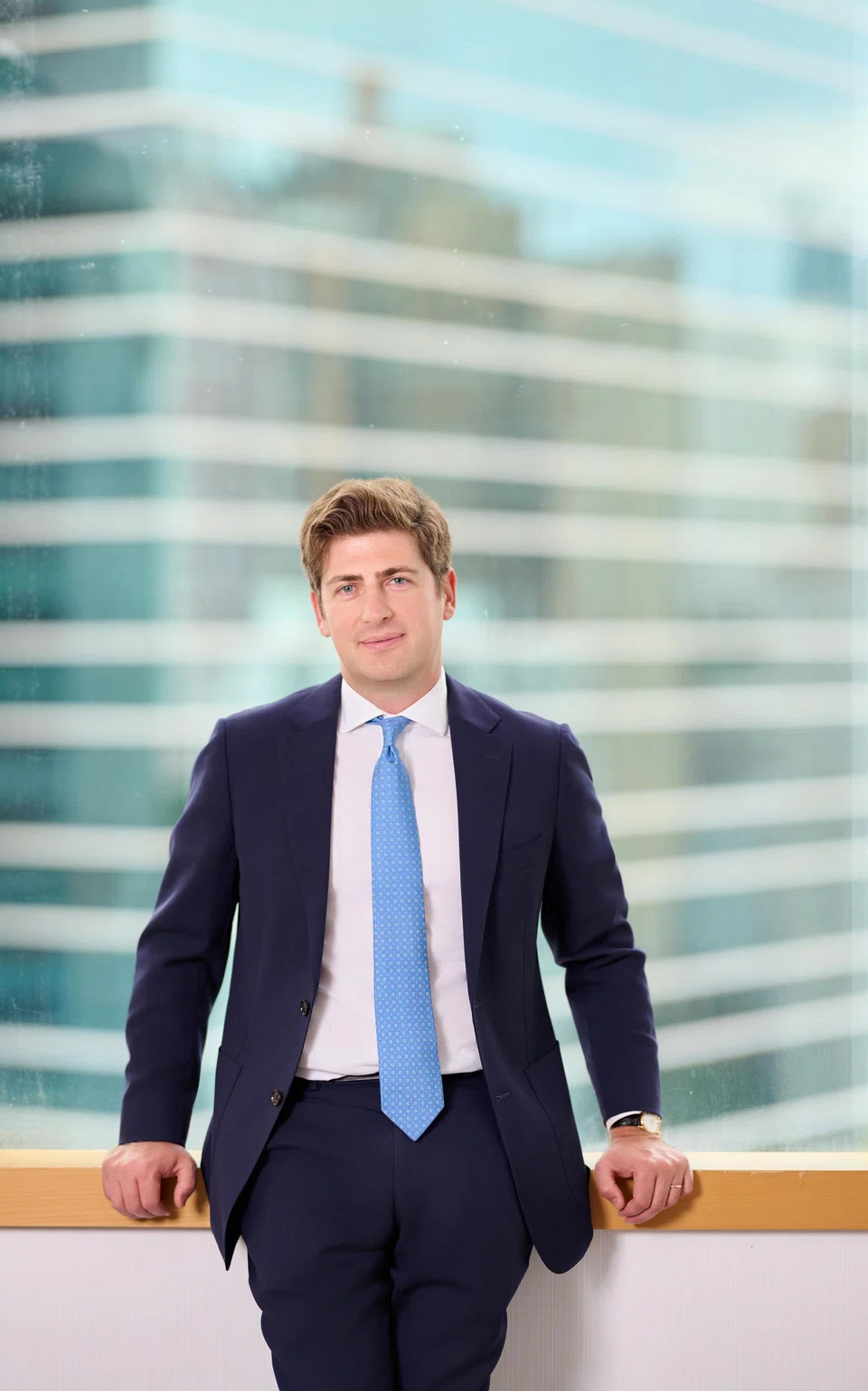
    • Efstathopoulos says investors should still embrace the US as an investment destination, "but the rest of the world has awakened".
    • Efstathopoulos says investors should still embrace the US as an investment destination, "but the rest of the world has awakened". PHOTO: FIDELITY INTERNATIONAL

    [HONG KONG] Mega initial public offerings, such as those of SpaceX and the impending launches of Anthropic and OpenAI, could herald a fresh era of public equity issuance, said George Efstathopoulos, Fidelity International portfolio manager.

    Speaking in an interview on the sidelines of Fidelity’s Asia-Pacific media investment conference in Hong Kong on Jun 11, he said: “Free floats have been coming down and down. As active investors, our universe has been shrinking...

    “But now, we might have found the trough, and we’re back to equity issuance. I think private debt may face some headwinds.”


    The number of publicly listed stocks in the US peaked in 1996 at more than 8,000 companies. This shrank to around 4,300 in 2023. Over the past few years, as financing has become readily available from private debt and equity, more companies have been staying private much longer.

    “The anomaly has been that in the past five to eight years, equity issuance has been very light. But if you go back to early 2000s, (SpaceX’s) level of issuance was the norm.”

    He added: “As a result, private debt and private equity ballooned. But now, cash rates are at 4 to 5 per cent. This challenges their business models by definition.”

    From the 2000s until early 2020, low interest rates created a positive environment for debt financing.

    Ten-year US Treasury yields touched 4.7 per cent in May, before pulling back to 4.45 per cent recently.

    Efstathopoulos said that the narrative of US exceptionalism is far from over. “Investors should still embrace the US because (it) still generates the best earnings in the world, and the best (return on equity) and innovation...

    “But the rest of the world has awakened. Fiscal stimulus is happening in Germany like it hasn’t happened before. Japan is coming out of 30 years of deflation. That’s all leading to opportunities outside the status quo, which started with (artificial intelligence) megatrends.”

    Based on the firm’s proprietary Fidelity Leading Indicator (FLI), which generates warning signals three to six months ahead, the global economy continues to sit in the top-right quadrant, indicating high and accelerating growth.

    The FLI incorporates global hard and soft data, including commodities, business surveys and industrial orders.

    “It has been in the top-right quadrant for some time now, the (longest) period in 20 years. This tells us this extended cycle has legs... The (capital expenditure) cycle looks very strong...

    “Generally, we’ve been pivoting between risk-on and a little less risk-on, and neutral. We’ve not gone negative on risk, because we think the cycle has legs.”

    He expects volatility as the market transitions into rate hikes, but “that’s volatility I want to buy because it’s early-cycle”.

    At the US Federal Reserve’s most recent Federal Open Market Committee meeting, the majority of policymakers expect at least one rate hike this year.

    Three market calls

    Efstathopoulos has three high-conviction calls.

    One is real assets such as gold, clean energy and commodities, including copper and uranium, which are benefiting from supply-demand imbalances.

    “The world has not been focused on investment in hard-resource markets. But now with global spending on defence, on the AI grid and electrification, demand is meaningfully exceeding supply.”

    On gold, he noted that certain themes remain supportive. These include higher and stickier inflation, concerns over central bank independence, and rising fiscal spending by global central banks.

    “Since March, many countries which hoarded gold have been selling gold because they were defending their currencies. But that will abate at some point, and that would be a good time to dial up the exposure to gold and copper.”

    The World Gold Council’s latest survey of 74 central banks found that 45 per cent planned to buy more in the coming year; only one planned to cut holdings, Bloomberg reported.

    “Central banks are price-agnostic. When you have buyers of that size who are price-agnostic, it changes the dynamics.”

    The second big theme is financial stocks in the US, Japan and Greece, underpinned by higher cash rates and net interest margins. For banks in the US and Europe, deregulation is expected to be a tailwind.

    “Japan has one of the steepest yield curves; we like Japanese banks as a result. But elsewhere, the lending cycle is improving. We’ve already seen companies start to re-lever, and we might see households re-lever as well.”

    His single biggest call is Greek equities, particularly in the financial sector. Greek equities, he said, have returned 120 per cent cumulatively over the past three years, outperforming US equities.

    “The interesting thing is that the multiples or valuations have come down. They’re cheaper than they were three years ago, because earnings are growing so fast that the price isn’t catching up, so they’re still trading at a discount against European equities and European banks...

    “We think there is potential for some multiples to catch up, going forward, in Greece.”

    His portfolio does not hold Singapore banks because their growth is “all in the price”.

    The third theme is countries with growing – or the potential to grow – domestic consumption, which are less sensitive to global trade disruptions. He likes Germany for its fiscal stimulus, as well as Japan and China.