

US blockbuster IPOs are creating new millionaires. Philanthropies want to share in the bonanza
Recipients of windfalls are likely to be interested in expanding beyond traditional philanthropic organisations
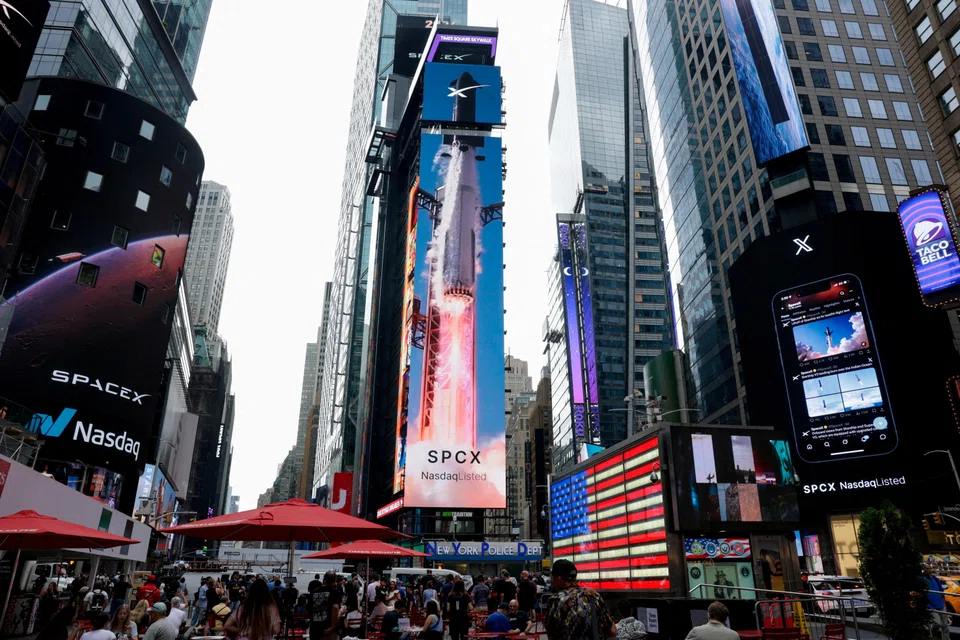
[NEW YORK] As a series of blockbuster US IPOs mint a new crop of the ultra-wealthy, non-profits are scrambling to figure out how they can share in the bonanza.
US university fundraising departments are making lists of potential white whales, and philanthropy executives are doing napkin maths to prepare for a once-in-a-generation windfall that could create hundreds of billions of dollars in new donations.
Some are less optimistic than others. In recent years, a billionaire backlash against charitable giving has emerged, as a subset of the wealthiest people in the world argue that business success, not philanthropy, is the best way to give back.
But the founders of OpenAI and Anthropic – both expected to be among the largest IPOs of all time – have deep links to effective altruism, a philanthropic philosophy that seeks to maximise the impact of giving.
And even those who are not feeling particularly generous may be moved by the tax burden that will come with cashing in their highly appreciated shares: If they sold, say, US$10 million worth of stock, they could get a tax bill that exceeded US$3.5 million.
“It’s common to see vast amounts of low-basis, high-gain stock put in the hands of people that have no clue what an exit strategy is,” said Randy Fox, founder of Two Hawks, a US family office consulting firm. “One of the only ways that you can eliminate capital gains taxes is by using charitable vehicles.”
With advisers also having an incentive to collect the fees for setting up charitable trusts and foundations, the US non-profit sector could see an annual infusion of more than US$100 billion, according to some estimates.
Huge amount in proceeds
Nan Ransohoff, head of public goods at payment processor Stripe, did the napkin maths to figure out how large this windfall could be.
Using current valuations, she figured that the non-profit OpenAI Foundation, which owns 26 per cent of OpenAI, would see about US$220 billion become liquid when the company went public.
SEE ALSO



The seven founders of Anthropic, which is expected to have an enormous IPO as soon as the autumn of 2026, have each pledged to give away 80 per cent of their wealth, which could be about US$90 billion.
Anthropic also has a philanthropic matching programme, which could mean another US$60 billion in funds earmarked for giving.
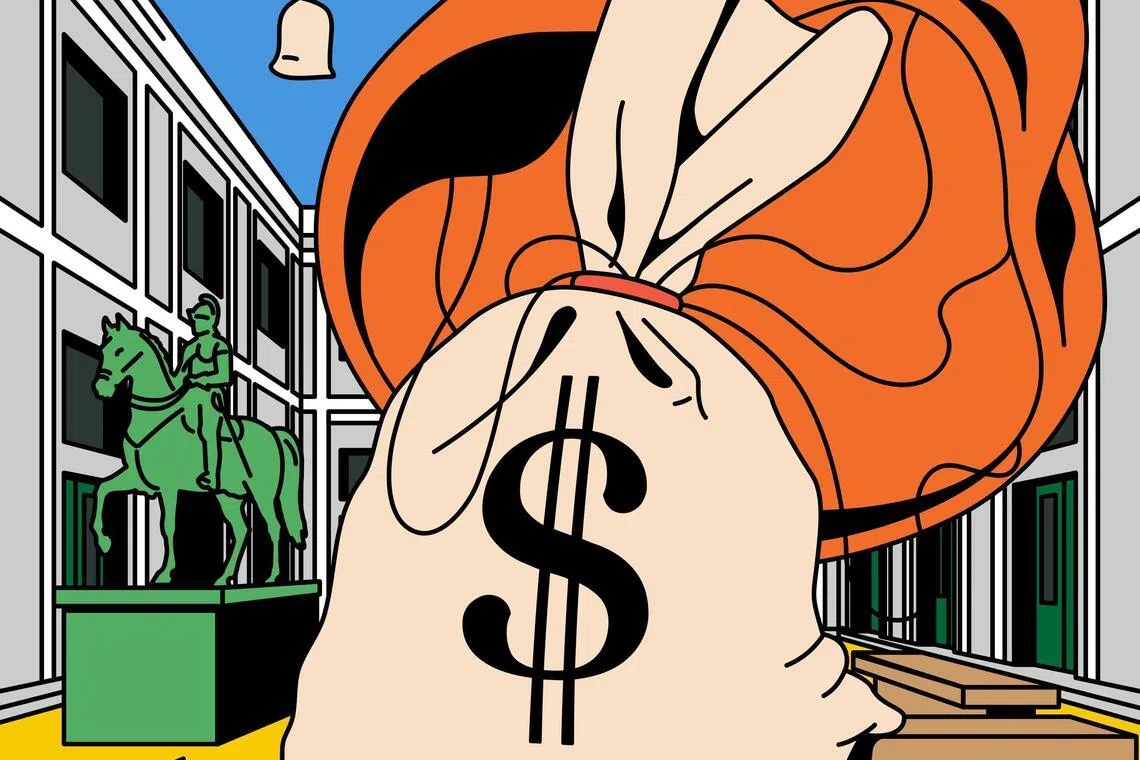
In total, Ransohoff estimated in a Substack post, between US$37 billion and US$100 billion could become available to charities annually. “You could fully fund the Gates Foundation many times over, and then there’s still more to be spent,” she said.
And that does not even include OpenAI’s employees. Or the newly rich created by SpaceX, whose IPO spawned an estimated 4,400 millionaires (and some 400 employees now worth more than US$100 million). Or the many other IPOs on the docket. The value of such public offerings could rise to US$160 billion, the biggest year in absolute proceeds ever recorded, according to Goldman Sachs.
Tax incentives
Giving money away is a common manoeuvre to avoid taxes: Up to US$0.74 of every US dollar donated to charity would have been paid as taxes, according to the Institute for Policy Studies in the US. It reported that charitable giving in 2022 alone had resulted in US$73 billion in lost tax revenue.
In California, where both OpenAI and Anthropic are based, and where SpaceX has thousands of employees, some new billionaires may also be in a rush to reduce their net worth before the state Legislature aims to levy a one-time 5 per cent excise tax on billionaires. That gives them a double incentive to donate.
Jon Feldhammer, a partner at US law firm Baker Botts, said that a client with US$300 million worth of stock options at a leading artificial intelligence company set to go public in 2026 was thinking of moving out of the state.
“He has all options on the table,” Feldhammer said. “I have a lot of clients looking at leaving California in a much more serious way and in much larger numbers than I’ve ever seen before.”
Some common donation strategies include donating stock instead of cash to avoid capital gains taxes and creating a trust that distributes fixed income to the donor (or the donor’s heirs) and a chosen charity.
Wealth advisers say a donor-advised fund has proved the most popular for young employees bracing for an IPO windfall in 2026. These non-profit charitable giving accounts allow the donor to make tax-deductible stock contributions and then direct funds from the account over time to various charities.
It’s cheap, anonymous and easy, said Paul Tramontano, executive managing director at Cresset Asset Management. “There are no tax returns, and no filings to do,” he added. “It’s sort of the best of both worlds.”
Not an appealing path
Some of the most famous US philanthropists throughout history – Rockefeller, Gates, Bloomberg – have created private foundations. But that path may not be as appealing to the latest batch of artificial intelligence millionaires and billionaires.
A family foundation “really does require care and feeding”, said Brandon Smith, director of estate planning at LNW Advisors. He has over 10 Anthropic employees as clients, some of them set to make upward of US$100 million when the company goes public. “Most of these employees won’t have that kind of time,” he added.
Ransohoff argues that the recipients of windfalls are likely to be interested in expanding beyond traditional philanthropic organisations. Many people who work in AI, she pointed out, have fast timelines and appreciate philanthropic organisations that operate more like startups. They may be willing to take high-risk, high-reward bets.
“I’ve been thinking about: Should we do a Y Combinator for philanthropic startups?” she said, referring to the well-known startup accelerator.
Stripe recently launched a US$500 million fund alongside the OpenAI Foundation, Anthropic, Bill Gates and others, aimed at backing efforts that prevent respiratory infections like the flu and common cold.
Ransohoff’s main worry is that there’s a shortage of organisations that fit the ethos of the employees who stand to benefit from 2026’s mega-IPOs.
“At the scale we’re talking about, it’s hundreds of Arc Institutes or thousands of Institutes for Progress,” she said, citing two philanthropic organisations. “It’s sort of an abundance story.”
Giving not guaranteed
Many employees of these leading AI labs want to enjoy their newfound wealth for at least a few years (even if it is on paper) before committing to giving a chunk of it away.
“They’re having a harder time grasping what the dollar value actually means in their lives,” said Frank Alvarez, a financial consultant at Tidemark Financial Partners. He has 26 clients who work at SpaceX, he said, and also advises employees from Anthropic and OpenAI.
“The psychological transition of becoming a world steward, rather than an accumulator, is the hardest aspect,” Alvarez added.
But Feldhammer said that the best US tax strategy was one that began long before a company went public. “There are a lot of ways to drastically change your estate tax situation long before the company is worth something,” he added.
For example, rapidly appreciating private shares could be placed into a Roth IRA – and therefore avoid taxes entirely without having to leverage charity. (A Roth IRA is a special individual retirement account funded with after-tax money, offering tax-free investment growth and tax-free withdrawals in retirement.)
“It’s so sad when people come to us when they IPO,” Feldhammer noted. “The economics never really work out such that you’re ahead – unless you’re charitably minded.” NYTIMES
Decoding Asia newsletter: your guide to navigating Asia in a new global order. Sign up here to get Decoding Asia newsletter. Delivered to your inbox. Free.
Share with us your feedback on BT's products and services






