SCIENCE OF WEALTH

Will the Singapore stock market continue to outperform?

The Straits Times Index has underperformed some markets such as South Korea, China and Hong Kong this year but still remains one of the best performers
Summarise
    • As the Straits Times Index touches new highs, investors wonder if the current rally has legs.
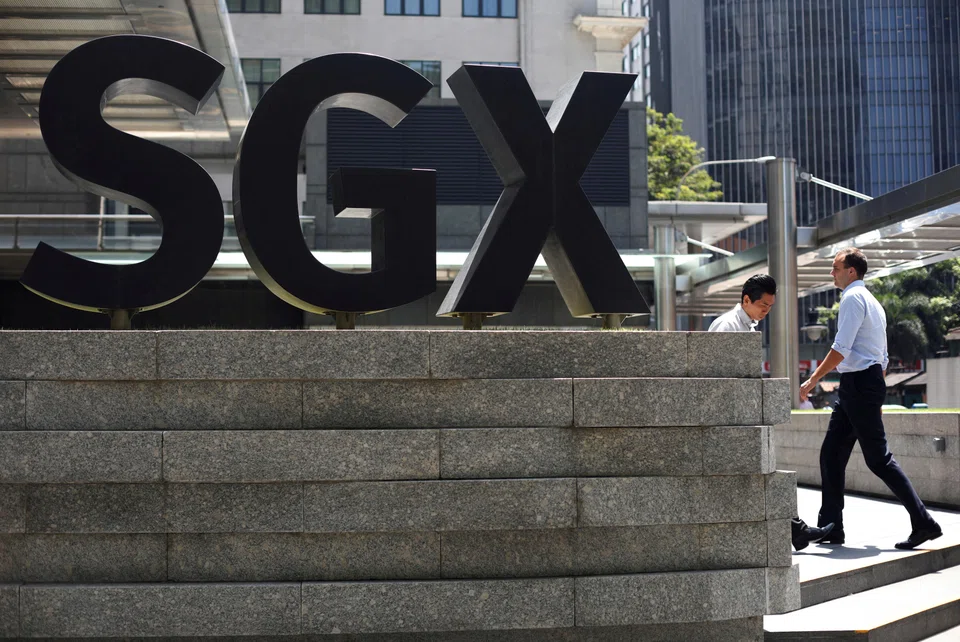
    • As the Straits Times Index touches new highs, investors wonder if the current rally has legs. PHOTO: REUTERS
    Published Mon, Aug 4, 2025 · 07:08 PM

    [SINGAPORE] Last year, Singapore was one of the best performing markets globally with the Straits Times Index (STI) hitting record highs. How much more upside is there, and can it continue to outperform its regional peers?

    This year, the index has underperformed some markets such as South Korea, China and Hong Kong, but it remains one of the best performers.

    Many forget that the STI’s outperformance follows a sustained period of underperformance. Many other markets are also at historic highs. The question may not be whether to invest or not. Instead, how much of our portfolio should be invested in our home market?


    Why invest in our home market

    It is human nature to favour something that is familiar to us. This is known as mere exposure bias. It describes our tendency to develop preferences for or dislike things simply because we are familiar with them. It is also known as familiarity bias.

    In the context of financial markets, this is expressed in the form of home or home-country bias, which is the tendency to invest the majority of assets into domestic equities, despite evidence that diversification can produce a more optimal portfolio.

    To be sure, there may be other barriers to investing overseas, such as regulations, costs or foreign exchange risks.

    US exceptionalism alive and well

    Home bias exists in every market including the US and across Asia. However, the effect differs because some markets are bigger and have broader representation than others. There is only one market that is big enough with globally competitive companies, is diversified across geography, sector and size, and allows for a meaningful and consistent outperformance over time. That is the US stock market.

    Whether it is the S&P 500 index or the broader Russell indexes, the US represents more than half of the global stock market capitalisation, and comprises 64 per cent of MSCI All Country World Index (ACWI). The next largest is Japan whose share is less than 5 per cent. This attests to the big gap the US has over every other market in the world, and shows how exceptional and unique the US market is.

    It is also why in the past two decades, investment flows into the US as a form of diversification for local non-US investors have risen. The average annual foreign capital inflow into the US stock markets has increased from an average US$50 billion in the 1970s to more than US$500 billion in recent years. This, in turn, has resulted in better returns for these investors.

    Home bias investing in Singapore

    The benchmark STI is a collection of the 30 largest and most liquid companies listed on the Singapore Exchange, which comprises more than 600 listings. The STI represents a meaningful S$622 billion of market capitalisation.

    The Monetary Authority of Singapore recently announced its Equity Market Development Plan to revitalise and broaden the Singapore equity market, especially the mid and small-cap segment outside the STI. It has allocated S$5 billion to co-invest alongside private capital; some initial capital was awarded to Avanda, Fullerton and JP Morgan Asset Management. Separately, Amundi, the largest European asset manager, launched an STI index fund with the lowest cost of 0.15 per cent in Singapore. Both initiatives are happening in time for SG60 celebrations.

    As the STI touches new historic highs and interest is resurgent due to new product launches and government support, many investors wonder whether the current rally has more legs.

    Historically, the STI has been a perennial underperformer. Over the past 15 years, it has lagged the S&P 500, gaining 2.4 times compared to 8.7 times by the S&P 500. Of course, the real question is whether this trend will continue. Between 2002 and 2012, the STI outperformed the S&P 500 in nine out of 11 years.

    When home bias is positive

    While no other economy is comparable to the US, some regional players do set themselves apart. India offers growth and diversified sectoral exposures, and Taiwan has tech and entrepreneurial companies which generate high returns on equity through cycles. Those are two examples of economies with good equity culture that have generated better returns. They also exhibit strong home bias.

    Another good example of a positive home bias is Australia, with its ageing and wealthy population and its superannuation pension system. Like Australia, Singapore has among the highest GDP per capita, a large savings pool, an ageing population and a high rate of home ownership, as well as the CPF Investment Scheme. Singaporeans have the wherewithal to invest consistently into their local market too.

    What sets Singapore apart is that its companies have lowest dependence on the local economy and highest overseas revenue contribution, compared to the other major stock market indexes in Asia and the US. Most of Singapore companies’ revenues are generated in South-east Asia; this growing diversification in its revenue source is a positive. 

    What drives change?

    The world is evidently changing. There is continued noise around tariffs; concerns over US economic growth and the US Federal Reserve’s interest rate policy abound. However, those are cyclical issues. The underlying current of structural changes points to a new global regime and the end of an US-led post-war international order which could reshape many things, among which is international cross-border investment flows.

    Countries which turn inwards may start to keep more of their capital at home. A structural change of this order and magnitude could reshape investor behaviour and patterns which could be positive for the Singapore market and the Singapore dollar over the long term.

    But investing in our home also goes beyond the stock market. That is, supporting the social sector is just as important as investing in the financial sector. That is why as we kick off the SG60 celebrations, the Community Chest, National Volunteer and Philanthropy Centre and Endowus have teamed up to launch the Invest in our Home campaign to raise awareness and raise funds for local charities and non-profit organisations.

    This effort will strengthen the fabric of our society and generate greater social returns alongside financial returns.

    Samuel Rhee is group chief investment officer, and Hugh Chung is chief investment officer at Endowus, a digital wealth platform with more than S$10 billion in client assets across public, private markets and pension (CPF and SRS)