

Corporates' bad actions speak much louder than good words
Big business has pledged gentler capitalism; it's not happening in a pandemic.
 Add BT as a preferred source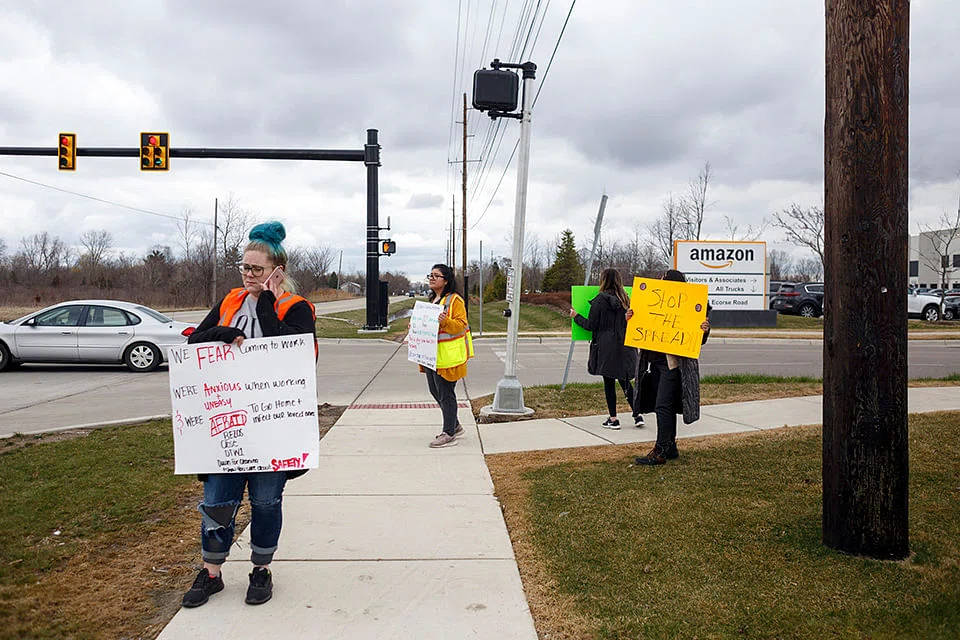
DeeperDive is a beta AI feature. Refer to full articles for the facts.
IN August, the chief executives of 181 of America's largest corporations signed a document pledging their commitment to run their companies for the benefit of workers and communities, and not just for shareholders.
Some pundits celebrated the statement from the Business Roundtable as a historical milestone, the moment when corporate executives demonstrated sensitivity to public anger over economic inequality. But others dismissed the document as a canny public relations move: So long as executive pay remained tied to stock prices, shareholder interest would remain supreme.
Today, with the planet under assault from a pandemic that has delivered the most profound economic pain since the Great Depression, key signatories are furloughing employees, paying dividends to shareholders and provoking complaints from workers that they are not adequately protected from danger.
Their actions expose the reality that the rhetoric of the Business Roundtable did not alter the decisive question of American capitalism - where the money goes. In the run-up to the crisis, many companies used cash to buy back their shares and pay out dividends, rewarding shareholders, while leaving themselves with fewer resources to aid workers when disaster struck.
Take, for example, Marriott International, the world's largest hotel chain, which last year earned US$1.2 billion. It has begun furloughing most of its American workers, jeopardising their access to health care, even as the company paid out more than US$160 million in quarterly dividends and pursued a raise for its chief executive, Arne M Sorenson.
"They just say: 'We don't need you. You are on your own,'" said William Gonzalez, 47, who was laid off last month from his job at an employee cafeteria at a Marriott hotel in San Francisco, leaving his family unable to pay rent.
Navigate Asia in
a new global order
Get the insights delivered to your inbox.
"The company has been making billions and billions of dollars, and a lot of that money doesn't go to pay workers," he added. "I thought there was going to be a moment where they say, 'OK, we are going to help you' ".
Mr Sorenson, a co-chairman of the Business Roundtable's task force on Covid-19, declined a request for an interview. A Marriott spokesman, Brendan F McManus, said in an email that the chief executive was "unfortunately tied up and unavailable".
"The coronavirus pandemic has evolved dramatically in the last few weeks, and we continue to do our best to take care of associates, guests, owners and our business," Mr McManus said later in a statement. "We have now suspended all dividends." The Business Roundtable declined to make executives available to discuss how signatories have responded to the crisis. In a statement, a spokeswoman, Jessica Boulanger, portrayed their efforts as consistent with their lofty aspirations.
"The Covid-19 crisis has triggered an impressive demonstration by leading companies of their commitment to the long-term interests of all stakeholders," she said. "Overwhelmingly, BRT members who remain financially able to do so are stepping up with voluntary measures to support their customers, employees, suppliers and communities during the crisis."
Amazon, another signatory, has seen protests flare outside warehouses in several American cities, as workers complain that the company - valued at more than US$1 trillion - has failed to provide protective gear like masks and hand sanitisers, exposing them to the virus.
Amazon says it has ordered and distributed millions of masks, has been cleaning its facilities rigorously and has increased pay for hourly employees.
"We are working hard to keep employees safe while serving communities and the most vulnerable," the company said in a statement, declining an interview request.
Paying dividends, violating the norms
Macy's, the retail chain, which last year earned US$564 million, has furloughed most of its workers, though it has continued to pay their health insurance. It distributed about US$116 million in dividend payments to shareholders on April 1, while suspending subsequent dividends.
"Unfortunately we don't have anything to add," a company spokesman, Blair Rosenberg, said in an email.
"Any company paying dividends now in this situation, or paying bonuses to executives, that's just clearly violating the norms that the Business Roundtable vowed," said Lawrence Katz, a former chief economist at the Department of Labor and now a professor at Harvard University. "It just seems both inappropriate and shortsighted." Mr Katz said it was too early to tell whether such conduct was representative of American business, but he described the Roundtable's approach as fundamentally compromised by a reliance on unilateral action.
The statement makes no mention of labour unions or other workers' associations. The signatories commit to "investing in our employees" and "compensating them fairly and providing important benefits", leaving it to corporate management to decide for itself how to follow through.
"There's a lot of lip service in that," Mr Katz said.
Some signatories have moderated their cost-cutting to spare workers. Major banks, including Bank of America and Wells Fargo, have vowed to avoid layoffs, while JPMorgan Chase has promised to pay cash bonuses to employees earning less than US$60,000 per year.
Apple - whose balance sheet boasts more than US$100 billion in cash - is paying employees and contract workers like janitors even as stores remain closed. Pepsi has bolstered sick pay while continuing to compensate workers who must stay home to tend to children.
Undercutting the spirit of their pledge
Many companies have suspended plans to purchase shares, among them AT&T, Best Buy and Delta Air Lines.
But some signatories are responding to the downturn in ways that appear to undercut the spirit of their pledge.
"Americans deserve an economy that allows each person to succeed through hard work and creativity and to lead a life of meaning and dignity," the statement declares.
Given the scale of the pandemic and Marriott's global presence - nearly 1.4 million hotel rooms spread across 7,349 properties worldwide - the company was uniquely exposed to the pullback.
"For those large firms whose viability has been imperiled by the crisis in specific industries like air travel and hospitality, they've had excruciating choices to make, which they have done with caring and candour," the Business Roundtable spokeswoman said. "None can support any of their stakeholders if there is no viable business on the other side of the crisis." Over the last two years, while Marriott was recording profits of more than US$3.1 billion, it spent more than US$5 billion to buy shares of its stock.
On March 19, Mr Sorenson distributed a video message in which he said the pandemic was so destructive that it required the furloughing of workers. "In most markets, our business is already running 75 per cent below normal levels," he said.
"There is simply nothing worse than telling highly valued associates, people who are the very heart of this company, that their roles are being impacted by events completely outside of their control," he added. "I wish you good health and a sense of optimism."
Mr Sorenson said he was forgoing his salary - US$1.3 million annually - for the rest of the year, though he said nothing about his stock-based compensation, which exceeded US$8 million last year, or the cash incentive plan that brought him US$3.5 million, according to a company statement.
Twelve days later, the company paid its scheduled dividend to shareholders. On April 8, Marriott filed with the Securities and Exchange Commission proposals that its board would present for approval at a meeting of shareholders next month. Among them: a 7.7 per cent salary increase for the chief executive, plus a cash bonus of up to 200 per cent.
"Words on a paper are one thing," said D Taylor, international president of UNITE HERE, a union representing 300,000 workers in the gambling, hotel and food-service industries, including Marriott workers. "Actions in reality are another thing." NYTIMES
Decoding Asia newsletter: your guide to navigating Asia in a new global order. Sign up here to get Decoding Asia newsletter. Delivered to your inbox. Free.
Share with us your feedback on BT's products and services
TRENDING NOW

From 1MDB to ‘corporate mafia’: Is Malaysia facing a new governance test?
Middle East-linked energy supply shocks put Asean Power Grid back in focus

Beijing’s calculated silence on the Iran war
DPM Gan warns of 3 structural shifts to the global system that will bring greater challenges – and opportunities

