Foxconn’s musical chairs sound like punk rock
The manufacturing giant needs to dance to a new beat, and a bold approach in the C-suite is a good place to start
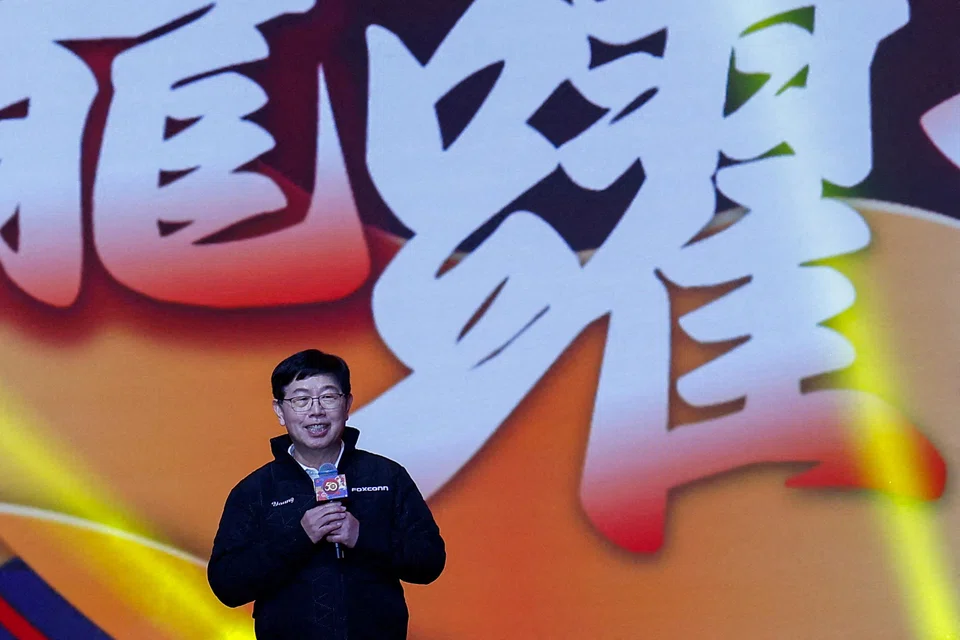
ONLY two people have ruled over Foxconn Technology Group in the 50 years since it was founded. Now, as many as six more could be added to the roster in the space of three years.
This game of executive musical chairs is risky, but given the upside, such a punt may be worth it.
Chairman Young Liu, who also holds the chief executive officer (CEO) role, is working on plans to rotate the leaders of various business units through the latter position, most likely for six-month terms. The new system started in April on a trial basis, with more details likely to emerge at Foxconn’s shareholders meeting in June.
It’s an unusual strategy, undertaken by few companies and none with annual revenue approaching US$200 billion. In music terms it’s more punk rock – hard-edged, punchy and eschewing corporate orthodoxy – than classical.
One possible outcome cited in reports is that it may end one-man rule. This seems unlikely.
In Western companies there’s usually a separation between chairman and chief executive. Many people know the names of the CEOs of Apple, Alphabet and Tesla, but few could name the chairmen (Art Levinson, John Hennessy and Robyn Denholm, respectively).
In Asia, the chairman is ever-present. Or, as Taiwan Semiconductor Manufacturing founder and then chairman Morris Chang once told me: “There’s no such thing as a non-executive chairman.”
Chang had two co-CEOs during his last few years at the company, but we all knew who was boss.
Huawei vs Foxconn
Huawei Technologies, the Chinese maker of smartphones and communications equipment, is the closest comparison to Foxconn. It has run a six-month rotation since 2011, though it’s the chairman who changes.
It’s hard to assess whether that’s been a successful strategy. The company’s annual revenue climbed 3.45 times from 2011 to last year, despite being hampered by US curbs. Revenue at Foxconn’s Taipei-listed flagship Hon Hai Precision Industry rose 1.78 times over the same period. So we might at least conclude that swapping around every six months hasn’t been bad for the Chinese giant.
Yet there are enough differences between the two companies to believe that what’s good for one isn’t necessarily right for the other.
First, Huawei isn’t publicly listed and doesn’t need to satisfy shareholders on a quarterly basis. A more glaring disparity, though, is that Huawei functions more like a single entity compared with the disparate divisions that Foxconn founder Terry Gou built into his, early on.
In addition, Huawei designs and manufactures products under its own name. Foxconn must answer to dozens of external clients including Apple, Sony Group, Dell Technologies and even Huawei.
It’s these two peculiarities at Foxconn that make a new leadership strategy so compelling, yet very risky.
The business is incredibly siloed, to the point that only the chairman and a coterie of lifers have a deep understanding of the entire empire.
For decades under Gou’s leadership, it was believed that he alone was the glue that held it all together. One insider told me more than a decade ago, when Gou was still in charge, that the founder was so integral to the smooth running of the company that, if he left, many division chiefs would quit and the whole operation would grind to a halt.
Bold changes
Gou stepped down in 2019, while Foxconn is still functioning, last year posting the highest profit in seven years. Yet it says something that, prior to his departure, there was no clear front runner to take over.
Liu likely got the job due in part to the fact that he, like Gou, had experience building businesses from scratch – at least one of which was sold to Foxconn.
Liu’s already shown some of that fresh thinking. Soon after taking over, he implemented quarterly investor calls, complete with revenue breakdowns and forward guidance, and in doing so threw out decades of doctrine which held that even such mundane details were too secret to reveal.
The boldest change he’s made is to pivot the company towards electric vehicles (EVs), with plans to provide end-to-end supply from chips all the way to final assembly. One reason is to try and make the company less reliant on Apple, while also attempting to catch a new wave of growth as the smartphone boom wanes.
It’s very possible that this strategy will fail. Although EVs are a growing market, Foxconn’s role in that sector remains unclear.
Yet, for a company with more than 700,000 employees, throwing so much money and management focus on an untested business is about as close as you can get to startup culture – and if it works, the payoff could be huge.
The same can be said for its new approach to management. For example, having the head of a TV-making division step in to make critical decisions ahead of September’s iPhone launch could prove disastrous.
Yet fresh ideas may be just what’s needed. Foxconn has become so large, and so dependent on one customer, that the riskiest option may in fact be to stick with the old ways. The world’s largest electronics manufacturer needs to find some entrepreneurial spirit, and the best place to start is in the C-suite.