

How to survive and succeed in a disrupted world? With sound strategy
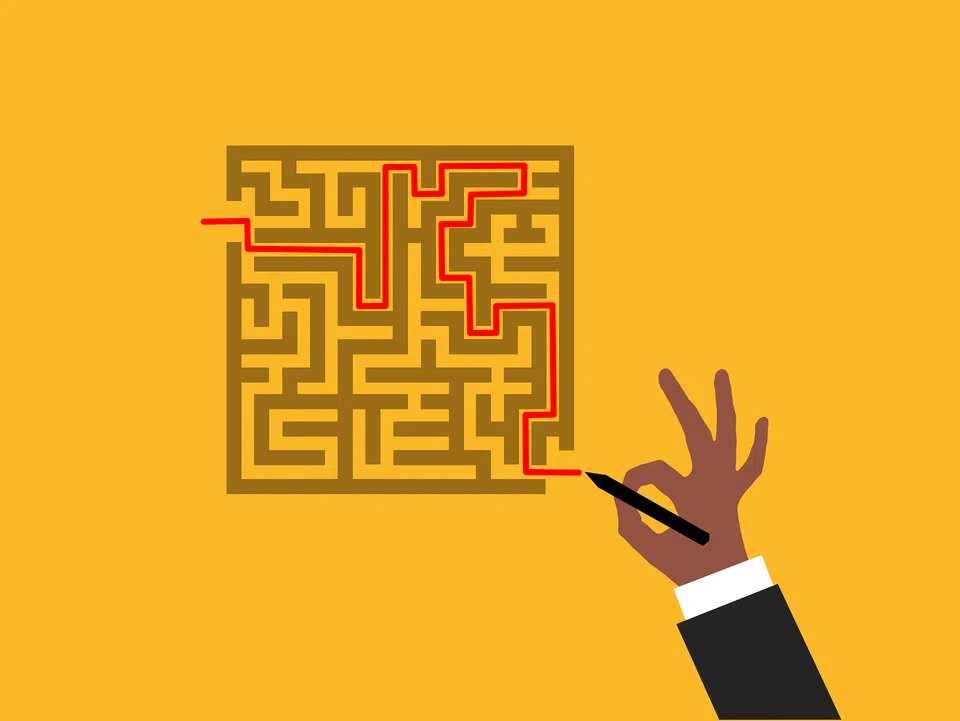
A FAMOUS WWII British general, Bernard Montgomery, had two fundamental rules about fighting the North Africa campaign. One was to plan in great detail even though he knew the plan would never work out as intended. The other was to be better equipped than his adversary.
These sound like simple rules, but neither is that easy to follow. Better equipment requires time, and everyone wants a war to be won as fast as possible. “Don’t let glory-seekers push you off your time schedule,” was Montgomery’s view, because “they will if they can”. In business, the pressure to achieve results today is often at the expense of the longer term.
Disruptions – the new normal?
In our somewhat frightening, ever-changing world, the ability to discern and seize opportunities is more critical than ever. Disruptions and uncertainties have become the norm, requiring a new blend of strategic foresight and tactical finesse not only to survive but to thrive. These will increase as mounting debt brings economic uncertainty, unstable climate becomes more destructive, and social pressures fostered by increasingly available media make everyone a participant in politics whether equipped or not. The world’s chaos makes us question the developing roles of strategy and tactics. How are we to handle unforeseeable events?
By the delicate dance with risk that accompanies any worthwhile venture.
Boeing, Rolls Royce, Twitter, Kohl’s, Netflix, Lyft, LinkedIn and Trump (the business, not the individual) are all companies that may have been pressured to deliver at rates too fast for safety and sometimes with quality controls that have been allowed to fall below their usual high standards. The cost of absent planning, when it occurs, is high and the damage to reputation through the ensuing trouble is often severe.
Recalibration required
Disruption signifies the reshaping of established norms and structures. Whether propelled by technological advances, geopolitical tremors, or unforeseen global events, disruptions compel individuals and organisations to recalibrate their strategies. The Covid-19 pandemic revealed the rapidity with which the world can be thrust into disarray, upsetting economies, supply chains and daily life. In this maelstrom, traditional planning models are inadequate. At such times, strategic thinking becomes indispensable.
An example of this was when I moved into the advertising agency SH Benson. It was going downhill rapidly. Apart from the fact that the directors at the time were drinking themselves into oblivion, the reason for the agency’s imminent demise was despair at not getting new clients. Increasingly mountainous lunches with potential clients were failing to impress the people whose advertising work we wanted. And yet the creative teams and the media planners at Benson’s were better than most agencies.
Observing potential clients, I saw that they wanted to see theme ideas for their advertising, whereas the agency was explaining to them how it worked. There was a risk, of course, in taking the time to prepare and present a well-thought-out advertising campaign – an almost wholly complete one. Indeed, the occasional potential client did steal our work. But without taking that risk, no clients were ever going to shift their accounts to us. Once we grasped that, the work flowed in and the agency flourished.
Strategic planning guides through seas of uncertainty
Forecasting can be like gazing into a cloudy crystal ball, and a well-crafted strategy is a guide that helps individuals and organisations stay the course. Strategic thinking demands a mixture of foresight, adaptability and a deep understanding of fundamental goals. The benefit of strategic planning comes from its commitment to scenario analysis. Rather than tethering themselves to a plan, experienced strategists explore a range of potential scenarios, creating approaches robust enough to cater to diverse outcomes. This approach of proactive decision-making allows for agile adjustments when faced with unexpected challenges.
Like most of life, strategic planning is not a Roman road, but more of a meandering river. How can you plan a battle when at least 50 per cent of the decisions will be made by the enemy? It’s perplexing that, even today, most people have no idea what a plan is for, nor even what strategy means.
Plans and strategies are neither job descriptions nor prescriptions for success. They have two purposes: one, to ensure that objectives are clear; the other, to review the ways to achieve them.
“To win the battle” is self-evident as the overall objective. When you are competing with other clever people, you need to have a much clearer and more comprehensive goal than that. The unpreparedness of Israel to handle the overwhelming attack from Hamas, and the delayed lack of planning for post-battle consequences and needs, are good examples. Both cost many lives.
Planning involves both forecasting and flexibility
The process of planning is an act of research about the other side’s possible moves.
The tacticians in place during a battle have to respond to one of several possible courses of action by the enemy. They must be aware of what those courses are. To have only one planned response is to court disaster. All this requires forecasting, a dreaded word for some people who believe that it is no longer possible. But all competitive contests would have been abandoned long ago if that were true. It is, however, true that you cannot predict with certainty, so your planning has to be multi-faceted.
I faced these problems four times in my career. The first was a tricky problem that research could not solve because of too many variables. My approach was that all our competitors had the problem too, and a perfect statistical answer was not possible. So I settled for the next best thing – observations backed with as many opinions as I could gather.
My solution not only improved our performance in buying screen time, but also impressed clients with what they saw as a pragmatic solution.
On another occasion, I was asked to plan for a big company that employed over 145,000 people. I failed at this because I tried to be too comprehensive too quickly. If I had approached it with a developing plan, then it would have had a better chance of success.
My lack of education in corporate planning was the main cause of failure. Business ethics are now starting to address the issues of untrained employees, but the quality of teaching still has a long way to go.
When asked to dispose of some small businesses that were not profitable, I took a significant risk to find out if their products were technically viable – they had never proven to be in the past. The risk paid off, and my next objective was to build a war chest for acquisitions. That also worked well, and the acquisitions we subsequently made were well-negotiated and valuable.
Get your tactics right
While strategy provides the framework, tactics are the manoeuvres and tools that execute the plan.
Tactics are the bridge between strategic planning and doing it. They enable individuals and organisations to adapt to shifting circumstances. Tactical skill is the ability to make informed decisions quickly. Agility is the primary tool. Tactical decisions must be made swiftly, but not impulsively. They should be synchronised with the strategy while remaining flexible enough to accommodate surprises.
Tactical precision is about making the right moves at the right time – be it adjusting supply chain logistics, responding to market shifts, or adapting to regulatory changes. Important as these are, they are meaningless if they are not part of a strategic plan. In today’s world, defenders need that as much as aggressors. However, they mostly don’t think about it until it is too late.
Today’s business is rightly still opportunist. However, we need clearer charts, a stronger compass and a visionary outcome. With these, humankind will still succeed.
John Bittleston is the founder of Terrific Mentors International
TRENDING NOW
OCBC Q3 profit rises 3% to S$2.04 billion, slightly above expectations
Stocks to watch: OCBC, IHH Healthcare, FLCT, SingPost, Koh Brothers Eco Engineering
From legacy to launch: Francis Yeoh and Yeoh Pei Xien on family unity and YTL’s next‑gen ventures

Wealthy Indonesians snap up government bonds as yields near 8%: OCBC

