



Philippine sovereign fund backs Petron with credit line of 15 billion pesos in energy security push
The deal marks Maharlika’s first emergency-style intervention in a private utility
 Add BT as a preferred source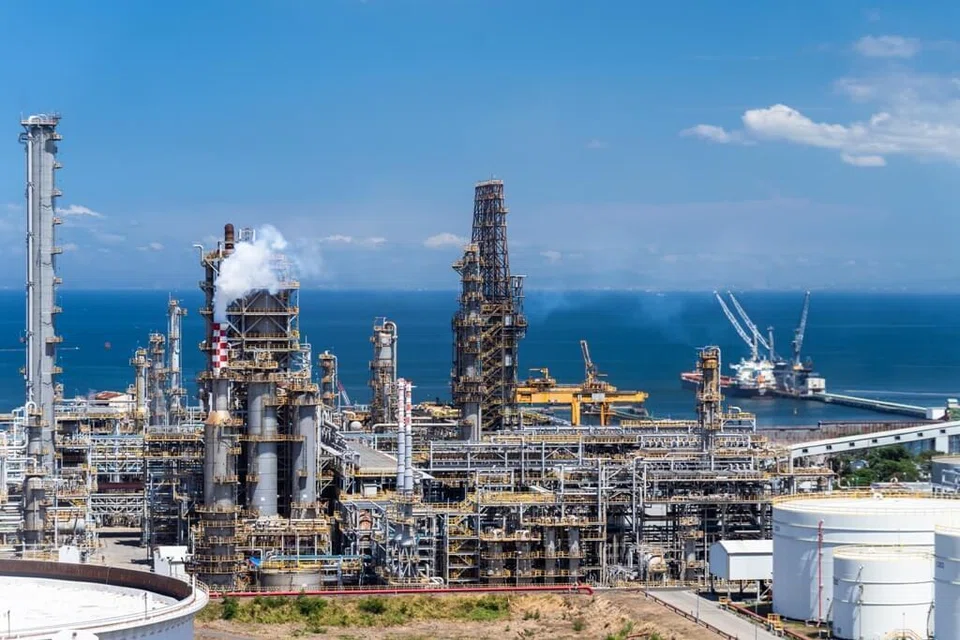
本文由AI辅助翻译
[MANILA] In its first major intervention in a private utility, Maharlika Investment Corporation has extended a financial lifeline of 15 billion pesos (S$310.5 million) to Petron Corporation, the Philippines’ sole remaining oil refiner.
This comes as Manila moves to cushion the shock from the global energy crisis.
Petron, the country’s key fuel supplier, controlled by conglomerate San Miguel Corporation, reported a first quarter drop of 56 per cent in net profit to 1.8 billion pesos on the back of lower refinery output and higher procurement costs.
With Maharlika – the Philippine’s sovereign wealth fund – holding some S$1.4 billion in deployable capital, the revolving facility is designed to absorb these shocks, giving Petron the cash flexibility to import crude and handle working capital requirements.
The strain was already evident in late March when Petron turned to Russia for 2.48 million barrels of Siberian crude to keep inventories covered through June, after the Middle East crisis disrupted shipments.
“The price of oil has risen to the point where distribution companies must double their working capital just to buy the same amount of fuel,” Maharlika’s president and CEO Rafael Consing Jr said when he announced the credit facility on Thursday (May 14).
The deal also signals the fund’s openness to a “state partnership” with Petron.
Sharp decline in earnings
Petron supplies nearly a third of local fuel demand, hence any prolonged financial pressure poses a systemic threat to the Philippine economy. The funding strain follows a banner year for Petron with net income surging to 15.6 billion pesos, up 84 per cent from 8.5 billion pesos in 2024. Petron pulled in consolidated revenues of 810 billion pesos last year, down 7 per cent from a year earlier as global oil prices softened. Even so, it still ranks as one of the largest companies in the Philippines by revenue. But running its 180,000 barrels per day Bataan refinery is cash intensive.
Petron’s shares have recovered slightly from last year’s low but remain well below their March high, suggesting investors may still be cautious despite its strong 2025 earnings.

The sharp decline in Petron’s earnings has prompted Maharlika to offer financial backing.
In late March, Consing said a partnership between Maharlika and Petron would be beneficial and a structural necessity.
“By co-investing in critical infrastructure and strategic reserves, we can build a permanent buffer for the economy, ensuring our energy security no matter what global shocks come next,” he said.
Consing’s recommendation came as Petron chairman and CEO Ramon Ang renewed his offer for the government to take over the oil company.
Petron was wholly owned by the government through the Philippine National Oil Company (PNOC) until 1994. From then on, it underwent a series of structural handovers before finally landing under Ang’s San Miguel Corp.
“If the government believes that Petron under its ownership will better serve the Filipino people especially in times like these, we are ready to sit down and make it happen,” Ang said.
But Consing believes Petron belongs in the private sector and that Maharlika’s partnership with the oil company would “yield better solutions than one initiated solely by the government”.
State partnership
The state’s re-entry into Petron may be mutually beneficial for the state and the refiner, and may even boost the refiner’s credit profile, analysts from Fitch’s CreditSights said.
While San Miguel currently holds a 71.8 per cent stake in Petron, divesting just 35.9 per cent would be enough to recalibrate control, give Petron the funding needed for operations and loan repayment, and make the oil company “modestly credit positive” in the longer term.
“While the deal could be slightly credit negative in the near-term due to fuel regime changes (eg fuel price caps or export curbs) which could weigh on its working capital, execution uncertainties, and potential incurrence of large strategic capex obligations to ensure Philippine self-sufficiency, we ultimately believe these risks are outweighed by the above positives,” research firm CreditSights said.
Maharlika’s support for Petron complements a broader infrastructure strategy. The fund is also reviewing plans to co-develop oil storage facilities with the PNOC and the private sector.
In April, Consing told The Business Times that the geopolitical conflict in the Middle East has served to validate Maharlika’s mandate as a growth catalyst. He said the fund is sharpening its focus on energy, agriculture, and mining.
Decoding Asia newsletter: your guide to navigating Asia in a new global order. Sign up here to get Decoding Asia newsletter. Delivered to your inbox. Free.
Share with us your feedback on BT's products and services
TRENDING NOW

Singapore banks’ rout on new China scrutiny of wealth flows ‘overblown’: Maybank

Private equity giant Carlyle can grow bigger but needs to stay on its toes: co-founder David Rubenstein

Vietnam police bust group planning large-scale online scam centre

Is the global tech sell-off the start of a bear market or just a correction? What experts say

