

Abe's US visit reinforces a historic partnership
It has sealed Japan's place as a staunch ally central to the geostrategic concept of an American "pivot" to East Asia though question marks still remain over TPP
 Add BT as a preferred source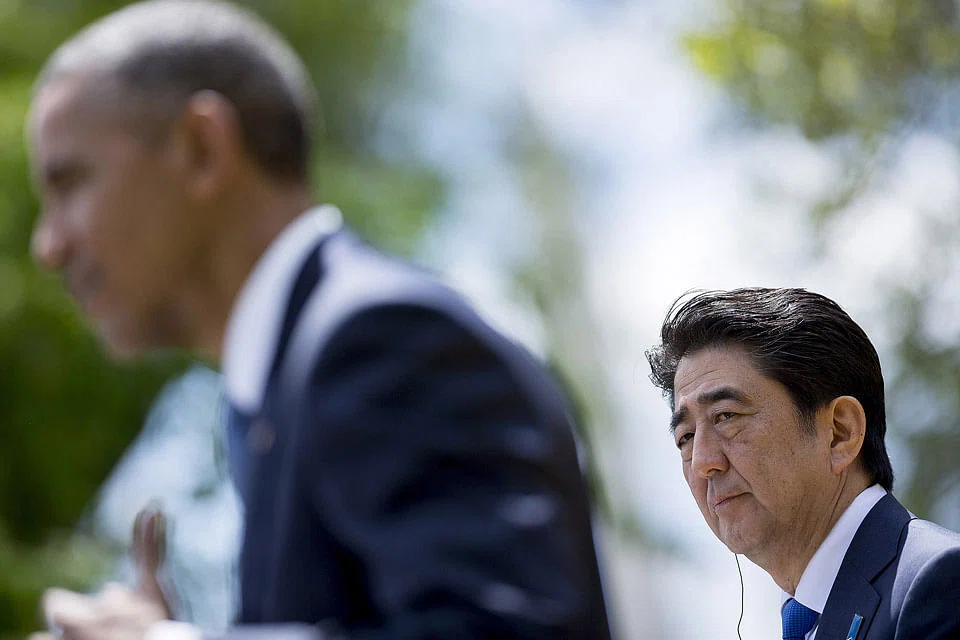
DeeperDive is a beta AI feature. Refer to full articles for the facts.
AS Japanese Prime Minister Shinzo Abe concluded his historic visit to Washington - the first by a Japanese premier in nine years, and the first Japanese leader to address a joint meeting of the US Congress - it may be difficult to imagine that it was only five years ago when some officials and pundits in Washington considered saying their Sayonara to Japan.
Then Japan prime minister Yukio Hatoyama of the Democratic Party of Japan (DPJ), calling for a review of Japan's ties with the United States, made it clear that he wanted to shift his country's focus from a more America-centric foreign policy to a more Asia-focused policy.
Infuriating American policymakers and lawmakers, Mr Hatoyama called for a "close and equal" Japan-US relationship, and insisted that Japan should not continue to be subservient to Washington. In addition to ending a Japanese refuelling mission in Afghanistan, which, he argued, violated Japan's pacifist constitution, he refused to commit himself to an earlier accord that was supposed to relocate the American Futenma Air Base to another part of Okinawa. He also seemed to be siding with those in his party that wanted the United States to move its military bases off the Okinawa islands altogether.
Copyright SPH Media. All rights reserved.
TRENDING NOW

Shelving S$5 billion office redevelopment plan proved ‘wise’ as geopolitical risks mount: OCBC chairman

Eurokars Group introduces rental car franchises Enterprise Rent-A-Car, National Car Rental, and Alamo to Singapore

20 photos that show how dramatically Singapore has changed in two decades
Singapore’s key exports up 15.3% in March from electronics surge, exceeding forecasts

