AEM, UMS among chip players riding AI-linked export surge
Several analysts say that the impact on Singapore’s manufacturing landscape has been ‘limited’


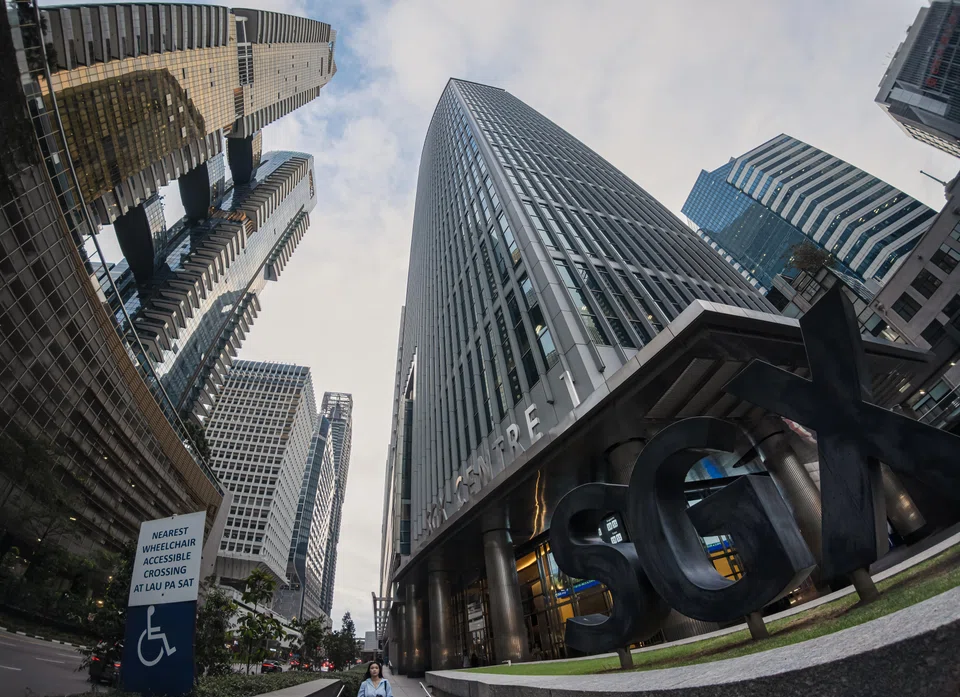
[SINGAPORE] Certain electronics and artificial intelligence plays listed in Singapore saw gains of up to nearly 20 per cent the week of Apr 20 amid strong export demand.
AEM Holdings is up more than 20 per cent this week. Its rally comes weeks after its Mar 21 announcement of a partnership with ASE Technology, one of the world’s largest semiconductor testing and packaging firms, to build AI test solutions and high-performance computing markets.
The company under the collaboration will raise S$12 million via a private placement of some 3.35 million shares – around 1.1 per cent of its share capital – at S$3.591 apiece to a wholly owned unit of ASE.
High-precision engineering group UMS also jumped 15.1 per cent in the same period, though Aztech Global fell 1.2 per cent.
Frencken recorded a weekly gain of about 7.5 per cent, while other electronics-linked counters such as Valuetronics gained 10.8 per cent during the week.
Stronger-than-expected export data
This follows stronger-than-expected data on Singapore’s key exports, which indicated a 15.3 per cent year-on-year expansion in March.
Semiconductor Equipment and Materials International (SEMI), an industry association representing companies involved in electronics design and the manufacturing supply chain, forecasts global sales of semiconductor manufacturing equipment growing from 2025 to 2027, culminating at a record high of US$156 billion in 2027.
CGS International (CGSI) analyst William Tng said that this signals a clear shift away from traditional consumer-driven cycles, towards major tech companies investing heavily in the relevant materials to compete in the AI field.
Some of these counters rose by more than 10 per cent on Friday (Apr 24) morning, with AEM Holdings trading as much as 22.1 per cent higher at S$6.19 on Friday. It later ended the day at S$6.06, up 19.5 per cent.

UMS rose as much as 11 per cent to S$2.21, and ended the session 8.1 per cent higher at S$2.14. Aztech Global jumped 12.7 per cent to S$0.845, before easing to S$0.825, closing 10 per cent or S$0.075 up.
Frencken ended 5.1 per cent higher at S$2.66 and Valuetronics was up 3.7 per cent at S$1.12.
Limited impact on Singapore’s manufacturing landscape
Several analysts have said that the impact on Singapore’s manufacturing landscape has been “limited”, as electronics exports are supported by continued AI-tailwinds on a global level, as well as a significant demand for server products and memory chips from the city-state.
Maybank analysts Chua Hak Bin and Brian Lee said that electronics demand is expected to be a “bright spot” for at least the first half of this year, since AI capital expenditure seems to be “unscathed” amid the recent Iran war, a report by The Business Times noted.
CGSI raised its target price on UMS to S$2.23 on Apr 16 – with Tng saying that the group will have a stronger second-half this year, compared with H1.
This comes as orders from its key customers are skewed towards H2 of 2026, amid the acceleration of AI applications.
“The escalating demand for high-bandwidth memory and advanced logic is driving the need for packaging complexity, and (customers of UMS) are major players in this space,” he wrote in his report.
Song Seng Wun, economic adviser at SDAX, noted that there has been “sustained demand” led by AI and AI-related products since H2 of 2025 – a trend which has continued into the start of 2026.
“Tech-related trade has grown substantially since H2 of last year, which is why the Singapore economy’s manufacturing sector (was) supported by stronger production and exports of tech-related products,” he said.
Hence, despite fears about the Middle East conflict affecting demand, businesses are currently still locking in supplies, he said.
Supply shortages and worries of supply disruption have caused costs and product prices to rise, with tech manufacturers ordering ahead or rushing orders, he added.
Regarding the outlook for the Singapore electronics and AI sectors for H2 2026, Song said the high prices will be reflected in higher costs for consumers, for electronics and mobile devices such as mobile phones and laptops.
This comes amid increased costs of producing such items, due to higher costs of chips and other inputs.
But whether the higher prices will dampen demand is uncertain, as this boils down to whether consumers are willing to pay more, he said.
At this juncture, the latest PMI survey suggests that manufacturers are still receiving orders, as their customers – who need these items to produce their own goods – fear that costs would go higher if they delay their orders or if there are supply shortages.
The SDAX expert thinks that Singapore’s tech manufacturers could see more orders coming in, despite higher input costs – though whether or not this trails off in subsequent months remains to be seen.
Decoding Asia newsletter: your guide to navigating Asia in a new global order. Sign up here to get Decoding Asia newsletter. Delivered to your inbox. Free.
Copyright SPH Media. All rights reserved.