

Analysts tip StarHub as ‘obvious’ front runner for M1 after Simba merger stalls
The setback is expected to weigh on Keppel, which had planned to monetise M1 through the deal


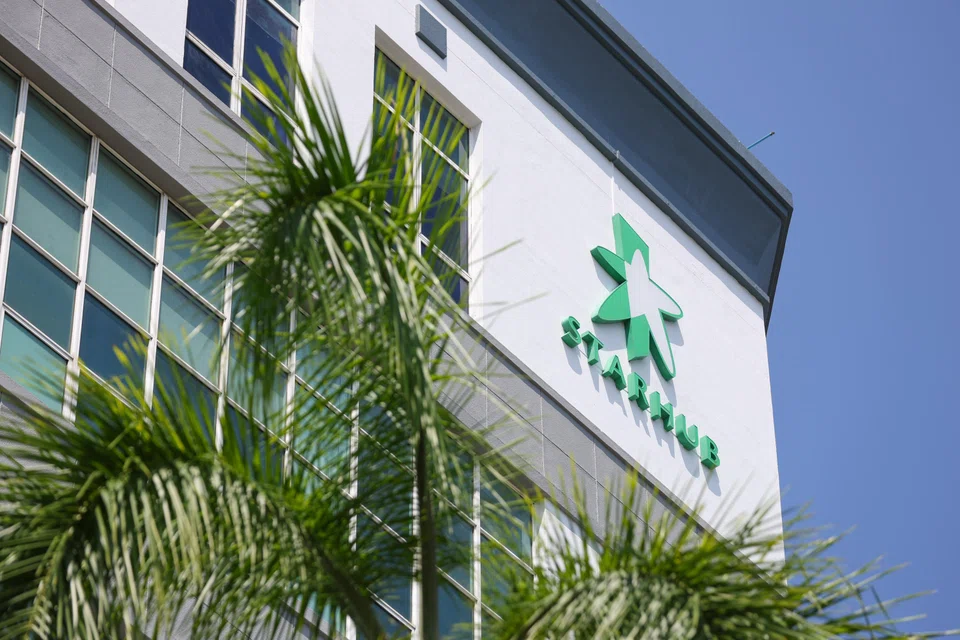
[SINGAPORE] The pause on the proposed merger between telcos M1 and Simba announced on Monday (May 18) has revived speculation that rival StarHub could re-enter the picture as a buyer.
Analysts are assessing alternative pathways for consolidation in Singapore’s telecommunications market, after the Infocomm Media Development Authority said that it had halted its assessment of the proposed M1-Simba consolidation until further notice.
The authority said that Simba could have been using radio frequency bands that it had not been assigned to provide mobile services, with possible enforcement action to follow.
The setback is expected to weigh on Keppel, which had planned to monetise M1 through the deal.
Citi analyst Brandon Lee expects about S$1.3 billion worth of announced monetisation to be removed from the asset manager’s 2025 financial year.
Shares of Keppel fell as much as 5 per cent on Monday to their lowest level since December 2025, though the counter later pared some losses, closing 2.1 per cent lower at S$10.38.
CGS International (CGSI) downgraded Keppel’s shares to a “hold” from its previous “add” call, lowering its target price to S$11.50 from S$13.52.
Analyst Lim Siew Khee forecast a drop in dividends, to S$0.45 per share from S$0.48 per share.
“We expect share price to be range-bound as Keppel refocuses on optimising M1 as monetisation momentum could stall slightly,” she said on Monday, noting that M1 is a non-core asset.
SEE ALSO

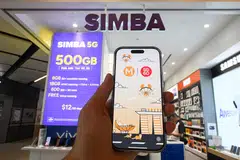


Shares of Simba’s Australia-listed parent Tuas Ltd took a hit on Monday after the news. The counter closed 63 per cent down at A$2.27.
UOB Kay Hian (UOBKH) analyst Adrian Loh said that the “outsized negative reaction” suggests that the market has concluded there “may be major operational, compliance and legal failures” in Tuas Ltd.
StarHub back in the picture
“There is obviously only StarHub left to bid for M1,” said Paul Chew, head of research at Phillip Securities Research.
“It is an opportunity for StarHub to achieve its goal to be a clear No 2 operator by revenue market share,” he added.
UOBKH’s Loh said that while the proposed merger between M1 and Simba could still materialise in a year or two, StarHub could “rekindle its interest in M1”.
Speculation about a merger between the two telcos has been going on for years, with StarHub having lost out to Simba in the now-suspended deal.
Responding to queries from The Business Times, StarHub said that it “would not want to speculate beyond the information publicly available at this stage”.
In response to BT queries at a media briefing on whether M1 plans to explore a merger with other players such as StarHub, Keppel chief executive officer Loh Chin Hua said the company remains open to the “opportunity for consolidation further down the track”.
Outlook on Keppel’s “Plan B”
Keppel announced on Monday that it would execute its “Plan B” for M1.
The 90-day restructuring will involve improving M1’s efficiency to boost its run rate earnings before interest, taxes, depreciation and amortisation) by rightsizing the company and reducing costs.
Analysts welcomed the plan.
Noting that the telco industry’s “profit pool has plunged”, Phillip’s Chew noted that “Plan B” is aimed at enhancing M1’s intrinsic value before its sale.
UOBKH’s Loh expects the plan to yield improvements, as M1’s team will be able to implement strategies to strengthen the business once it is free of the sale and purchase agreement from May 21.
The analyst believes that M1’s future sales prospects will not be impacted by the breakdown of the deal, given that it fell through due to Simba’s potential breaches “and not because M1 is unsellable or has any major issues”.
“This aspect is worth investigating and highlighting because it is unfair to surmise that M1 is a troubled business when it was the actions of the acquiring party that toppled the deal.”
Decoding Asia newsletter: your guide to navigating Asia in a new global order. Sign up here to get Decoding Asia newsletter. Delivered to your inbox. Free.
Copyright SPH Media. All rights reserved.
TRENDING NOW
Prima to move out of historic Keppel Road flour mill building in 2028

Grab CEO’s wife Chloe Tong on life with Anthony Tan and finding her purpose

OCBC sheds S$8 billion in value as shares close nearly 6% down; analysts cautious on banks

As Asia’s food delivery giants rejig the pie, who will win the market?

