

National Stock Exchange of Australia eyes South-east Asia for listings, Singapore for capital
NSX is looking beyond its home market for growth, as private capital puts pressure on public listings globally, says its chief

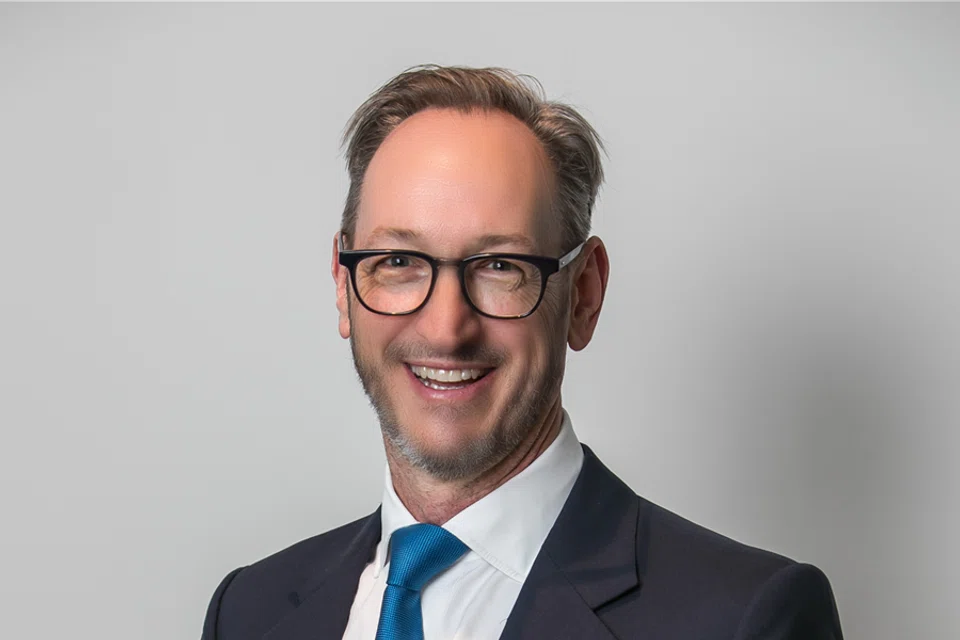
[SINGAPORE] Australia’s National Stock Exchange (NSX) is looking to South-east Asia and other overseas markets for new listings, and to Singapore as a source of capital.
This is as it seeks to grow its role as an alternative venue for small and mid-cap companies.
The country’s second Tier 1 licensed equity exchange is targeting companies from South-east Asia, New Zealand and Canada, NSX chief executive Max Cunningham told The Business Times.
At the same time, he sees Singapore as a venue for recapitalising the business and tapping capital flows from Asia and North America, as well as a hub for trading Australian-listed securities.
“The market makers for alternative trading venues in the region are all in Singapore and Hong Kong,” he said. “There is a lot of capital here (in Singapore), and the capital is from Asia and North America.”
NSX’s ambitions come as public markets in Australia and elsewhere face a broader challenge from abundant private capital, which is giving companies fewer reasons to list, or remain listed, on stock exchanges.
Four constituents of the Australian Securities Exchange’s (ASX) top 200 disappeared from the bourse within weeks, while several other multibillion-dollar companies were moving towards going private in August, Cunningham said.
He argued that the pressures are not unique to Australia, with markets including Singapore facing similar questions over how to keep public listings attractive.
“This is a global trend everywhere, so it is not Singapore or Australia. It is Singapore, Australia, the UK, Canada and the US,” he noted.

Why are companies taking the private path?
Cunningham attributed the shift to macroeconomic conditions and interest rates, alongside a deep pool of private capital that now gives companies an alternative route to fund growth without going public.
He pointed to consolidation in the share registry sector as evidence: A share registry changed hands between two private equity owners, and another was acquired by Mitsubishi UFJ and taken private – removing two significant market players from public view.
Singapore’s capital has also played a role in the trend. Earlier this year, National Storage Reit – Australia and New Zealand’s largest self-storage owner-operator – was suspended from ASX trading in April and removed from the index, following GIC and Brookfield’s roughly A$6.7 billion (US$4.8 billion) take-private of the trust.
Regulation was another factor Cunningham cited, noting that the regulatory environment has grown “more prohibitive”, compounding pressure from the rapid growth of passive investing through exchange-traded funds.
“That means the ability to rely on active fund managers… to get those valuations to justify being public are all challenges,” Cunningham noted, adding that private equity has been leading this move, given that they can provide lower cost of capital.
These pressures, he said, have spurred “active conversations” in Australia around new private market infrastructure, including cap table management, secondary trading venues and specialist licensing.
Betting on small caps
That private-market build-out is exactly the gap NSX is trying to fill. As Australia’s other Tier 1 licensed equity exchange alongside ASX, NSX is positioning itself as the region’s alternative venue for small and mid-cap companies, said Cunningham.
In its pursuit of doing so, NSX has stripped out much of the regulatory cost associated with listing, offering lower fees and a lighter-touch regime within the bounds of local corporate law – a pitch aimed at smaller companies still weighing public listings, he said.
While ASX listing requires either A$4 million in net tangible assets or a minimum market cap of A$15 million and 300 securityholders holding at least A$2,000 each, NSX offers a lighter entry path.
It sets a minimum expected market cap of A$500,000 with no mandatory minimum asset test or minimum profit test, requiring a minimum of 50 securityholders.
Beyond lower listing hurdles, Cunningham noted that revitalising the small to mid-cap segment requires active ecosystem support.
He pointed to ASX’s research coverage scheme introduced to increase interest in small and mid-cap stocks in 2012 as a pilot, under which the exchange sets aside a share of listing fees each year to fund broker research on small and mid-cap stocks.
It was then deemed successful and established as a permanent, ongoing programme now known as the ASX Equity Research Scheme.
Singapore has taken a broader approach. Its S$6.5 billion Equity Market Development Programme deploys capital through asset managers to allocate heavily into Singapore equities, including small and mid-caps.
Alongside this, Singapore has also strengthened research coverage through the Grant for Equity Market Singapore scheme to enhance equity research and support listed products.
For new listings, NSX is targeting mining, technology and life-sciences companies, with Canada a particular focus alongside New Zealand and South-east Asia.
“We have a huge crossover with Canada on mining, and… Canadian brokerage connectivity already in the Australian marketplace,” he said. “Historically, there have always been a lot of listings from Canada into Australia because they have similar companies… and a lot of Canadian companies own assets in Australia, or are shareholders.”
In the longer term, Cunningham sees these capital flows potentially evolving into direct equity investments, with global fund managers backing companies across the region, including Singapore.
Decoding Asia newsletter: your guide to navigating Asia in a new global order. Sign up here to get Decoding Asia newsletter. Delivered to your inbox. Free.
Copyright SPH Media. All rights reserved.
TRENDING NOW

Malaysian king buys stake in Singapore-listed mining firm expanding into rare earths

Family offices ‘kept captive’ by relationship managers turn to independent advisers, direct deals

Once staunchly pro-China, Malaysian Chinese businesses are now distancing themselves from Beijing

Could stablecoins be the future of money?

