

China’s central bank withdraws medium-term funds in warning sign to easing bets
The latest liquidity drain is set to reinforce traders’ cautious mood
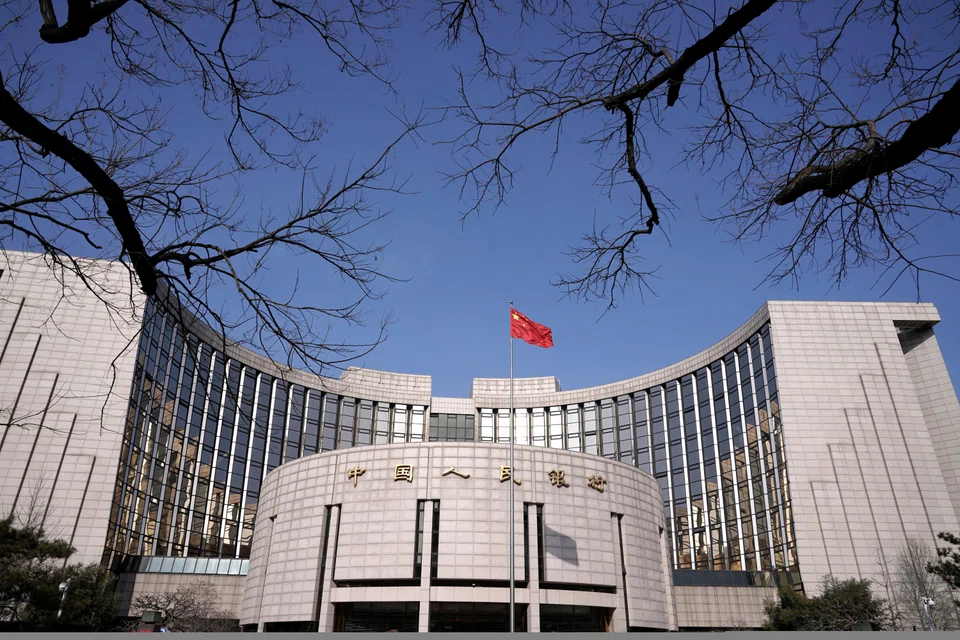
[BEIJING] China’s central bank is draining funds from the financial system via a medium-term liquidity tool for the first time in five months, signalling caution to traders betting on monetary easing.
In a late Friday (Nov 13) statement, the People’s Bank of China (PBOC) said that it will conduct 200 billion yuan (US$30 billion) of six-month outright reverse repurchase operations on Monday, falling short of the 300 billion yuan maturities.
Combined with an earlier three-month operation on Nov 5, the PBOC is set to withdraw a net 300 billion yuan via the tool this month, the first liquidity drain since June, according to Bloomberg calculations.
Bonds rallied earlier this month after the PBOC shifted its policy rate framework to prioritise lower-cost overnight operations over the seven-day repo rate.
Yet, benchmark yields rebounded from a record low last week as traders weighed the central bank’s tolerance for further declines and a potential tax on debt interest. The latest liquidity drain is set to reinforce that cautious mood.
The liquidity withdrawal will help restrain further declines in the overnight interbank repo rate and prevent the market from misinterpreting the PBOC’s recent open market operation reforms as an interest rate cut, said Wang Qing, chief macro analyst at Golden Credit Rating.



The overnight borrowing cost for banks stands at 1.29 per cent, versus a six-month low of 1.25 per cent touched in early November. Yields on China’s 10-year bonds edged up to 1.62 per cent on Monday, having fallen to 1.57 per cent in early November. Futures on 30-year notes dropped to the lowest since Oct 8.
To be sure, the central bank still has other tools to support liquidity, including one-year policy loans typically conducted on the 25th of each month and potential government bond purchases. It also made a net injection via overnight reverse repos on Monday.
The PBOC may still step up monetary policy support at year-end by resuming net injections of medium-term liquidity to accommodate government bond issuance and to support bank lending, Golden Credit’s Wang said. BLOOMBERG
Decoding Asia newsletter: your guide to navigating Asia in a new global order. Sign up here to get Decoding Asia newsletter. Delivered to your inbox. Free.
Share with us your feedback on BT's products and services
TRENDING NOW

Ex-Nvidia CEO Jensen Huang carried a secret for more than a year. It led to his downfall

South-east Asia has lost Nvidia’s best salesman

Demand, tech capabilities position Apac and AI as Skyscanner’s next growth frontiers: CEO Bryan Batista

Jensen Huang discusses comeback as Nvidia CEO with allies: report

