Indonesia’s central bank governor touts higher bond yields in investor pitch
The bank will refrain from buying bonds with tenors that are 10 years or longer
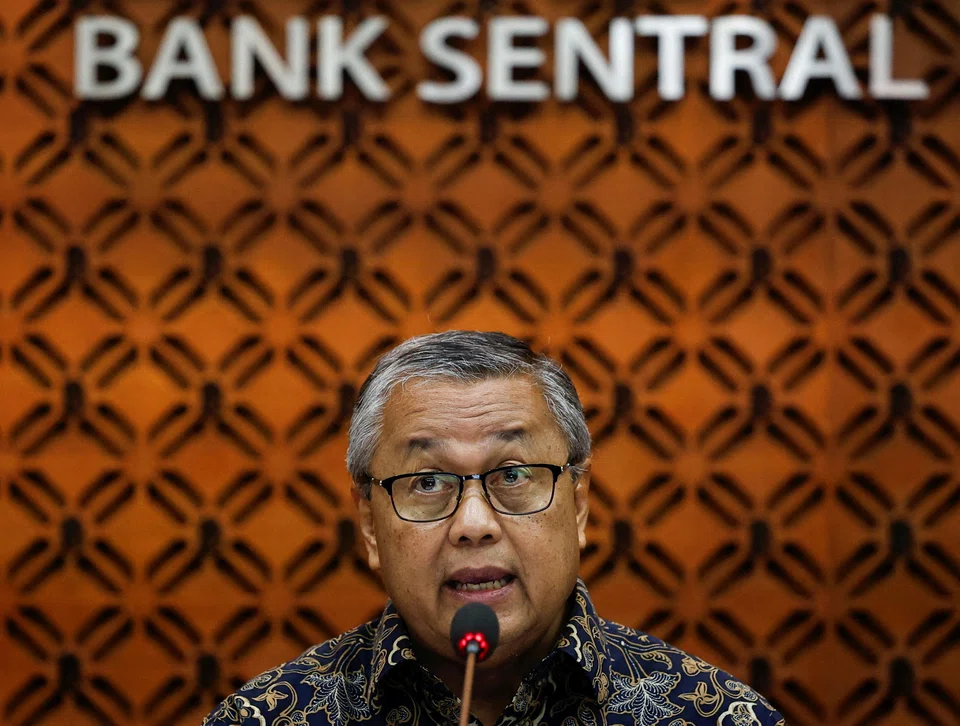
[JAKARTA] Indonesia’s central bank governor signalled it would allow bond yields to rise and left the door open for future interest-rate hikes during a roughly 90-minute call late on Tuesday (Jun 9) night with investors, seeking their return to South-east Asia’s largest economy.
Bank Indonesia’s primary focus is the stability of the currency and policymakers are taking preemptive action to ensure the rupiah finds steadier footing, governor Perry Warjiyo said in a call with more than 200 participants dialling in from the US and Europe, according to the people on the call.
Warjiyo confirmed the call when contacted by Bloomberg News on Wednesday, saying the meeting was to explain to investors the surprise rate hike this week. He added that he held a separate call on Wednesday for Asian investors with more than 180 participants.
The main message from Warjiyo was that policymakers are letting bond yields rise as the price for trying to stabilise the currency, even if it means higher financing costs for the government, according to the participants, who asked not to be identified because it was a closed meeting.
The central bank will refrain from buying bonds with tenors that are 10 years or longer, reopen repurchase facilities to mop up liquidity at banks, and reduce hedging costs for foreign investors – an approach that is now more cohesive, according to the people who attended the call.
While Bank Indonesia regularly holds investor briefings after every rate decision, having the governor host and talk at length was a rare move, the people said. Warjiyo fielded more than 30 questions and told the moderator he would answer all queries even if the nine pm call in Jakarta stretched on until midnight.
“The investor conference call was held to reassure investors and boost market confidence,” Warjiyo said in a response to questions. “Indonesia’s economic outlook is positive; Bank Indonesia is ‘going all out’ with all available policy instruments and maintaining close monetary-fiscal coordination”.
Tuesday’s rate hike, which followed the rupiah’s plunge to a record low in recent days, takes Indonesia’s total rate increases to 75 basis points in the space of three weeks. Analysts expect the benchmark rate could be hiked by another 25 basis points at Bank Indonesia’s meeting on Jun 18.
The rupiah strengthened for a second day on Wednesday, falling back below the key 18,000 level against the US dollar. The benchmark equity index was led 2.6 per cent higher by a rally in banking stocks. Yields on the 10-year bond dropped.
SEE ALSO




Policy mix
Bank Indonesia made similar points about the repurchase facilities and hedging costs in its statement on Tuesday. It also pledged to lure more inflows in joint press conference with the Finance Minister Purbaya Yudhi Sadewa on Saturday as they sought to temper a market sell-off.
“Overall, the strategy appears geared towards increasing yield differentials and lowering transaction costs to attract offshore inflows,” Bank of America economists and strategists including Kai Wei Ang wrote in a note.
Bank Indonesia’s explanation of its policy mix to investors on Tuesday night was very clear, emphasising the current focus on stabilising the rupiah and attracting foreign capital, said Fakhrul Fulvian, chief economist at Trimegah Sekuritas Indonesia.
Fulvian expects Bank Indonesia to raise its key rate by 25 basis points both next week and in July, which he said will still be framed as a “preemptive” move rather than the start of an aggressive tightening cycle.
“By front-loading rate hikes, the rupiah and the market can stabilise more quickly, so there are no expectations of more permanent liquidity tightening going forward,” he said.
Bank Indonesia, however, may have limited scope to turn investor sentiment. Even while rate hikes may succeed in stabilising the rupiah, concerns persist over President Prabowo Subianto’s populist and interventionist economic agenda, and the risk this could blow up the Budget deficit.
Investors are also waiting for the results of MSCI’s review about the investability of Indonesian equities, as well as S&P’s latest assessment of Indonesia’s credit rating. BLOOMBERG
Decoding Asia newsletter: your guide to navigating Asia in a new global order. Sign up here to get Decoding Asia newsletter. Delivered to your inbox. Free.
Share with us your feedback on BT's products and services