



MSCI keeps curbs on Indonesian stocks, delays index changes pending reform review
Analysts note that uncertainty surrounding the revisions continues to weigh on investor sentiment

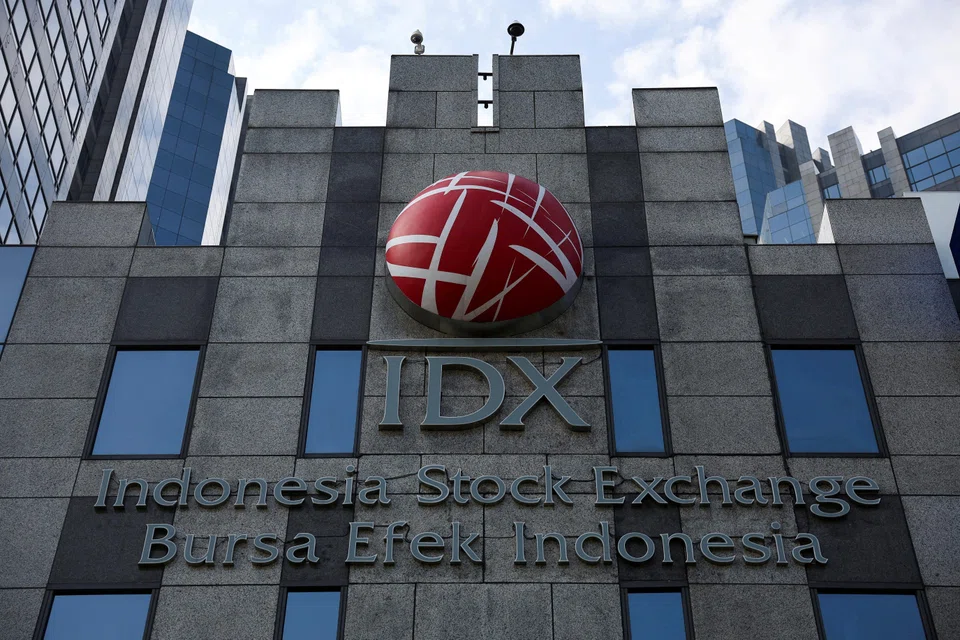
[JAKARTA] Global index provider MSCI has maintained curbs on Indonesian equities and postponed index changes in its May 2026 review, as it continues to assess the effectiveness of new market transparency reforms introduced by the local authorities.
In a statement released late on Monday (Apr 20), MSCI said that it is still evaluating the consistency and reliability of the new shareholder data and regulatory policies introduced in Indonesia, including a rule that raises the minimum free-float requirement for listed companies to 15 per cent.
The index provider added that it will provide further clarity on its assessment of Indonesia’s reforms in June, when it publishes its next market accessibility review.
It will also keep a freeze on increases to foreign inclusion factors, adjustments to the number of shares used in index calculations, and any upgrades of Indonesian stocks across index size segments.
However, MSCI noted that it will remove stocks identified as having high shareholder concentration, and may begin using newly disclosed shareholder data of investors owning more than 1 per cent of shares to refine its estimates of companies’ free float.
Jeffrey Hendrik, interim president director of the Indonesia Stock Exchange, said on Tuesday that the exchange will continue engaging with global index providers and international investors to gather feedback aimed at strengthening the country’s capital market going forward.
The announcement comes as Indonesia’s equity market remains under pressure following MSCI’s earlier warning that it could reconsider the country’s classification due to concerns over investability and limited free float. The market has faced renewed concerns over a potential downgrade from emerging-market to frontier-market status.
That warning in January this year triggered a sharp sell-off in several highly concentrated stocks.
Among the reforms introduced are new disclosure rules for shareholders owning more than 1 per cent of a company’s stock, and stricter minimum free-float requirements that will gradually increase to 15 per cent over a transition period of up to three years for some companies.

The exchange has also identified nine companies where more than 95 per cent of shares are concentrated among a small group of investors, including tycoon-linked companies such as Barito Renewables Energy and Dian Swastatika Sentosa.
The Jakarta Composite Index closed down 0.46 per cent on Tuesday following MSCI’s latest update. Among the biggest laggards were shares of Barito Renewables Energy and Dian Swastatika Sentosa, both on MSCI’s high shareholder concentration list which came under heavy selling pressure. The two stocks fell more than 9 per cent.
Analysts at Stockbit said that the latest MSCI update largely matched market expectations and does not signal an increased risk that Indonesia could be downgraded to frontier-market status. “We see the downgrade risk as a tail risk rather than the base case,” the research team wrote in a note.
Still, the analysts noted that uncertainty surrounding index changes continues to weigh on investor sentiment.
“The overhang has not fully lifted because meaningful upside catalysts from passive fund inflows will only appear once the freeze on foreign inclusion factors and share adjustments is lifted,” they said. “That is unlikely to happen before the June 2026 market accessibility review.”
Stockbit also warned that stocks placed on MSCI’s high shareholder concentration list could face selling pressure when passive funds execute the deletions.
Decoding Asia newsletter: your guide to navigating Asia in a new global order. Sign up here to get Decoding Asia newsletter. Delivered to your inbox. Free.
Copyright SPH Media. All rights reserved.
TRENDING NOW

Mooted COE changes will solve category issues, but higher premiums likely: observers

Grab CEO’s wife Chloe Tong on life with Anthony Tan and finding her purpose

Once staunchly pro-China, Malaysian Chinese businesses are now distancing themselves from Beijing

Cliff Tan has 7 million followers and a 4-month waitlist. Why won’t he expand his business?

