

Japan central bank set to hike rates to highest since 1995 despite governor absence
The Bank of Japan expects inflation to accelerate later this year
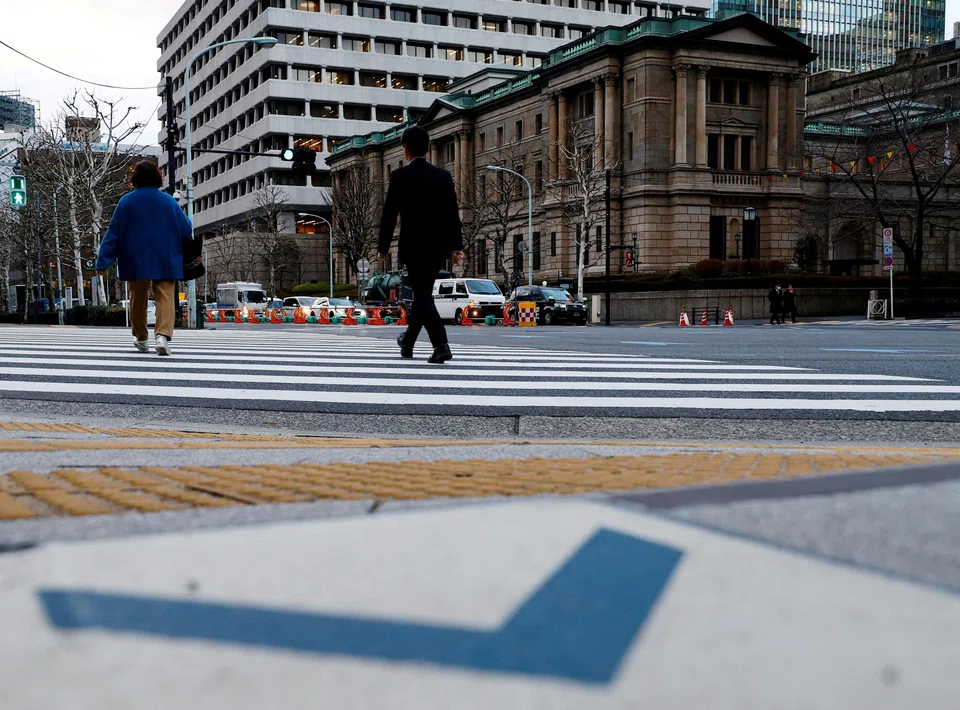
[TOKYO] The Bank of Japan (BOJ) is widely expected to raise its benchmark interest rate to the highest level since 1995 at the first regular policy meeting ever held without the governor in attendance.
Almost all BOJ watchers expect policymakers to raise the benchmark rate by a quarter percentage point to 1 per cent at the conclusion of the two-day meeting on Tuesday (Jun 16), according to a Bloomberg survey.
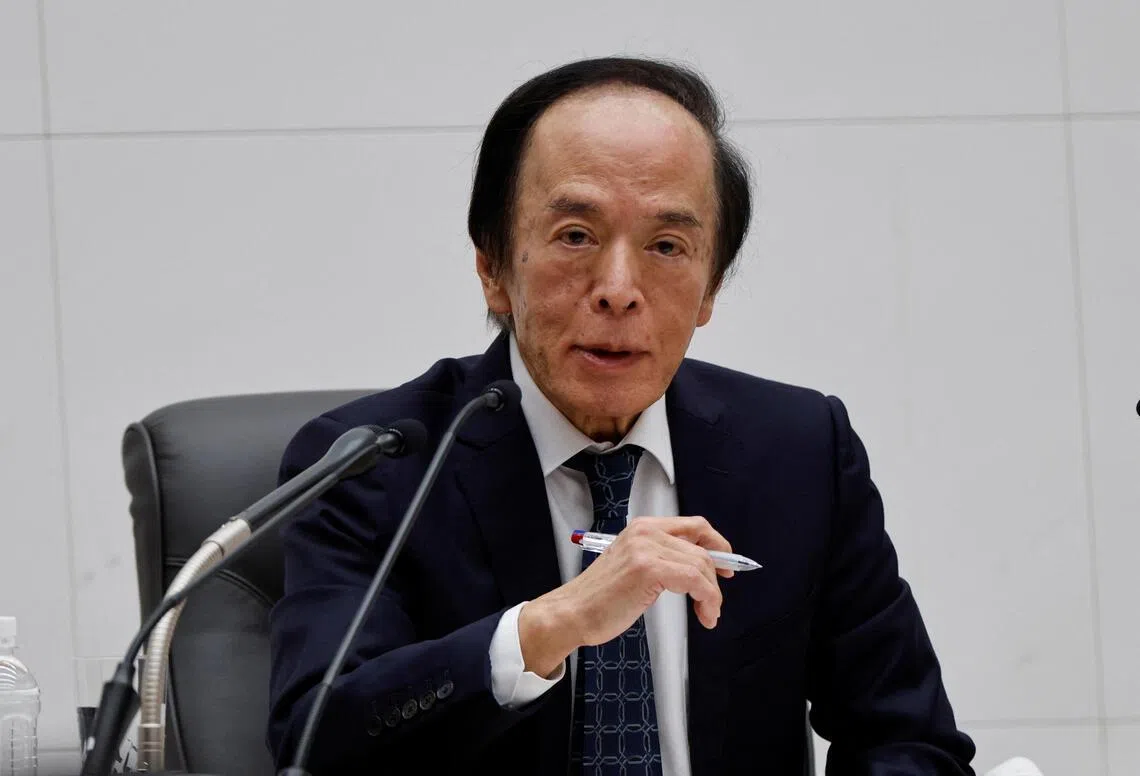
Governor Kazuo Ueda, who was hospitalised in recent days for treatment of a hepatic cyst infection, will present his views to the board in writing but will not cast a vote, the central bank said.
The expected increase would mark the first rate hike since December, and come as policymakers grapple with mounting upside inflation risks stemming from the prolonged conflict in the Middle East. Markets will watch for clues on how soon the BOJ might move again, with traders wary of potential currency intervention after the gathering if the yen weakens.
Deputy governor Shinichi Uchida will hold the post-meeting press conference in place of Ueda, the BOJ said. Investors will be watching whether the veteran central banker, widely regarded as one of the architects of the BOJ’s policy framework over the past two decades, speaks more directly than the governor, a former professor known for taking a highly nuanced approach.
The BOJ will need to strike a delicate balance between its policy statement and Uchida’s press conference. The statement is usually released around noon before a press briefing at 3.30 pm in Tokyo.
The central bank faces a dilemma. It must avoid provoking Prime Minister Sanae Takaichi’s administration, which has been increasingly sensitive to the risks of premature policy normalisation, while also convincing investors that it is not falling behind the curve as inflation risks mount and the yen weakens, according to Shigeto Nagai, former head of the BOJ’s international department.
“At some point, the BOJ may be forced to make a difficult choice between supporting domestic demand and preventing further yen depreciation,” said Nagai, currently head of Japan economics at Oxford Economics.
Despite a record amount of intervention to prop up the currency, the yen is still hovering around the key 160 per US dollar threshold that has previously prompted authorities to step into the market. A weak currency intensifies inflationary pressures for a resource importer like Japan.
SEE ALSO




Pressure is also building from abroad. The European Central Bank last week became the first major central bank to raise rates since the outbreak of the US-Iran conflict, while traders now see a growing chance that the Federal Reserve will tighten policy by the end of the year.
Against that backdrop, it is increasingly difficult for the BOJ to sound dovish without putting more pressure on the yen. Even after a move to 1 per cent, Japan’s policy rate would remain among the lowest in the developed world.
“As other major central banks move towards hiking rates, interest rate differentials could once again become a key driver of yen weakness, as they did in 2022, increasing upside risks to inflation,” said Taro Kimura of Bloomberg Economics.
At the April meeting, Ueda faced three dissenting votes in favour of a rate increase, the largest split under his governorship. Since then, two policymakers who held at that gathering have spoken in support of rate hikes, and Ueda signalled a good chance of that happening in his last scheduled speaking event ahead of the June meeting.
Investors will also look to see if any board members oppose raising rates. Toichiro Asada, the first policy board member nominated by Takaichi, may lean towards favouring a more accommodative policy, reflecting the premier’s stance.
One argument against a June hike is softer inflation data, which is running below the BOJ’s 2 per cent target in part due to government subsidies. Even so, the BOJ expects inflation to accelerate later this year, as higher energy costs stemming from the Middle East conflict filter through the economy. Ueda has suggested consumer price growth could exceed 3 per cent during the current fiscal year.
Investors also see price growth accelerating. The 10-year breakeven inflation rate climbed to a record 2.35 per cent last month, and has since held near that level as higher oil prices compound inflationary pressure from a weak yen. The gauge reflects bond investors’ expectations for average consumer-price growth over the coming decade.
Another major focus of the meeting is the BOJ’s bond-purchase reduction plan.
The central bank is currently trimming purchases by 200 billion yen (S$1.6 billion) per quarter to March next year. That pace was already halved last year amid concerns that a faster withdrawal could destabilise the bond market. Despite the reductions, the BOJ still owns roughly half of Japan’s outstanding government debt after more than a decade of massive asset purchases.
Japan’s 10-year yield climbed to the highest level since 1996 in May, underscoring the high volatility of the market this year.
Earlier this month, Ueda said that policymakers would take into account both improved market functioning and market stability when considering future bond-buying plans.
Sources familiar with the matter told Bloomberg that officials are likely to discuss slowing the pace of reductions further or pausing the process altogether as conditions in the bond market improve.
“A key question is how the BOJ will frame its bond-buying strategy without triggering concerns over the bond market or creating the impression that it is bowing to fiscal considerations under the Takaichi administration,” said Nobuyasu Atago, chief economist at Rakuten Securities Economic Research Institute and a former BOJ official. BLOOMBERG
Decoding Asia newsletter: your guide to navigating Asia in a new global order. Sign up here to get Decoding Asia newsletter. Delivered to your inbox. Free.
Share with us your feedback on BT's products and services
TRENDING NOW

Once staunchly pro-China, Malaysian Chinese businesses are now distancing themselves from Beijing

Looking beyond looming CEO succession, should UOB potentially pursue a transformative merger?

Could stablecoins be the future of money?

Grab CEO’s wife Chloe Tong on life with Anthony Tan and finding her purpose

