Australia central bank says inflation too high as confidence readings slump
Deputy governor Andrew Hauser describes spike in oil as significant income shock
[SYDNEY] Australia’s inflation remains too high and interest rates will need to be set at a level consistent with returning it to the 2 to 3 per cent target, Reserve Bank of Australia (RBA) deputy governor Andrew Hauser said, as a surge in energy prices tied to the Iran war sent consumer and business confidence tumbling.
Speaking at an event in New York, the RBA’s No 2 official described the spike in oil as a significant income shock for Australia, and warned policymakers were alert to the risk that medium and long-term inflation expectations could begin to drift higher.
“Rates will have to go to a level where they bring inflation back to target,” Hauser said. “If that means them going higher, it means them going higher,” he added.
“I would not say we have high confidence that we have yet set interest rates at the right level, because you never do have high confidence,” he said. “But we are going to have to monitor this new shock pretty carefully.”
The remarks point to a central bank prepared to tighten policy further to rein in inflation that was already proving stubborn even before the Middle East conflict.
The RBA has delivered two consecutive rate hikes this year, taking the cash rate to 4.1 per cent, and money markets nudged up the odds of a third increase at next month’s meeting to about 72 per cent from 69 per cent on Monday (Apr 13) after Hauser spoke.
The deputy governor’s comments came before figures on Tuesday showed consumer confidence nosedived 12.5 per cent in April to post its biggest monthly decline since the onset of the Covid-19 pandemic. Separate data showed business confidence plummeted by 29 points, the second-largest monthly fall in the survey’s history.
Hauser said a combination of rising inflation and weakening activity would be a “nightmare” scenario for central banks, adding that policymakers will need to monitor the shock closely. He noted that private consumption was still growing, though it was relatively low.
The conflict in the Middle East and the associated global energy supply shock has sparked a debate over whether the RBA will need to push rates higher at its May 4 to 5 meeting. Hauser offered little guidance on the next move.



“Inflation in Australia is too high, but then about 100 basis points above the midpoint of the target in core, that’s not very different to the core measures of many other G20 (Group of 20) countries,” he said. “I don’t mean by that to say that we are complacent. But on the other hand, the intensity of the policy debate in Australia, which I welcome, sometimes slightly loses touch with that point.”
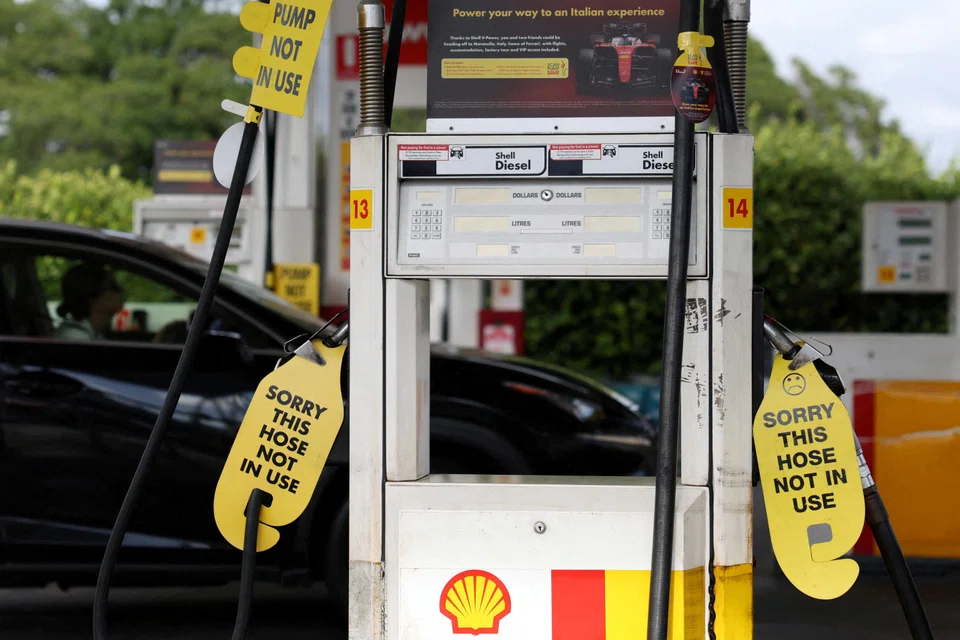
Oil has been extremely turbulent since the US and Israel began striking Iran and the Islamic Republic responded by shutting the Strait of Hormuz that connects the Persian Gulf to global markets. Oil prices have swung by an average of more than US$9 a day since the conflict began.
In Australia, fuel prices have surged to record highs, prompting the government to announce a cut to a tax on fuel to help ease inflationary pressures.
RBA staff last month estimated the direct effect via petrol prices of oil remaining around US$100 a barrel would be to lift headline inflation to around 5 per cent in the second quarter from a year earlier. The RBA aims for the 2.5 per cent midpoint of its target band.
“It does add to the challenge that we were describing before, about evaluating whether this oil shock, if it is a shock, how big of a shock it is, does some of the job of slowing the economy that rate rises would be expected to do,” Hauser said.
The RBA will receive Q1 inflation data in late April, alongside updated staff forecasts, both key inputs for next month’s meeting. Labour market data due in mid-April and consumer spending indicators will also be closely watched. BLOOMBERG
Decoding Asia newsletter: your guide to navigating Asia in a new global order. Sign up here to get Decoding Asia newsletter. Delivered to your inbox. Free.
Share with us your feedback on BT's products and services