

Banks, blue chips see heavy trade on SGX in volatile Q1
Turnover is high among stocks viewed as anchors of stability or those positioned to navigate supply chain disruptions

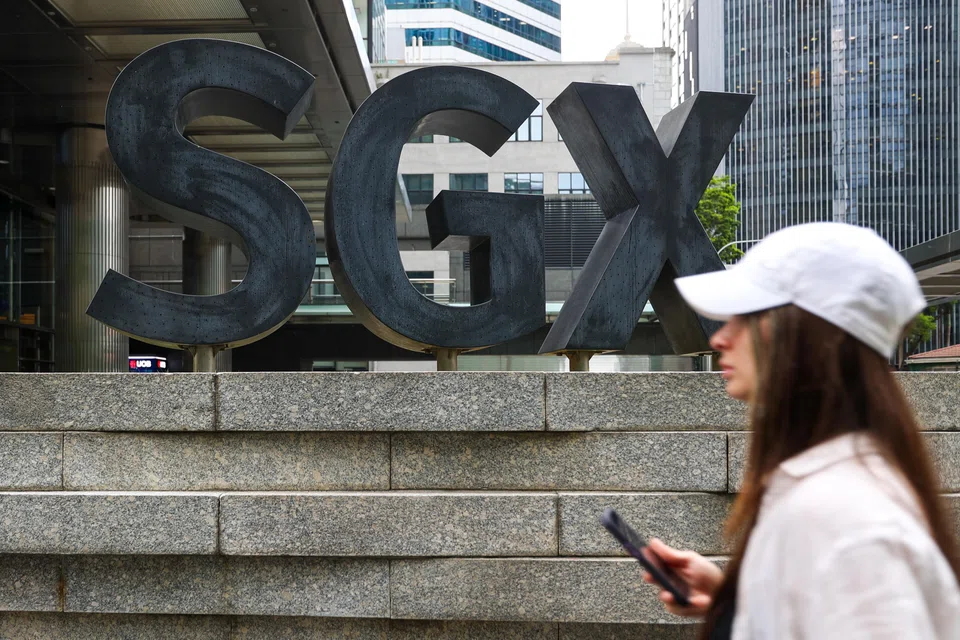
[SINGAPORE] A landscape of heightened geopolitical risk defined the first quarter of 2026, as military escalations in the Middle East and South America pressured global supply chains and fanned energy prices.
Against this volatile backdrop, trading activity on the Singapore Exchange (SGX) remained concentrated in institutional blue chips, according to Q1 data ended Mar 31 from SGX Research.
The local trio of banks – DBS , UOB and OCBC – anchored the market’s turnover for the quarter.
The concentration in financials occurred as the Straits Times Index outperformed global benchmarks, booking a 5.6 per cent total return and underscoring the index’s income-defensive characteristics.
Outside of the financial sector, Singtel , Yangzijiang Shipbuilding and CapitaLand Integrated Commercial Trust also ranked within the top six most traded stocks, with average daily turnovers ranging from S$66.7 million to S$109 million.
Turnover was high among stocks viewed as anchors of stability or those positioned to navigate supply chain disruptions.
Aviation stocks such as Singapore Airlines also experienced high trading activity in the face of operational headwinds.
The first quarter of 2026 saw direct military operations in Venezuela and conflict in Iran act as significant macro headwinds. In particular, oil and natural gas faced a whirlwind as the market processed the restriction of the Strait of Hormuz.
This pushed the price of Brent crude oil to surpass US$100 a barrel on Mar 12 and continue to generally increase throughout the month. From Feb 27 to Mar 31, Brent crude oil futures prices gained 63 per cent, said a report released by the US Energy Information Administration on Apr 7.
The energy shock became a primary transmission channel, driving up fuel and input costs for energy-importing economies.
With much of the region’s fuel imports coming through the Strait of Hormuz, markets across Asia were hit particularly hard.
In Q1, analysts said that the Republic’s domestic resilience and safe-haven status were expected to provide support to Singapore valuations despite the geopolitical uncertainty.
Decoding Asia newsletter: your guide to navigating Asia in a new global order. Sign up here to get Decoding Asia newsletter. Delivered to your inbox. Free.
Copyright SPH Media. All rights reserved.
TRENDING NOW

Once staunchly pro-China, Malaysian Chinese businesses are now distancing themselves from Beijing

Grab CEO’s wife Chloe Tong on life with Anthony Tan and finding her purpose

Could stablecoins be the future of money?
ST Engineering opens tech-focused aircraft maintenance facility in Changi; to create over 500 jobs

