

Big Tech earnings show split between AI trade winners and losers
The artificial intelligence boom is alive and well, but investors are getting more granular
THE world’s biggest technology companies posted strong earnings last week, showing that the artificial intelligence boom is alive and well. But in the stock market, investors are getting more granular as they try to divvy up the winners and losers in the AI trade.
On one end is Alphabet. Strong growth at Google Cloud and in its other AI products sent the shares soaring 10 per cent last Thursday (Apr 30), pushing their gain for the year to 23 per cent, by far the best performance among the Magnificent Seven tech giants.
The stock is now the biggest point contributor to the S&P 500 Index’s rise in 2026.
On the other end is Meta Platforms. Facebook’s parent tumbled more than 8 per cent on Thursday despite strong results as investors baulked at chief executive officer Mark Zuckerberg’s assurances about the eventual payoffs from its rapidly rising capital expenses, which are increasingly being funded with debt.
The shares are down 7.8 per cent in 2026, while the S&P 500 and tech-heavy Nasdaq 100 Index are in the green.
“I get the concern about spending, and it is healthy to question and probe,” said Talley Leger, chief market strategist at Wealth Consulting Group, which has about US$11 billion in assets under management. “But the results are good and reinforce the strategy.”
The outcome was a US$566 billion divergence on Thursday as Alphabet’s market capitalisation took off and Meta’s sank a day after their earnings reports.
“If you’re borrowing to continue putting money into AI data centres and chips and so forth, you’re being punished,” said Bob Savage, head of markets macro strategy at BNY. “If you have the cash and you are making good money from the investments, you’re being rewarded.”
More than three years into a bull market fuelled by excitement about AI and heavy investments in computing infrastructure, earnings reports are showing that two key pillars remain intact: Big Tech profit growth continues to outpace the rest of the market, and the flow of money into AI infrastructure keeps growing.
SEE ALSO






But investors are increasingly separating companies that can draw a line from spending to revenue growth and those that cannot.
With reports now in from all of the Magnificent Seven companies aside from Nvidia, the group is on pace to deliver earnings growth of 57 per cent in the first quarter, more than three times the 18 per cent estimate at the start of earnings season, based on data compiled by Bloomberg Intelligence.
The rest of the S&P 500 is on track for earnings growth of about 16 per cent.
“Tech is the bright spot in the economy right now,” Leger said. “All the engines seem to be humming, and the market is cheering that fundamental data.”
Apple and Amazon.com also offered encouragement to investors. The iPhone maker’s shares climbed 3.3 per cent on Friday, their biggest gain in months, after the company forecast revenue growth of as much as 17 per cent in the current quarter, far exceeding Wall Street estimates.
Meanwhile, Amazon shares ended the week at a record high after posting the fastest quarterly sales growth in its cloud business in more than three years.
Boosting indices
Taken as a whole, Big Tech’s results gave a substantial boost to the S&P 500 and Nasdaq 100, which ended last week at fresh records despite oil prices settling above US$100 a barrel and data showing inflation ticking higher.
Since the S&P 500 bottomed in late March, tech giants have been the driving force behind the index’s rebound.
The seven biggest companies in the benchmark – Nvidia, Apple, Alphabet, Microsoft, Amazon, Broadcom and Meta – are responsible for more than half of the advance from the Mar 30 low, indicated data compiled by Bloomberg. Nvidia is scheduled to report on May 20.
Meta was not the only Big Tech company to be punished last week. Microsoft shares sank nearly 4 per cent on Thursday after the company projected 2026 capital expenditures of US$190 billion, which overshadowed its forecast for accelerating revenue in its Azure cloud computing business.
The stock has lost 14 per cent this year, making it the worst performer among the Magnificent Seven and the biggest point drag on the S&P 500.
Of course, investors should be careful about counting out Meta, Microsoft or any of the other stocks that are struggling as investors try to sort out the AI landscape.
Sentiment can turn quickly. Just last year, Alphabet was considered on the losing end of the AI trade, while Meta was being touted as a big winner.
Cautionary tales
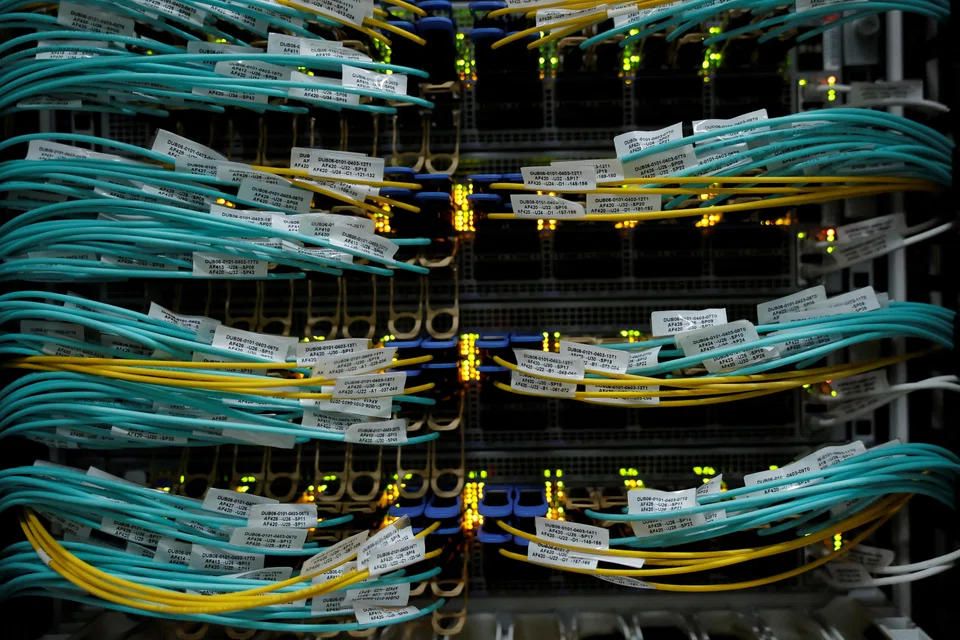
Meanwhile, the rising spending that investors are punishing Meta and Microsoft over is welcome news for suppliers such as semiconductor and memory storage makers, which have become the hottest trades on Wall Street.
The Philadelphia Stock Exchange Semiconductor Index closed at a fresh record on Friday, extending its gain in 2026 to 50 per cent.
One key outlier was Nvidia, whose shares were on a four-day losing streak in which they have declined 8.4 per cent.
The chipmaker has become the world’s most valuable company amid soaring demand for its AI accelerators. But there are increasing concerns that its grip on the market may be slipping.
Alphabet’s tensor processing units, or TPUs, are in high demand and the company will soon make them available to customers to use in their own data centres, CEO Sundar Pichai said.
Amazon said its home-grown AI chip business exceeded a US$20 billion revenue run rate. Meanwhile, Qualcomm said that a top hyperscaler is on track to begin using its new data centre chips later this year, helping to send its shares up as much as 15 per cent on Thursday, its best session in more than a year.
Further weakness in Nvidia shares would be a headwind for stock market gains considering it is the biggest weight in the S&P 500. At the same time, the divergence in the AI trade is likely to continue as investors try to divine who the winners and losers will ultimately be, noted BNY’s Savage.
“There are some cautionary tales here in the data-centres-are-everything theme,” he said. “We’re getting to the ‘not everyone is going to win in this space’ stage.” BLOOMBERG
Decoding Asia newsletter: your guide to navigating Asia in a new global order. Sign up here to get Decoding Asia newsletter. Delivered to your inbox. Free.
Share with us your feedback on BT's products and services
TRENDING NOW

DBS, OCBC, UOB rout lops billions off STI as inflation, rate concerns spook investors

Grab CEO’s wife Chloe Tong on life with Anthony Tan and finding her purpose

OCBC sheds S$8 billion in value as shares close nearly 6% down; analysts cautious on banks

Deal between tycoon friends sparks scrutiny of Philippine power sector

