BYD profit rises for first time in 5 quarters on overseas growth, pointing the way out of China car slump
Prolonged industry downturn persists into July, the latest period for which sales data is available.
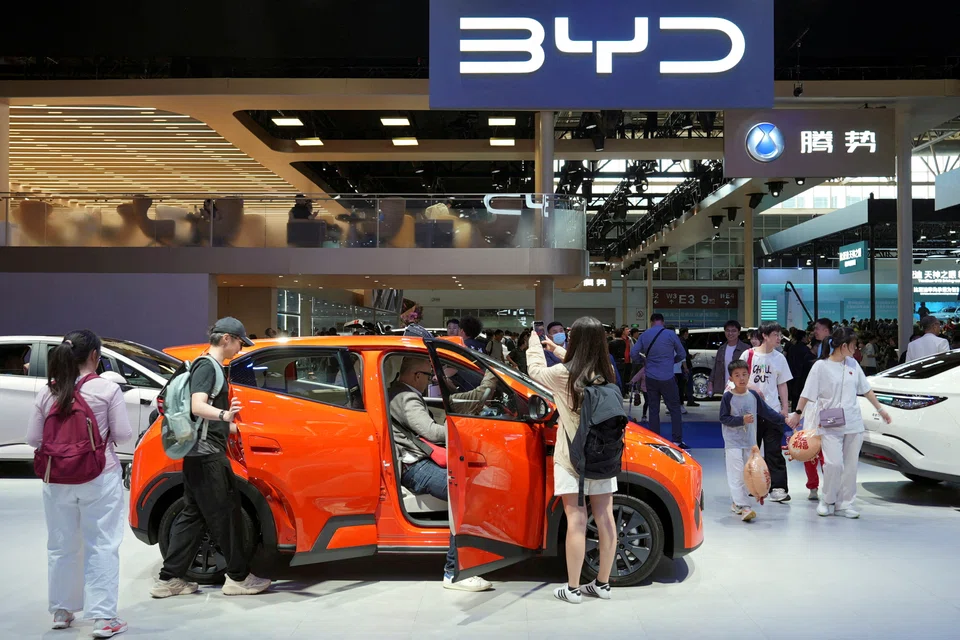
BYD’s overseas revenue exceeded what it made at home in China for the first time, helping end one of the company’s longest profit slumps and illustrating why Chinese carmakers have no choice but to try their luck outside of the world’s largest auto market.
First-half sales from overseas rose 34 per cent to 181.3 billion yuan (US$27 billion), accounting for 53 per cent of the total, while they shrank 31 per cent in Greater China, according to figures released on Aug 28 by the world’s biggest electric-vehicle maker. That powered a rise in Shenzhen-based BYD’s profit for the first time in five quarters.
The results show how the vast Chinese market, where annual vehicle sales outnumber those of the US by nearly two-to-one, has become so brutal that not even its national champion can count on making money there. That is why Chinese carmakers have increasingly turned abroad, where they can charge more for their vehicles, to make money despite ongoing geopolitical risks.
“China‘s automotive industry entered a stage of profound adjustment and divergence characterised by ‘sluggish domestic demand and robust export growth,’” BYD said in its interim report. “The group’s overseas growth momentum will continue to be unleashed.”
It has been worse for foreign carmakers such as Volkswagen and Mercedes-Benz Group, which had grown dependent over the past two decades on the Chinese market, where their sales grew exponentially.
These days, Chinese consumers increasingly see once highly sought-after foreign cars as overpriced and outdated. US standard-bearer General Motors, which once made US$2 billion in annual profit in China, has lost money there over the past two years.
BYD fell as much as 2.7 per cent in early trading in Hong Kong on Monday (Aug 31) amid a broader drop in stock markets across Asia.
A prolonged industry downturn, now in its 10th month, persisted into July, the latest period for which sales data is available.
Total passenger vehicle sales fell 21 per cent in July in the country, based on data from the China Passenger Car Association. As a result, most carmakers, including BYD, saw retail revenue slide at home due to persistent price cuts, according to Bloomberg Intelligence.
SEE ALSO





On top of that, Beijing has recently stepped up scrutiny of the industry, vowing to take a close look at automakers’ rapid development cycles to make sure they are not cutting corners on safety with their newest models.
Overseas sales surge
With things so tough at home, overseas markets have been the key growth driver for Chinese carmakers all year, with July being no exception. Total overseas sales of passenger vehicles from China surged 88 per cent in July, according to the CPCA.
It is not hard to see why.
In many countries, Chinese automakers can jack up the prices of their cars but still undercut the local competition, more than making up for the cost of shipping vehicles overseas.
Take BYD’s Seal U plug-in hybrid SUV. Its sticker price starts at 39,900 euros (US$46,200) in Germany, or more than double what the Chinese version costs in Beijing, according to car-buying websites.
Those fatter overseas margins resulted in BYD’s second-quarter net income climbing 30 per cent to 8.2 billion yuan, coming in slightly above the average analyst estimate compiled by Bloomberg and giving it a much-needed break from intense competition at home from nimble rivals like Xiaomi and Xpeng.
Though BYD’s deliveries are still falling short of the company’s annual target, exports are a big reason why analysts predict its earnings rebound will accelerate through the end of 2026. Estimates compiled by Bloomberg even call for profits and revenue to hit record highs in the fourth quarter.
Increasing hostility abroad
But challenges loom as the global trading environment grows increasingly hostile to Chinese imports. The US market, for instance, is effectively shut for Chinese carmakers.
The European Union is considering new tariffs on Chinese hybrid vehicles, German business daily Handelsblatt reported in June, curtailing a lucrative market that emerged after the bloc imposed tariffs on fully electric cars from the Asian nation.
China’s carmakers already face EU tariffs on all-electric vehicles, something that a handful of other countries have implemented as well – including Brazil and Mexico – to stem the influx of Chinese imports.
That has prompted BYD to promise to manufacture some vehicles in the markets where it sells the most, such as in Europe and South America.
But BYD’s flagship factory under construction in Hungary has come under scrutiny over alleged labour abuses by subcontractors, while a change of government in Budapest has triggered a probe into state subsidies, tax breaks and environmental exemptions previously granted to BYD.
The company, which has said it followed local laws and regulations, has delayed the start of production in Hungary until the fourth quarter, roughly a year behind its original target.
BYD is leaving no stone unturned, even seeking to make its mark in places like Japan, which has been so tough to break into that global automakers such as Ford Motor have long since abandoned their attempts to do so.
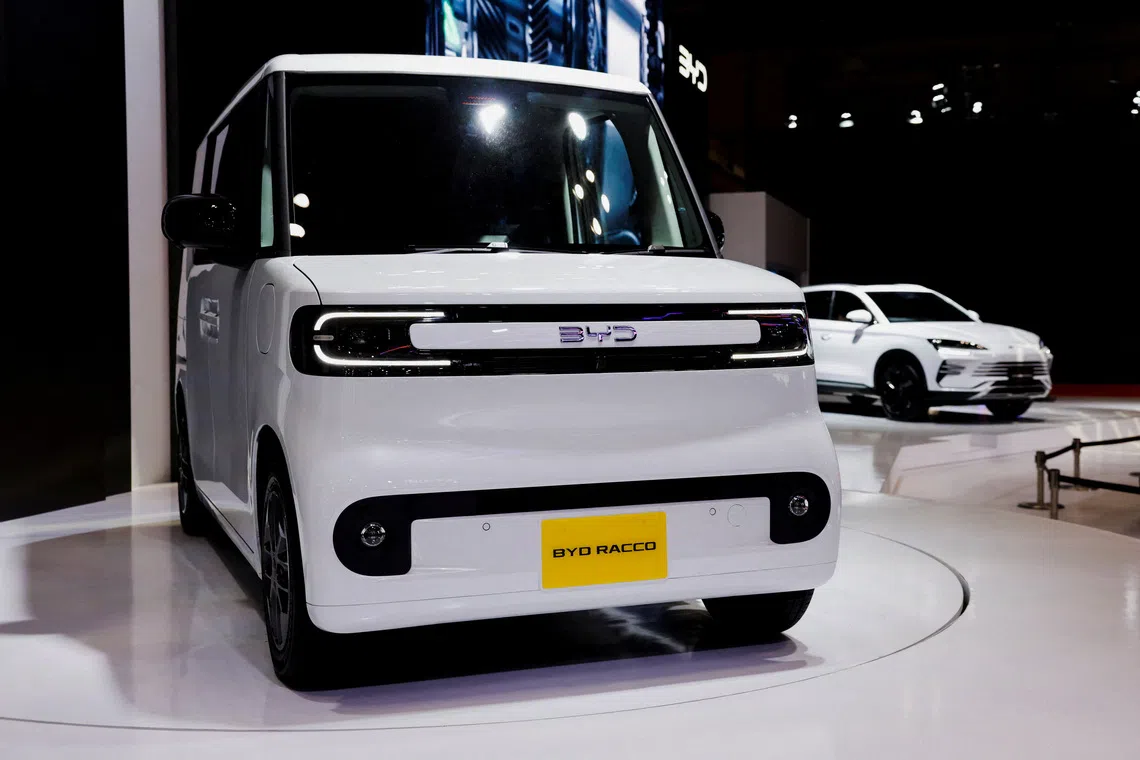
The Chinese company recently began sales of the Racco, a tiny EV designed specifically for Japan’s narrow roads, entering the biggest segment of the country’s auto industry.
Decoding Asia newsletter: your guide to navigating Asia in a new global order. Sign up here to get Decoding Asia newsletter. Delivered to your inbox. Free.
Share with us your feedback on BT's products and services