

Asian stocks rise as Iran tensions ease
Investors are awaiting earnings from megacap technology firms after a recent backlash against heavy AI spending
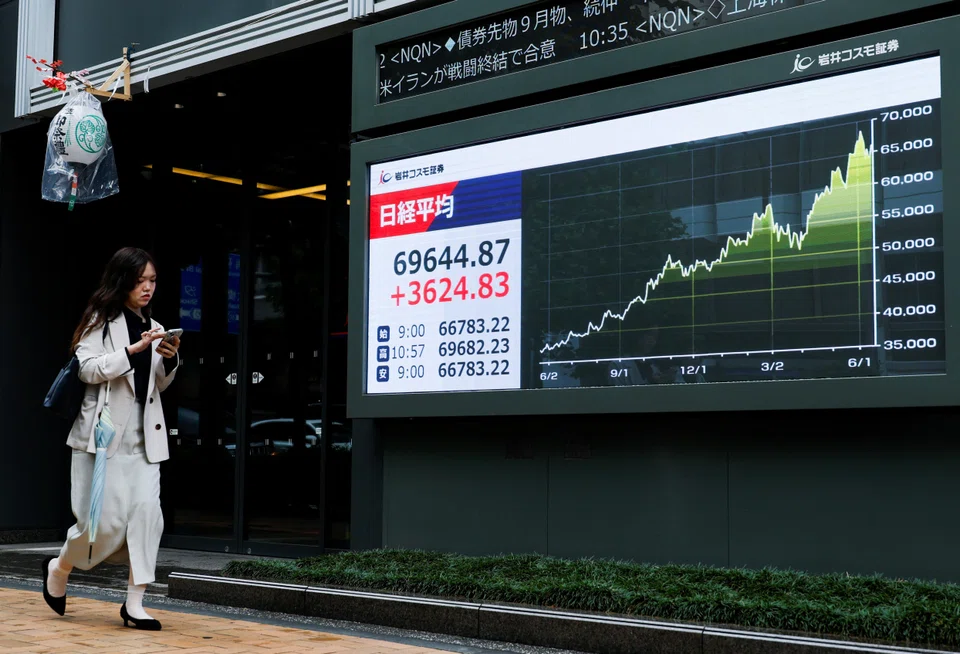
ASIAN stocks gained and oil dropped on Monday (Jul 27) as the US and Iran refrained from retaliatory strikes, easing concerns over potential disruptions to Middle East energy supplies after a recent escalation in the conflict.
Brent crude fell as much as 7.4 per cent to below US$90 a barrel, before paring losses as the US paused an almost two-week run of strikes against Iran.
MSCI’s Asia-Pacific equities gauge rose 0.4 per cent and contracts for the Nasdaq 100 Index climbed 1.2 per cent as sentiment improved after last week’s sell-off in chip stocks.
Among the main moves across markets, the S&P 500 futures rose 0.7 per cent as at 9.40 am Tokyo time. The Hang Seng futures rose 0.2 per cent, Japan’s Topix rose 0.6 per cent and Australia’s S&P/ASX 200 rose 0.9 per cent.
The US dollar, the haven of choice during the Middle East conflict, weakened against almost all of its G10 peers as tensions eased.
Treasuries gained along with government bonds in Australia and New Zealand as inflation concerns receded. Gold led precious metals higher.
“A resolution to the conflict would be a positive development,” said Shoji Hirakawa, chief global strategist at Tokai Tokyo Intelligence Lab. The pause in attacks raises “hopes that the two sides will enter negotiations”.
The lull in hostilities sets the tone for a pivotal week in markets, with traders focused on whether the Federal Reserve will raise interest rates on Wednesday after the recent surge in oil prices fuelled inflation concerns.
Investors are also awaiting earnings from megacap technology companies after a recent backlash against heavy spending on AI.


After striking Iran for 13 days, the US has apparently held off since late on Friday without explanation, raising questions about US President Donald Trump’s next move.
Iran’s army said on Sunday that Teheran had also suspended its military response.
The pause came as Iranian and Omani officials held talks over shipping through the Strait of Hormuz, raising hopes that the key oil transit route may avoid further disruption.
Tensions in the Middle East had sent oil prices soaring in July, overshadowing a tamer-than-expected reading on June consumer prices that seemed to offer officials breathing room to keep rates stable.
Add to that a demand boom fuelled by AI and the Trump administration’s announcements of new tariffs, and Fed watchers see the possibility of dissents at the meeting that takes place from Tuesday to Wednesday, if officials again leave policy unchanged.
“We think the Fed will probably not hike,” Krishna Guha, head of central bank strategy at Evercore ISI, wrote in a note. “But we cannot take the probability too low given Warsh’s refusal to set out his strategy,” he said, referring to the new Fed chair Kevin Warsh.
Three days of G7 central bank decisions begin with the Fed on Wednesday, followed by the Bank of England and the Bank of Japan.
While no changes are expected in interest rate policy, officials are likely to emphasise vigilance over the inflationary impact of higher energy prices.
Elsewhere, the Singapore dollar strengthened against the US currency after officials further tightened monetary policy.
The Monetary Authority of Singapore, which uses the exchange rate as its main policy tool rather than interest rates, raised the rate of appreciation of its policy band “very slightly”, it said. It left the width and centre unchanged.
In other corners of the market, the yield on the Treasury 10-year fell five basis points to 4.63 per cent. Non-interest-bearing gold climbed over 1 per cent to US$4,100 an ounce. The yen strengthened to about 163.60 per US dollar.
Another key focus for markets will be earnings from megacap technology companies after a recent round of sell-offs in AI stocks rekindled doubts over whether billions of dollars being poured into infrastructure will generate commensurate returns.
The sell-off showed how much the narrative around AI and the Magnificent Seven tech behemoths has shifted.
This change makes for a tough setup heading into this week, with earnings from Microsoft and Meta Platforms due on Wednesday, followed by Apple and Amazon on Thursday.
“That is shaping up as the major clearing event for the month,” said Billy Leung, an investment strategist at Global X Management.
“The market has been punishing AI capex guidance all July even when the underlying numbers beat, so the read-through from these three on spending trajectory and monetisation will do more to set direction than anything in today’s session.” BLOOMBERG
Decoding Asia newsletter: your guide to navigating Asia in a new global order. Sign up here to get Decoding Asia newsletter. Delivered to your inbox. Free.
Share with us your feedback on BT's products and services






