

Baht drops to one-year low on expectations of rate gap with US
It weakened as much as 0.5% to 33.09 per US dollar, the lowest since May 2025
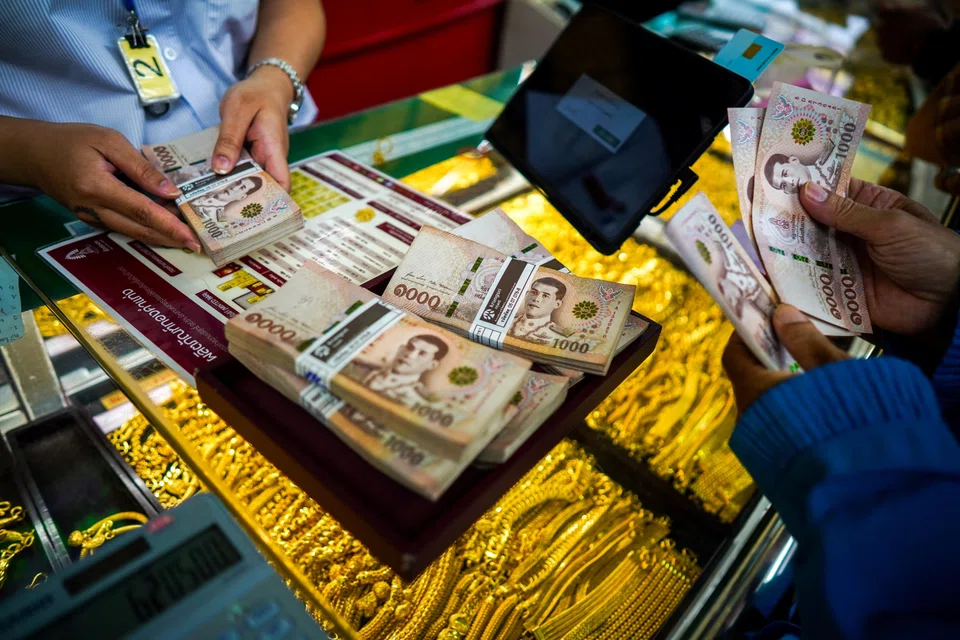
THE BAHT falls to a one-year low on expectations of a wider interest rate gap between the US and Thailand as domestic demand comes under pressure from multiple headwinds.
The Thai baht weakened as much as 0.5 per cent to 33.09 per US dollar, the lowest since May 2025. While US overnight indexed swaps are pricing in a full quarter-point Federal Reserve rate hike by October, baht swaps imply only an over 40 per cent probability of a 25-basis point increase over the next six months.
Thailand’s economic outlook remains challenging despite easing oil prices, as high household debt continues to weigh on consumption. The Bank of Thailand (BOT) earlier pledged to keep its interest rate at the current level “for as long as possible” to support the economy.
The Kingdom’s central bank maintained its key interest rate at a review on Apr 29, 2026, after weighing the economic impact of elevated oil prices due to the Iran war.
The BOT is expected to keep borrowing cost steady at 1 per cent when it meets on Wednesday (Jun 24), according to all economists surveyed by Bloomberg.
“Thailand faces multiple headwinds beyond the Iran war, including increased competition from US trade concessions, a shrinking workforce, highly indebted households, and China’s slowdown weighing on its key tourism sector,” Bloomberg Economics economist Tamara Henderson wrote in a note. BLOOMBERG; REUTERS
Decoding Asia newsletter: your guide to navigating Asia in a new global order. Sign up here to get Decoding Asia newsletter. Delivered to your inbox. Free.
Share with us your feedback on BT's products and services
TRENDING NOW

Government to bring forward raising of retirement age, give employers more financial support to create flexi-load jobs

Indonesia stocks suffer worst plunge in nearly 30 years as MSCI proposes standalone status

If Europe goes to war, the fallout will be felt in East Asia
Natural gas to stay for the long haul beyond 2050: Singapore International Energy Week panellists

