

Japan shares fall as Asian stocks slide after US tech rout, bonds rally
MSCI’s regional equities benchmark slips 0.3%, hovering around levels last seen in July
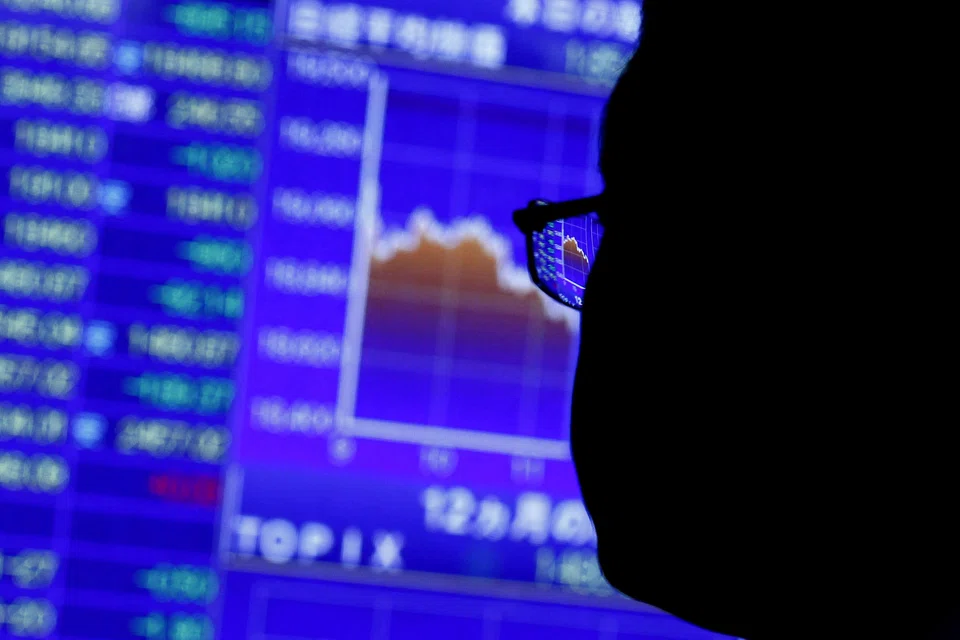
ASIAN stocks extended losses, tracking declines on Wall Street as investors rotated out of technology giants following a blistering rally earlier in 2026 and sought safety in Treasuries and currencies such as the yen.
MSCI’s regional equities benchmark slipped 0.3 per cent, declining for a second day, leaving the gauge hovering around levels last seen in July.
Taiwan’s stock exchange will be shut on Friday (Oct 23) due to a typhoon. Sentiment stayed weak as contracts for the Nasdaq 100 Index fell 0.3 per cent in early Asian trading.
Among the main moves across markets, S&P 500 futures were little changed as at 9.02 am Tokyo time. Hang Seng futures rose 0.8 per cent, Japan’s Topix fell 0.4 per cent and Australia’s S&P/ASX 200 fell 0.3 per cent.
Earlier, the Nasdaq 100 tumbled 2.9 per cent and the Philadelphia Semiconductor Index sank 6.7 per cent, their biggest declines since late June.
Tesla and Meta Platforms were among the megacaps that came under pressure following their earnings. Instead of abandoning the stock market entirely, investors rotated into defensive dividend-paying staples and utilities.
Tech remained in focus as South Korean chipmaker SK Hynix scrapped an initial public offering for its US subsidiary Solidigm after facing shareholder opposition.
The rout in the artificial intelligence trade drove investors towards the safety of bonds, with Treasuries staging their biggest rally in more than two years.
The benchmark 10-year yield declined 17 basis points to 4.95 per cent, while the yen outperformed all its major counterparts. Australian sovereign debt tracked the gains in Treasuries in early Asian trading.

Brent crude broadly held its gains to trade at around US$113.10 per barrel. Oil rallied on Thursday as deadly attacks in Saudi Arabia heightened concerns over supplies.
Technology megacaps that powered a four-year bull run in US equities bore the brunt of the selling as earnings from megacap companies added to concerns their rebound since late March had gone too far, too quickly.
The group faces fresh tests next week with results from Microsoft, Amazon and Alphabet landing alongside the US Federal Reserve’s policy decision.
“Sentiment seems to be shakier these days as investors reconsider AI-related assets,” said Eugene Leow, senior rates strategist at DBS. “With US yields still elevated by recent standards, investors may want to hedge off some of these risks by seeking safety in Treasuries.”
Treasuries surged across the curve on Thursday as the deepening rout in AI-related shares, turmoil in French markets and renewed Middle East tensions fuelled haven buying.
The rally pushed the 10-year yield below 5 per cent for the first time in a month, with buying in Treasury futures accelerating as traders unwound bearish positions.
In other corners of the market, the yen extended its gains to 156.60 per US dollar. The US currency was a touch weaker against most of its G10 peers.
Gold held its losses from Thursday’s session, when it slumped 2.8 per cent to trade just under US$4,205 an ounce.
Concerns about the sustainability of AI investment and its eventual payoff have knocked technology shares from recent highs and are beginning to weigh on the broader economic outlook. Traders also pared expectations for another Fed interest rate increase in 2026.
Crude oil was another market that traders were paying attention to.
A drone strike on Saudi Aramco’s Shaybah field killed two people without disrupting operations, while an attack on King Fahd International Airport caused casualties. Houthi rebels also claimed strikes on the Saudi port of Yanbu.
Investors are concerned that “post-election, the Iran war may escalate and potentially continue for a longer time than anticipated”, said Joseph Saluzzi, partner and co-head of equity trading at Themis Trading. “The bond rally also confirms the risk-off approach.”
In Asia, Chinese stocks will be in focus after a US$2.4 trillion slide from their May peak pushed them into a bear market. Alibaba suffered its steepest drop in two months on Thursday, dragging the Hang Seng Tech Index down 5 per cent, its biggest decline since April 2025.
“Investor sentiment remains very poor for China’s onshore and offshore markets, and without new policy or tech catalysts, this kind of volatile, directionless environment may persist into early 2027,” said Homin Lee, senior macro strategist at Lombard Odier in Singapore. BLOOMBERG
Decoding Asia newsletter: your guide to navigating Asia in a new global order. Sign up here to get Decoding Asia newsletter. Delivered to your inbox. Free.
Share with us your feedback on BT's products and services
TRENDING NOW

World’s largest offshore wind platform by Seatrium consortium on track to be completed by 2028

Is stamp collecting enjoying an analogue revival or are its best days over?

GovTech retrenches another 38 staff in second round of layoffs
MBS adjusted property Ebitda falls 20.6% in Q3 with fewer high-roller visits, weaker hold

