

Record Singapore-US rate gap may widen further on inflows and hawkish Fed outlook
Borrowing costs in the city state tend to closely track global interest rates, especially those of the US
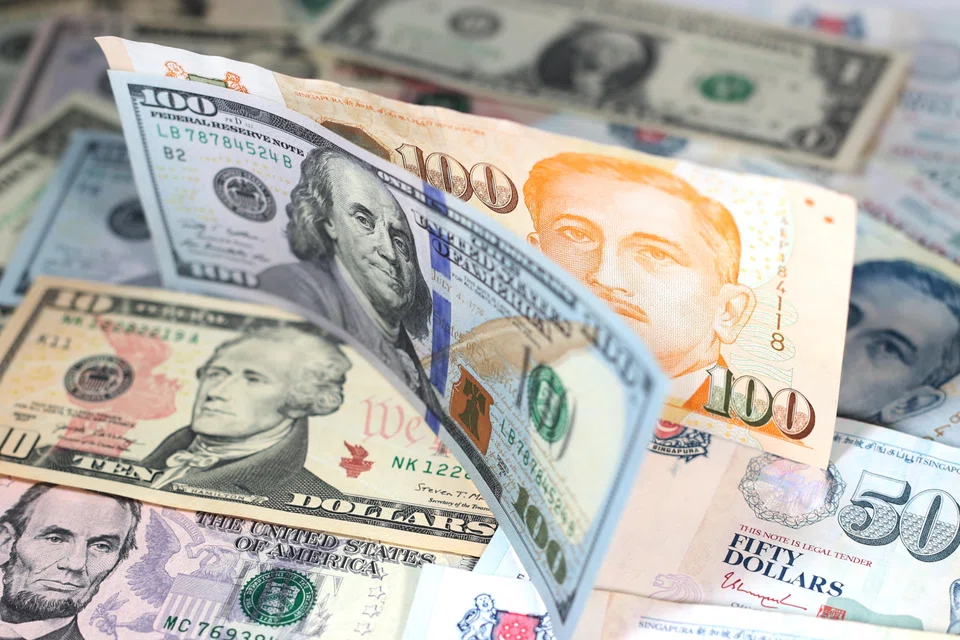
[SINGAPORE] The gap between Singapore and US swap rates has widened to a record, a trend likely to extend as foreign inflows keep the city state’s liquidity ample while inflationary pressures increase US dollar borrowing costs.
The two-year Singapore dollar swap was at a discount of 246 basis points to its US counterpart this week, the deepest based on data going back to 2020.
The momentum looks poised to intensify as a strong Singapore economy fuels expectations for currency appreciation, which may further accelerate the Iran war-induced safe-haven capital inflows. In contrast, the US Federal Reserve may come under pressure to raise interest rates due to elevated energy prices.
“We see this as a function of capital inflows and ample liquidity on the SGD side,” said Galvin Chia, an emerging Asia strategist at Societe Generale. “Inflows to Singapore have kept liquidity conditions flush, translating into more resilient SGD rates despite rising global yields.”
Singapore’s overnight interbank rate, a local benchmark of borrowing costs, hit a near nine-month low last week and remains more than three percentage points below its 2022 peak.
The Asian country’s economy grew 6 per cent on year in the first quarter, compared with 5.2 per cent estimated by economists in a Bloomberg survey. The government maintained its 2026 growth forecast of 2 to 4 per cent.
The outlook has prompted some analysts to forecast the Monetary Authority of Singapore (MAS) to tighten policy in July. The MAS uses the exchange rate, rather than interest rates as its primary monetary policy tool because Singapore is an open, trade-dependent economy. A policy tightening move effectively translates into currency appreciation.
Singapore’s political stability and economic resilience has stood out since the Middle East conflict began, spurring strong safe haven demand that has supported its bond market.
In contrast, US rates have gained as traders priced in more hawkish expectations for the Fed. The swaps market is now projecting an 80 per cent chance of a quarter-point Fed rate hike this year, versus expectations for two rate cuts by year-end on the eve of the Iran war.

The flush liquidity in Singapore has weakened a historically tight link between interest rates in the city state and the US. Borrowing costs in the small island republic tend to closely track global interest rates, especially those of the US, due to the lack of a local policy rate anchor.
The average 90-day correlation between two-year Singapore and US swap rates this year is 0.04, having declined from an average of 0.19 in 2021.
The Singapore-US rate differential will likely “remain deeply negative” as the Middle East tensions have amplified the divergence, said Winson Phoon, head of fixed-income research at Maybank Securities in Singapore. “Whether spreads widen further or narrow back will depend on how the haven flows and oil price momentum evolve in the coming months.” BLOOMBERG
Decoding Asia newsletter: your guide to navigating Asia in a new global order. Sign up here to get Decoding Asia newsletter. Delivered to your inbox. Free.
Share with us your feedback on BT's products and services
TRENDING NOW

DBS, OCBC, UOB rout lops billions off STI as inflation, rate concerns spook investors

Grab CEO’s wife Chloe Tong on life with Anthony Tan and finding her purpose

OCBC sheds S$8 billion in value as shares close nearly 6% down; analysts cautious on banks

Deal between tycoon friends sparks scrutiny of Philippine power sector

