S&P 500, Nasdaq end lower as inflation, Iran tensions weigh
As reporting season wraps up, investors are increasingly focused on valuations, macroeconomics and geopolitical developments
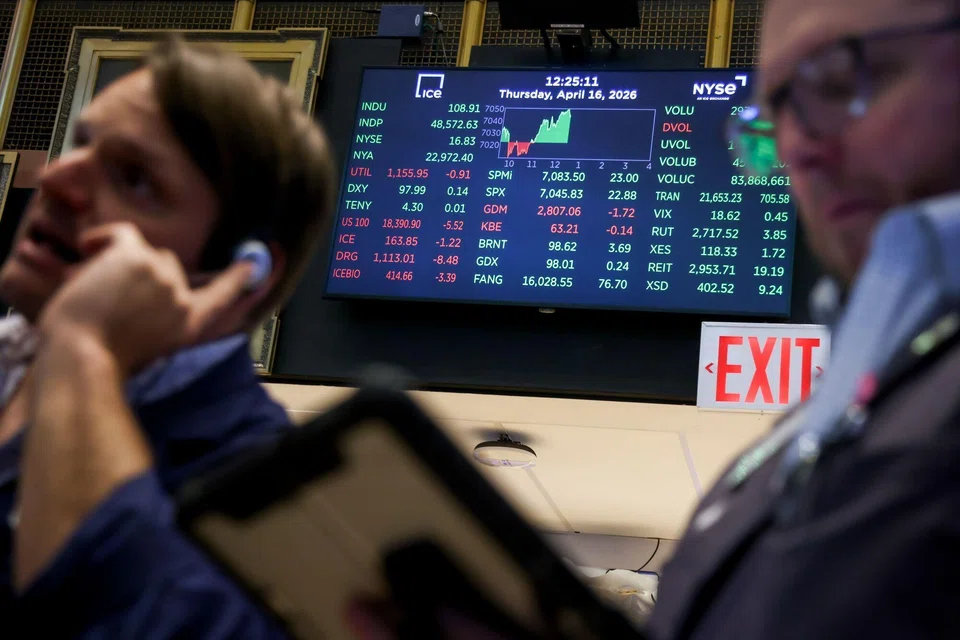
[NEW YORK] The S&P 500 and the Nasdaq closed lower on Tuesday (May 12), easing from record highs as hotter-than-expected inflation data and an increasingly tenuous US-Iran ceasefire prompted investors to take money off the table near the end of a robust first-quarter earnings season.
Weakness in tech shares dragged the Nasdaq down the most, while healthcare stocks, buoyed by a jump in Humana, helped keep the Dow in positive territory.
Despite the sell-off, the S&P 500 and the Nasdaq remain close to all-time highs.
As reporting season wraps up, investors are increasingly focused on valuations, macroeconomics and geopolitical developments.
While the PHLX Semiconductor index dropped 3 per cent, the index has soared 65.4 per cent this year, benefiting from the fervour about artificial intelligence.
“Our call has been for the market to flatten out simply because greed occurs during earnings season and fear after,” said Jay Hatfield, CEO and portfolio manager at InfraCap in New York.
Consumer price rise disappoints
Economic data showed consumer prices rose at a faster pace last month than analysts anticipated as the closure of the Strait of Hormuz due to the war with Iran continued to disrupt crude supply.
“Inflation is not getting any better unless oil prices go down,” Hatfield added. “That’s the history that you can set your watch by.” The Iran war, in its 11th week, showed no signs of a near-term resolution. US President Donald Trump declared the truce was “on life support” after Teheran rejected a US proposal to end the conflict, sticking with a list of demands Trump called “garbage”.
The notion of a protracted conflict raises the probability that spiking energy prices could metastasise into broader, more entrenched inflation. That has all but squelched hopes for an interest rate cut from the Fed this year under the presumed chairmanship of Kevin Warsh, whom the US Senate confirmed to the Fed board on Tuesday.
“Warsh is not going to be able to cut rates even if he wants to, and I do not think he will want to,” Hatfield said, adding he was optimistic about Warsh’s Fed reform plans.
The odds of a rate hike are rising. Financial markets are pricing in a 30.5 per cent likelihood that the central bank will implement a 25-basis-point increase to its Fed funds target rate in December, up from 21.5 per cent on Monday, according to CME’s FedWatch tool.
Trump is scheduled to travel to Beijing this week to meet Chinese counterpart Xi Jinping to address an array of issues, including tariffs, US military aid to Taiwan, China’s potential role in brokering a peace deal with Iran, and the extension of a trade agreement on critical rare earth metals.
The Dow Jones Industrial Average rose 56.09 points, or 0.11 per cent, to 49,760.56, the S&P 500 lost 11.88 points, or 0.16 per cent, to 7,400.96 and the Nasdaq Composite shed 185.92 points, or 0.71 per cent, to 26,088.20.
Of the 11 major sectors in the S&P 500, consumer discretionary and tech suffered the largest percentage losses, while healthcare and consumer staples led the gainers.
Humana advanced 7.7 per cent after Bernstein’s 36 per cent price target hike. GameStop dipped 3.5 per cent following eBay’s rejection of the meme stock trailblazer’s US$56 billion takeover bid.
Zebra Technologies jumped 11.4 per cent after the barcode scanner maker raised its annual sales growth forecast, betting on robust demand for its products that help automate manufacturing workflows. Hims & Hers Health tumbled 14.1 per cent after the telehealth firm missed Wall Street estimates for first-quarter revenue and posted a surprise loss.
Venture Global jumped 14.2 per cent after the LNG exporter raised its annual adjusted core profit forecast.
Declining issues outnumbered advancers by a 1.79-to-1 ratio on the NYSE. There were 199 new highs and 125 new lows on the NYSE.
On the Nasdaq, 1,605 stocks rose and 3,134 fell as declining issues outnumbered advancers by a 1.95-to-1 ratio.
The S&P 500 posted 16 new 52-week highs and 29 new lows while the Nasdaq Composite recorded 62 new highs and 167 new lows.
Volume on US exchanges was 19.63 billion shares, compared with the 18.08 billion average for the full session over the last 20 trading days. REUTERS
Decoding Asia newsletter: your guide to navigating Asia in a new global order. Sign up here to get Decoding Asia newsletter. Delivered to your inbox. Free.
Share with us your feedback on BT's products and services