



US stocks: Wall Street ends down as oil prices, Treasury yields rise
All three major indices closed lower for the day
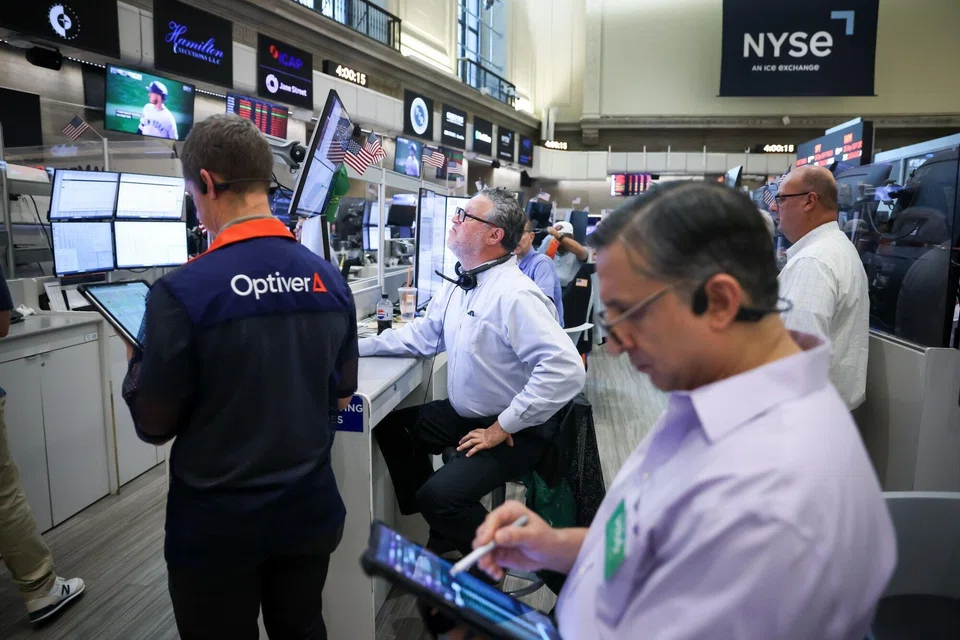
WALL Street ended lower on Wednesday (Sep 23), pulled down by Alphabet and Amazon, as Treasury yields climbed and Iran’s president said Teheran would never surrender to US pressure.
Oil prices rose almost 4 per cent and the S&P 500 energy sector index rallied after Iranian President Masoud Pezeshkian’s speech at the UN, a day after US President Donald Trump warned he could “annihilate” Iran.
A survey showed US business activity raced to a more than five-year high in September, pushing government bond yields higher and raising expectations the Federal Reserve will increase interest rates at its October meeting.
Yields on 2-year Treasuries touched their highest since 2024, while 10-year Treasury yields hit their highest since 2007.
“The stock market wants a resolution to the (Middle East) conflict, and if we don’t get that, we will have higher rates for longer, and that’s going to continue to weigh on the equity market,” said Lauren Cassidy, chief investment officer at Founders 100 ETF in Dallas.
Meta Platforms rose 1 per cent, bringing its gain this week to 12 per cent following a strong reception of its “Muse” AI assistant, which analysts say could benefit tech infrastructure stocks, while challenging banks, online shopping platforms and other consumer businesses.
Google parent Alphabet fell 3.8 per cent. Amazon, which has blocked Muse from its shopping platform, dropped 2.2 per cent.
The PHLX chip index dropped 1.2 per cent, with Nvidia down 1.5 per cent.
Expedia and Airbnb both fell more than 7 per cent.
The Nasdaq recorded record-high closes in the previous two sessions as Wall Street remained optimistic about AI-related companies. The S&P 500 is less than 2 per cent below its record high close on Aug 13.
US President Donald Trump welcomes Chinese President Xi Jinping to Washington on Wednesday for a three-day visit. The agenda includes extending the trade truce reached last year between the two superpowers, AI regulation and US arms sales to Taiwan.
The S&P 500 declined 0.75 per cent to end the session at 7,706.05 points.
The Nasdaq declined 1.13 per cent to 26,936.04 points, while the Dow Jones Industrial Average declined 0.68 per cent to 51,511.59 points.
Nine of the 11 S&P 500 sector indexes declined, led lower by utilities, down 1.72 per cent, followed by a 1.49 per cent loss in communication services.
Volume on US exchanges was relatively heavy, with 17.0 billion shares traded, compared to an average of 16.5 billion shares over the previous 20 sessions.
The S&P 500 is trading just under 19 times expected earnings, its lowest valuation since 2023, according to LSEG data. AI-related heavyweights are responsible for much of the recent increase in earnings expectations.
Markets also parsed comments from Federal Reserve Governor Michael Barr, who said the central bank will likely need to deliver further interest rate hikes as inflation remains north of the Fed’s 2 per cent target.
Traders are now pricing in a 71 per cent chance that the Fed will raise interest rates at its policy meeting next month, the CME Group’s FedWatch Tool showed.
Casual dining chain Cracker Barrel rallied 4.5 per cent after beating fourth-quarter sales estimates.
Paychex dropped 8.8 per cent after the HR and payroll services provider said that its largest segment missed first-quarter revenue estimates.
Declining stocks outnumbered rising ones within the S&P 500 by a 1.9-to-one ratio.
The S&P 500 posted 14 new highs and 33 new lows; the Nasdaq recorded 41 new highs and 186 new lows. REUTERS
Decoding Asia newsletter: your guide to navigating Asia in a new global order. Sign up here to get Decoding Asia newsletter. Delivered to your inbox. Free.
Share with us your feedback on BT's products and services
TRENDING NOW

GCash parent Mynt rises in market debut after South-east Asia’s top 2026 IPO

In the age of AI, what is a university education for?

Singapore to use ‘every legal and regulatory lever’ against companies linked to haze: Shanmugam
‘IPOs are not the only vehicle’: KKR heads for record exits even as firms stay private for longer

