US stocks: Wall Street falls as Middle East concerns offset earnings optimism
Stocks have rallied recently on the belief that a peace deal could be near
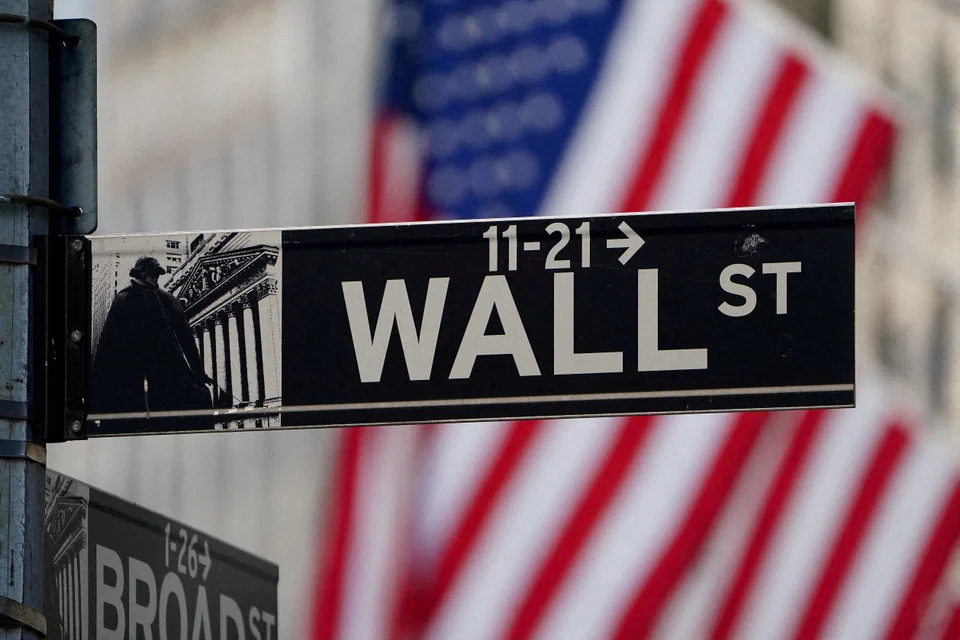
[NEW YORK] US stocks closed lower on Tuesday, with early gains evaporating as renewed concerns about the Middle East war outweighed initial optimism over a round of solid corporate earnings.
Iran could attend talks with the United States in Pakistan if Washington abandons its policy of pressure and threats, a senior Iranian official told Reuters, adding that Teheran rejects negotiations aimed at surrender.
Equities extended declines late in the session after reports that US Vice-President JD Vance had called off his trip to Pakistan for peace talks.
Stocks have rallied in recent weeks on the belief that a peace deal could be on the horizon.
“There’s two things going on - what is the resolution going to be or the path going to be for Iran, but in the meantime if that wasn’t there, you’ve got really good expectations for earnings coming in and the companies are pretty much reporting that way, and the economy is doing fine,” said Thomas Martin, senior portfolio manager at GLOBALT Investments in Atlanta.
“The wild card is indeed what happens with Iran, and nobody knows, and it’s baffling to me to think that people think that it’s going to be OK.”
The Dow Jones Industrial Average fell 293.18 points, or 0.59 per cent, to 49,149.38, the S&P 500 lost 45.13 points, or 0.63 per cent, to 7,064.01 and the Nasdaq Composite lost 144.43 points, or 0.59 per cent, to 24,259.96.
The benchmark S&P index had earlier been up as much as 0.4 per cent on the day.
Earlier economic data from the Commerce Department showed US retail sales increased more than expected in March as the war with Iran boosted petrol prices and led to a record surge in receipts at service stations.
Retail sales jumped 1.7 per cent last month, the largest rise since March 2025, after an upwardly revised 0.7 per cent gain in February and above the 1.4 per cent estimate of economists polled by Reuters.
Earnings, AI reassure investors
Optimism around AI and upbeat earnings have cheered investors, with first-quarter growth expectations of around 14 per cent, according to LSEG data.
JPMorgan raised its year-end target for the S&P 500, citing AI and tech-driven earnings, while Amazon said on Monday it will invest up to US$25 billion in Anthropic, signaling megacap companies are still willing to spend massively on the AI technology.
Amazon shares closed up 0.66 per cent. The S&P 500 energy index rose 1.31 per cent as the sole advancer among the major S&P sectors due to another jump in crude prices on Middle East tensions.
UnitedHealth jumped 7 per cent after the healthcare conglomerate raised its annual profit forecast and beat Wall Street expectations for the first quarter, and was the biggest boost to the Dow, contributing roughly 138 points to the upside.
Apple shares also garnered attention, losing 2.52 per cent after the company said CEO Tim Cook would hand over the reins to longtime hardware boss John Ternus.
Warsh hearing in focus
Investors were also digesting comments from Kevin Warsh, Trump’s nominee to lead the Federal Reserve, whose confirmation hearing wrapped up in the Senate on Tuesday.
Warsh said he had made no promises to President Donald Trump about cutting interest rates, as he tried to assure US senators mulling his confirmation to lead the US central bank that he would act independently of the White House while pursuing broad reforms.
Republican Senator Thom Tillis has promised to block Warsh’s confirmation until the Department of Justice ends an investigation into current Fed Chair Jerome Powell that Tillis says threatens the central bank’s independence.
The impasse could affect monetary policy, especially as Trump has vowed to fire Powell if he does not leave when his term ends in May.
Declining issues outnumbered advancers by a 2.67-to-1 ratio on the NYSE and by a 2.53-to-1 ratio on the Nasdaq.
The S&P 500 posted 50 new 52-week highs and four new lows while the Nasdaq Composite recorded 144 new highs and 62 new lows.
Volume on US exchanges was 18.08 billion shares, compared with the 18.4 billion average for the full session over the last 20 trading days. REUTERS
Decoding Asia newsletter: your guide to navigating Asia in a new global order. Sign up here to get Decoding Asia newsletter. Delivered to your inbox. Free.
Share with us your feedback on BT's products and services