ChatGPT creator OpenAI loses bid to block Singapore startup’s GemGPT trademark
Porolis Technologies, which uses AI to assess gemstones, can proceed with the name
[SINGAPORE] ChatGPT maker OpenAI has failed to stop a Singapore startup from registering the name “GemGPT”, after an intellectual property tribunal found that sharing the letters “GPT” was not enough to establish its case.
Porolis Technologies, which uses artificial intelligence to assess gemstones, can proceed with registering the trademark following the Intellectual Property Office of Singapore’s (IPOS) decision on Oct 28.
The startup, part of the BP de Silva group, was also awarded S$10,000 in costs, including disbursements. OpenAI’s five objections to the trademark application were all rejected.
At the heart of the dispute was whether people in Singapore would see “GPT” as a part of OpenAI’s products and services, or simply a type of AI technology.
Porolis had applied to register GemGPT for its AI-powered gemstone authentication and related software services.
Principal assistant registrar Gabriel Ong found that, as at May 22, 2023, when Porolis applied to register GemGPT, OpenAI had not established that the three letters alone identified its business.

The assessment turned on public perception at that date, less than six months after ChatGPT’s launch on Nov 30, 2022.
Porolis, founded in 2022, develops technology to help determine the grade, authenticity and treatment of gemstones, using images and optical data. Its parent group has its core business in gemstones and jewellery.
According to the decision, Porolis said it chose “Gem” to refer to gemstones and “GPT” to describe its use of generative AI models. GPT stands for “Generative Pre-trained Transformer”, a term referring to a type of AI model.
SEE ALSO
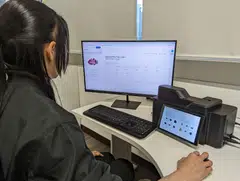
Its service is neither built on nor powered by OpenAI’s models. Porolis said it developed its systems using data that it owns or licenses, including samples labelled by gemmologists.
Why OpenAI lost the GemGPT trademark bid
OpenAI argued that GemGPT conflicted with its earlier registered trademarks, including ChatGPT and numbered GPT marks such as “GPT-3” and “GPT-4”.
Its objections included the likelihood of public confusion, harm to its well-known logos and an allegation that Porolis had applied for the name in bad faith.
But Ong found that ChatGPT and GemGPT had to be considered as whole names, rather than giving disproportionate weight to the letters they shared.
Although some of the companies’ services overlapped, this did not outweigh the other factors pointing against a likelihood of confusion.
“The ultimate impression given is that ‘GemGPT’ concerns an unrelated AI or technology product or service for gemstones,” he said.
The public would not be likely to mistake GemGPT for OpenAI’s marks, or assume that they came from the same or related businesses, simply because both contained “GPT”, he found.
OpenAI also failed to establish that GemGPT would weaken ChatGPT’s distinctiveness by causing consumers to associate the two.
“In my view, blurring does not arise simply because both marks contain ‘GPT’,” Ong said.
Comparing with Gmail: “Mail” non-distinctive element
Ong drew a comparison with Gmail: the fact that it is well-known would not, by itself, prevent another business from using the non-distinctive element “mail” for email or traditional mail services.
On the bad-faith allegation, OpenAI argued that Porolis had sought to ride on its own reputation. It pointed to the application being filed less than six months after ChatGPT’s launch.
Porolis countered that knowing about ChatGPT was insufficient to establish bad faith, and that GPT described a type of technology used by others in the industry.
Ong accepted that Porolis knew or must have known of OpenAI and ChatGPT. But this did not mean its conduct fell below acceptable commercial standards.
“Against this backdrop, the mere fact that the Application Mark contains the letter string ‘GPT’ does not, without more, justify a finding of bad faith,” he said.
He also stressed that the ruling did not mean OpenAI could never establish that GPT was distinctive.
“At a future relevant date, based on some other evidence, it could be possible,” he said. THE STRAITS TIMES
Decoding Asia newsletter: your guide to navigating Asia in a new global order. Sign up here to get Decoding Asia newsletter. Delivered to your inbox. Free.
Share with us your feedback on BT's products and services