

Citi targets globally ambitious firms as geopolitical de-risking drives Singapore flows
Its commercial bank revenue in Singapore is up 21% in the first seven months against a year ago

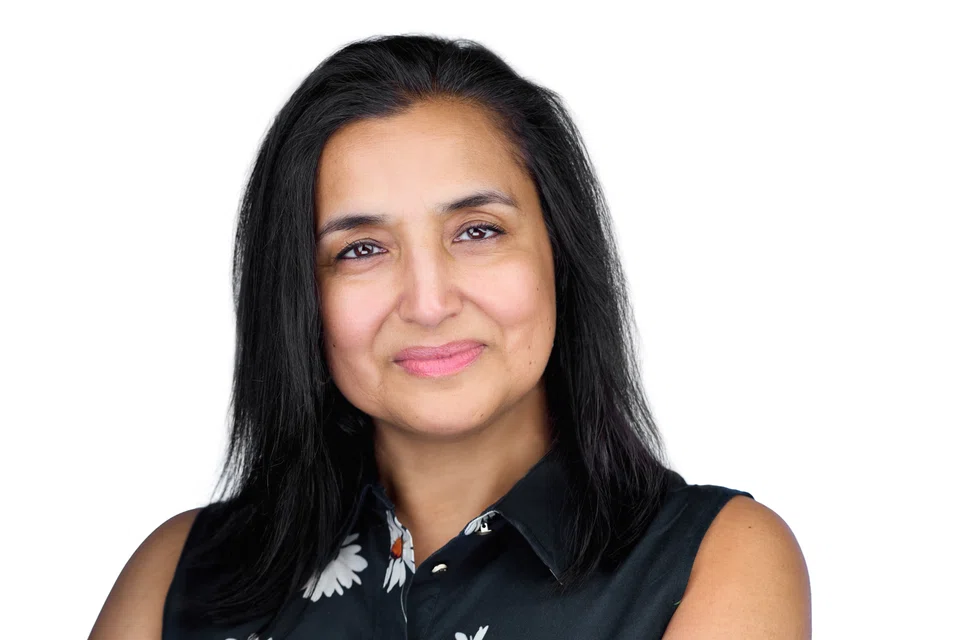
[SINGAPORE] Citi is targeting mid-sized companies with global ambitions in Singapore, as geopolitical and supply chain risks push businesses to spread their operations across more markets while centralising regional decision-making in the Republic.
The shift is driving more corporate flows through Singapore, with Citi experiencing particularly strong inbound growth from North Asia, the US and India. Singapore-based companies expanding across Asia and beyond are also contributing to outbound flows.
Tasnim Ghiawadwala, global commercial bank head at Citi, said: “That kind of global ambition that we see with our clients helps Singapore because of the hub nature.”
For Citi, the sweet spot in Singapore is companies that have outgrown single-market banking and increasingly require cross-border capabilities as their businesses expand, she added.
This growth is reflected in the revenue for its commercial bank business in Singapore, which rose 21 per cent in the first seven months of the year, compared with the same period a year earlier.
Citi’s commercial bank segment serves mid-sized companies with annual sales turnover of around US$10 million to US$3 billion.
“Can’t put all the eggs in one basket”
As a financial hub, Singapore benefits from being used as a location to set up regional headquarters for companies that have operations around South-east Asia, she said.
Asean gains from the “China+1” strategy, as a lot of the bank’s clients are looking to have multiple locations now, compared to previously where most operations were in China.
“Our clients are realising that (they) can’t put all (their) eggs in one basket,” she said. “Singapore plays a role in kind of almost being a mediator... a lot of the flows we see are via Singapore.”
Volatile logistic costs – from tariffs, maritime choke points and port turnaround times – also require dynamic route planning and multi-vendor sourcing.
With the Johor-Singapore Special Economic Zone, mid-market enterprises are also weighing twin-hub models where they retain high-value research and development, treasury and strategic headquarters in Singapore, while relocating labour and land-intensive manufacturing or back-office operations across the Causeway.
But, she expects Singapore to continue to be a place to centralise decision-making, even as commercial operations span the region, given its stability, trade agreement depth and standing as a trusted financial and legal jurisdiction.
Growth in the digital economy
Citi is seeing broad-based growth among its commercial banking clients in Singapore, spanning trading, manufacturing, digital technology, communications and fintech.
Ghiawadwala noted that the client base in Singapore broadly reflects the Republic’s major economic contributors such as trade, manufacturing, finance and insurance, logistics and professional services.
But a particular area of high growth is with clients in the digital economy, such as in the artificial intelligence infrastructure and fintech spaces.
She added that Singaporean mid-market clients face the same challenges as other growing, internationally active companies elsewhere in the world: currency volatility, global trade and regulatory shifts, and operational complexity of running a business in multiple markets.
Citi is looking to address these needs through its global network, with Singapore serving more than 50 cross-border corridors for its commercial banking clients. The Republic is a particularly critical corridor for serving Chinese, US and Indian clients, she added.
Going forward, Ghiawadwala expects Singapore’s commercial banking business to grow at a similar pace, and said that there is “still quite a large number of untapped companies” that would require its cross-border capabilities.
These include access to its global network and product capabilities, as well as connections to its investment banking and wealth businesses.
While competition for corporate banking business is intensifying across the region, she believes that there is room for different banks to play to their strengths.
“Our role is to help our clients with ambitions to go global, to help them connect into the world and make their life easy.”
TRENDING NOW
8 public officers referred to police over property buys near unannounced MRT stations: Chan Chun Sing

Grab CEO’s wife Chloe Tong on life with Anthony Tan and finding her purpose
Retrenched PMETs who return on lower pay see median 25% wage cut

Hao Mart owner resisting OG’s mortgage foreclosure on his Tanglin GCB

