From data centres to finance: analysts identify SGX’s best proxies to capture AI boom
Big names such as Singtel and DBS are among the eight companies identified as potential beneficiaries

[SINGAPORE] Even without any direct artificial intelligence (AI) players in the Singapore market, analysts say local investors do not need to look abroad if they wish to capture some profits from the AI boom.
“(We) do see (a) few companies which can benefit from the AI wave directly on the revenue side or indirectly through efficiency gains,” Maybank Research analyst Hussaini Saifee told The Business Times.
Manuel Villegas, next generation research analyst at Julius Baer, noted in a report released on Sep 11: “There is no question about the ongoing expansion of AI infrastructure for the time being.”
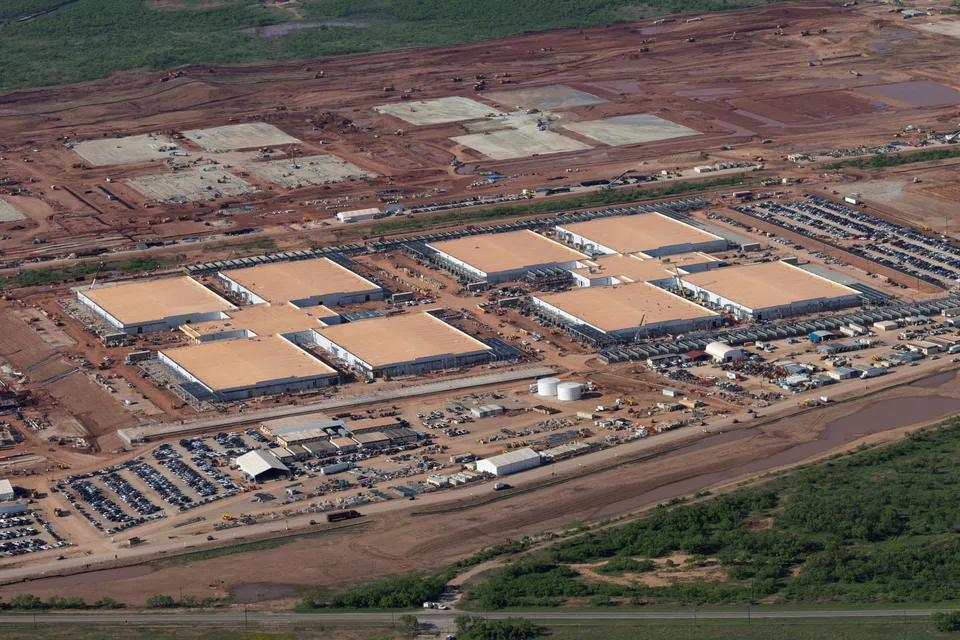
Data centres
Power grid and land constraints in the US amplify offshore data centre appeal, Villegas said.
Hussaini pointed to Singtel as one of the potential beneficiaries. He said: “Singtel’s AI exposure primarily comes through its data centre arm, Nxera, and its neocloud and GPU (graphics processing unit)-as-a-service platform, RE:AI, which directly serves AI clients.”
He noted that Singtel has further upside from potential wins in new Singapore data centre capacity, and expansion into “Tier-1” markets such as Japan and South Korea, supporting an elevated growth trajectory well beyond financial year 2028.
He added that Singtel is transitioning from experimentation to scaled deployment on the neocloud side. Neocloud, which is a new form of cloud-providing service, has gained traction in the past few months, with Microsoft’s Nebius partnership and Oracle’s bullish guidance highlighting the strong underlying demand for it.
In addition to Singtel, Hussaini also noted that CSE Global will also likely benefit from the data centre boom in the US such as Project Stargate.
“Currently growing with one Faang (Facebook or Meta, Amazon, Apple, Netflix, Google) customer but we expect many more orders from this existing customer and a potential new customer by the end of this year in this space,” Hussaini said. He expects 50 per cent of CSE Global’s revenue to be data-centre related by 2027/2028.
The last data centre-related stock Hussaini identified was Keppel DC Reit , which recently acquired two AI-ready data centres in Singapore and one in Tokyo. He noted that it is repositioning its portfolio by divesting older data centres and might be securing extra power to convert to AI-ready data centres. He also noted that its sponsor, Keppel, inked a strategic partnership with Amazon Web Services.
Sembcorp Industries is also a potential beneficiary in this space, Hussaini said, noting that it is the leading power provider to data centres in Singapore with 33 per cent of data centre energy.
“(Sembcorp Industries) counts data centre players like Singtel, ST Telemedia Global Data Centres and Equinix as its key customers,” he said.
Semiconductors
Despite the Republic’s small size, it also has a considerable stake in the semiconductor industry.
Analyst Ben Chong from Phillip Securities told BT that semiconductor manufacturer Frencken is a stock to watch to capture the AI boom. Frencken, he believes, is the key supplier for components in the most advanced lithography machine used to produce two-nanometre, semiconductor chips by its Netherlands-based customer.
“With hyperscalers’ strong demand for AI chips and rising sovereign AI investments, we are optimistic about the demand for advanced chip components over the next two years,” he said.
He also identified semiconductor test-equipment maker AEM as a stock that can provide investors with AI exposure, noting that it is collaborating with a large integrated device manufacturer to start graphics Dram memory chip production test in 2025. He also said that AEM is working with new AI customer chips to start early production tests in 2025, which Chong thinks will slowly ramp up in 2026.
“Given the strong demand for Dram memory chips and high-end GPU/CPU (central processing unit) chips, we think AEM is well-positioned to capture a potential boom in AI semicon chips,” he said.
Despite the positive outlook of semiconductor stocks, Chong advised investors to monitor for potential headwinds in the semiconductor industry, notably any new revenue and capital expenditure from high-end semiconductor foundries, equipment and memory manufacturers.
He also advised investors to watch out for any news regarding tariffs on high-end semiconductor chips.
Not just physical infrastructure
Hussaini noted that ST Engineering has been using AI extensively in various verticals such as aircraft and engine maintenance, repair and overhaul, smart mobility, as well as AI-enabled cybersecurity systems which will help in its defence vertical.
He pointed out that DBS has been commercialising AI-use cases such as deploying predictive models to capture deposit flows and delivery above industry liquidity growth.
“Strong tech investments in the past decade should enable DBS to overlay AI-developments quickly and deliver hyper-personalised services to clients, driving up revenues and lowering the cost to serve,” he said.
DBS expects the economic value from its AI use to top S$1 billion this year.