

DBS sees 46% upside for Jardine Matheson; analysts expect it to surpass ‘conservative’ targets
They see JMH’s goals as ‘achievable minimum yardsticks’ that reinforce the group’s strategic transformation story

[SINGAPORE] Analysts are generally upbeat about Jardine Matheson Holdings (JMH) following its inaugural Investor Day on Tuesday (Jun 16).
The Hong Kong-based group announced various targets then, including dividend growth of at least 5 per cent annually to 2030 and a US$500 million share buyback programme running to end-2027.
Led by recently appointed chief executive Lincoln Pan, the group also aims to deliver annual five-year total shareholder returns of at least 9 per cent through to 2030, and is committed to recycling at least US$4 billion in capital from its portfolio (excluding commitments from subsidiaries Hongkong Land and Astra).
It is also looking to build at least US$200 million in additional profit after tax and minority interests through inorganic acquisitions. Analysts see the new long-term targets as conservative but “achievable minimum yardsticks” that reinforce the conglomerate’s strategic transformation story.
They are maintaining their positive share-price outlooks, with Macquarie Equity Research looking at upside potential of 32.2 per cent from JMH’s closing price on Tuesday of US$63.55. DBS Group Research predicted 46.3 per cent gains in a note on Wednesday.
Over the past month, Singapore and London-listed JMH and subsidiary Jardine Cycle & Carriage (Jardine C&C) have seen their shares tumble 12 per cent and 16 per cent, respectively. They closed at US$63.29 and S$27.18, respectively, on Thursday.
Conservative shareholder return target
CGS International (CGSI) said in a research note on Wednesday that it observed a generally cautious tone during the analyst Q & A session, with concerns mostly centred on the lack of long-term revenue and net profit guidance.
There was also focus on the “seemingly conservative total shareholder return target, as JMH had already achieved 8.8 per cent in 2025, on a five-year annualised basis”.
Macquarie shared a similar sentiment, stating that the “9 per cent shareholder return target is a bit light... but appears to be a reachable minimum yardstick”. It maintained its “outperform” rating on the stock with an unchanged fair-value target of US$84.


DBS pointed to an even more bullish 12-month price of US$93. The lender added that, notwithstanding the absence of bottom-line compound annual growth rate (CAGR) targets from JMH, it remains “positive on JMH’s transformation story”.
It said that, ultimately, JMH is not an operational business but an asset manager. “We are not overly concerned by the lack of concrete earnings CAGR guidance, as management framed total shareholder returns as the more relevant KPI (key performance indicator) for a capital allocation-led investment company.”
Clearer capital-allocation discipline
On the US$4 billion capital-recycling target, analysts across the board welcomed the group’s clearer capital-allocation discipline.
DBS noted the “stricter” capital-allocation framework, with future investments having to clear a minimum return hurdle rate of more than 11 per cent, and divestments targeting assets with returns of under 7 per cent. The bank’s analysts were pleased that “management also provided greater clarity on capital-deployment priorities”.
Roughly 50 per cent of future capital allocation will be earmarked for mergers and acquisitions, with the rest split equally between dividend payouts and share buybacks.
“Management reiterated that further acquisitions remain a key long-term priority, with healthcare, wealth and infrastructure identified as preferred sectors,” added DBS.
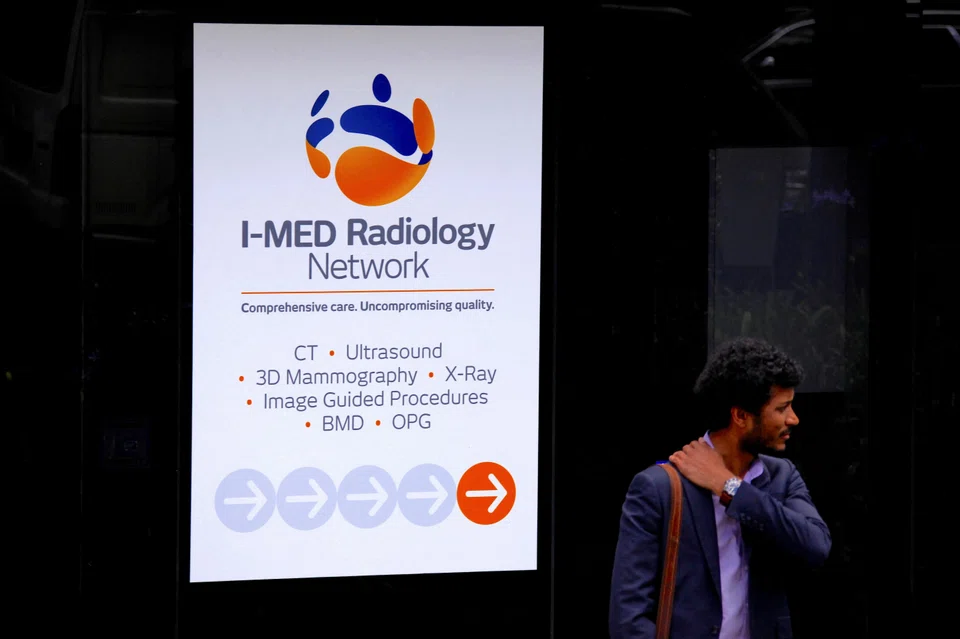
This strategy is already taking shape via JMH’s recent US$2.4 billion acquisition of Australian diagnostic chain I-MED Radiology Network.
CGSI noted in its report that the bulk of the announced US$4 billion capital-recycling programme is expected to come from non-core real estate assets under Mandarin Oriental, alongside non-core businesses and public equities.
Among JMH subsidiaries, Hongkong Land recently executed a massive pivot from a developer to an asset-light real estate fund manager.
It launched an S$8.2 billion private commercial real estate fund which included major assets such as Asia Square Tower 1 and One Raffles Link.
Jardine C&C, meanwhile, is exploring a potential sale of its car dealership businesses in Malaysia and Singapore, said to be valued between US$250 million and US$350 million.
In addition to these units, the Jardines group also includes:
- Indonesia-listed Astra International: a major conglomerate with interests in automotive, gold mining, financial services, heavy equipment, mining and agribusiness;
- DFI Retail Group : a leading Asian retailer managing convenience stores (such as 7-Eleven) and pharmacies including Guardian;
- Mandarin Oriental Hotel Group: an internationally renowned luxury hotel chain.
Subsidiary outlooks
On the operational front, the group’s biggest subsidary Astra “remains a work in progress”, Macquarie said.
“Ongoing headwinds in Indonesia mean Astra is unable to commit to firm capital-recycling targets, and any proceeds are likely reinvested (for example into autoparts) or buybacks. This will raise JMH’s ownership over time rather than seeing material capital repatriation,” the broker noted.
While Astra’s recovery remains Pan’s priority over the next 12 months amid current Indonesian macroeconomic headwinds and rising battery electric vehicle competition, other divisions unveiled clearer growth vectors.
“Mandarin Oriental (recently privatised) appears to have the highest growth prospects with its asset-light luxury hotel model scaling rapidly,” added Macquarie.
Mandarin Oriental aims to more than double its management business revenue to over US$250 million by 2030 through an aggressive, asset-light luxury hotel pipeline.
“Recently acquired I-MED presented and provided a clear case for organic growth and roll-ups in the Australian and New Zealand diagnostics market,” said Macquarie.
DBS noted that management indicated more mergers and acquisitions are likely; but the lender believes that the next major transaction may only materialise from next year.
This is given the fact that Pan’s “stated top three near-term priorities in the next 12 months are Astra execution, I-MED integration and strengthening the senior leadership bench”.
Decoding Asia newsletter: your guide to navigating Asia in a new global order. Sign up here to get Decoding Asia newsletter. Delivered to your inbox. Free.
Copyright SPH Media. All rights reserved.






