

DBS upgrades StarHub to ‘buy’ on potential M1 deal; merger to drive telcos’ recovery
This follows renewed expectations of a deal between Singapore’s second and third-largest mobile operators

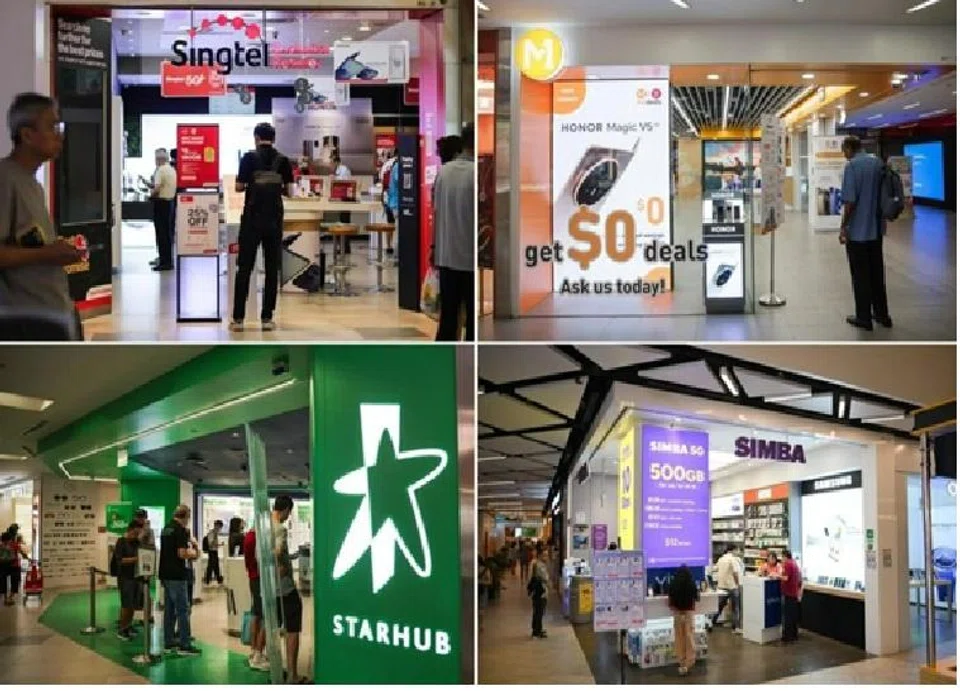
[SINGAPORE] A potential consolidation between StarHub and M1 could reshape Singapore’s telecommunications landscape, prompting DBS Group Research to upgrade StarHub to a “buy”.
The brokerage on Monday (Jul 27) set a revised target price of S$1.40, up from its previous valuation of S$0.94.
The upgrade follows DBS’ renewed expectations of a deal between Singapore’s second and third-largest mobile operators. M1’s parent company, Keppel, reiterated its commitment to industry consolidation following the collapse of its deal with Simba Telecom in May.
When the M1-Simba deal fell through, other analysts had also tipped StarHub as the “obvious” front runner for M1.
DBS analyst Sachin Mittal noted that a StarHub-M1 deal in 2026 could generate “annual recurring synergies” of S$65 million to S$75 million by FY2029, representing 9 to 11 per cent of the merged entity’s combined FY2026 forecast earnings.
These synergies are estimated to add S$0.35 per share to StarHub’s valuation, though failure to complete the deal could see StarHub’s target price fall back to S$1.05.
“Potential merger news might lift the share price initially, though we expect synergy extraction in 2027 to dictate the share price,” Mittal said in the note.
Possible StarHub-M1 deal?
DBS estimated M1’s acquisition enterprise value at S$1 billion, based on a seven to 7.5 times enterprise value to earnings multiple. This reflects a lower valuation than the S$1.43 billion previously agreed upon with Simba, owing to a sharp drop in M1’s FY2026 forecast earnings under intense market competition.
The transaction is expected to be funded through a potential sale of StarHub’s cybersecurity subsidiary, Ensign InfoSecurity, for about S$400 million, combined with S$621 million in new debt.
SEE ALSO



While net debt-to-earnings could peak at 3.5 times upon deal completion in the 2027 financial year, DBS expects earnings accretion of 120 per cent in the second year and 250 per cent in the third year post-merger as cost integration completes.
Who stands to benefit?
While StarHub will navigate integration risks, market leader Singtel stands to gain significantly from a post-consolidation environment without taking on operational execution burdens, said DBS.
Singtel currently holds a dominant 44 per cent mobile subscriber market share in Singapore. As price competition eases, Singtel’s blended mobile average revenue per user (ARPU) is projected by the brokerage to recover from a low of S$22.10 in FY2027 to S$25.90 by FY2030 – a 13 per cent increase over its FY2026 base.
Given the high operating leverage of Singtel’s existing fixed network cost structure, incremental ARPU gains flow directly to the bottom line with minimal extra capital expenditure.
DBS projects Singtel’s Singapore mobile earnings before interest, depreciation, taxes and amortisation to grow at a compound annual growth rate of 8 to 8.5 per cent from 2028 to 2030.
Furthermore, Singtel’s current holding company discount of 22 per cent could narrow to 10 per cent due to four upcoming catalysts. These include a potential minority stake sale in Optus and the planned initial public offering of its Singapore data centre business after the completion of the ST Telemedia Global Data Centres acquisition in August.
Other catalysts could be a complete exit from its remaining 4.95 per cent stake in Gulf Development and a further 6 to 7 per cent stake sell-down in India’s Bharti Airtel.
DBS maintained a “buy” call on Singtel with a sum-of-the-parts target price of S$5.46.
Mobile market outlook
Singapore’s mobile market has completed its nationwide shift to 5G-standalone architecture in 2026, shutting down legacy 4G fallbacks.
Without access to additional spectrum, DBS expects Simba to face substantial capital outlay for small cells, base stations and backhaul infrastructure to maintain service quality as its user base grows.
Whether Simba maintains its standalone operations or eventually succumbs to margin pressures, DBS stated that Singapore’s era of hyper-aggressive price wars is reaching its limit.
Market consolidation into a three-player – or effectively two-tier – market structure is expected to restore a “rational competitive environment” and drive sector-wide ARPU growth starting from 2027.
Decoding Asia newsletter: your guide to navigating Asia in a new global order. Sign up here to get Decoding Asia newsletter. Delivered to your inbox. Free.
Copyright SPH Media. All rights reserved.
TRENDING NOW

Once staunchly pro-China, Malaysian Chinese businesses are now distancing themselves from Beijing

Looking beyond looming CEO succession, should UOB potentially pursue a transformative merger?

Could stablecoins be the future of money?

Grab CEO’s wife Chloe Tong on life with Anthony Tan and finding her purpose

