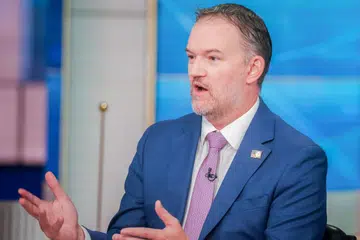
Disappointment for some, relief for others as markets ponder Warsh’s nomination as next Fed chief
In some quarters, he is seen as a ‘credible choice’, who may hold his own against President Trump’s demand for rate cuts
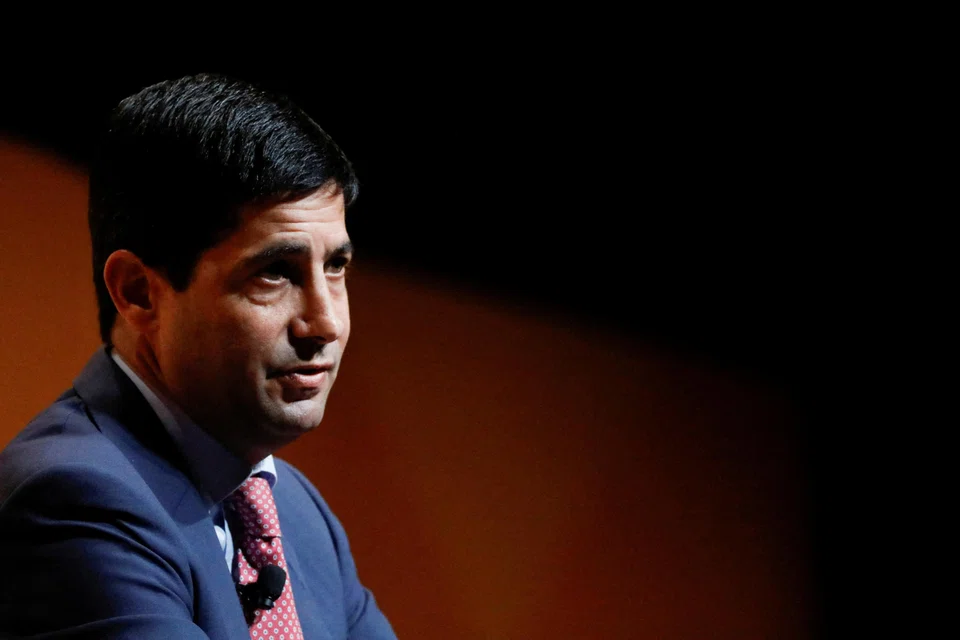
THE stock markets have shown a mixed reaction so far to the idea of a former US Federal Reserve governor as the central bank’s next chair and the successor to Jerome Powell. US President Donald Trump on Friday (Jan 30) nominated Kevin Warsh to head the Fed when Powell’s leadership term ends in May.
The choice of an old-school central banker was a bit of a disappointment for stock bulls because it makes interest-rate cuts less likely in the near term. But it was a relief to those who feared that the Fed would subordinate itself to the White House and undermine the financial system.
In recent weeks, the US dollar had weakened, while small stocks, gold, silver and Bitcoin had spiralled higher in anticipation of a Fed nominee who would acquiesce to Trump’s constant demands for rate cuts.
It was dubbed the “debasement trade” – a bet that reckless rate-slashing would undermine the greenback.
But, all these rate-sensitive investments plunged, and the dollar recovered some of its losses in the days following the president’s nomination of Warsh.
“Warsh as new Fed chair is seen as a credible choice and eases concerns over the Fed’s independence,” said Mohit Kumar, the chief economist and strategist for Europe at brokerage Jefferies, in a note to clients. “However, Warsh’s previous comments have been hawkish, and he is unlikely to follow an agenda of aggressive easing.”
The Fed insider
Trump’s pick is a much more conventional choice than the other rumoured contenders for the Fed’s top job. The names floated around included political appointee and White House economic adviser Kevin Hassett, BlackRock executive Rick Rieder and, in some circles, Treasury Secretary Scott Bessent.
Compared with those names, at least, Warsh’s advantage is that he is a Fed insider. He served for five years as a governor of the central bank after his appointment by then president George W Bush in 2006 at the age of 35.
His nomination, viewed as conventional by many observers, came as a surprise to markets after Trump’s break with modern capitalist conventions.
In sustained attacks on the Fed over the last few months, the president tried to fire Fed governor Lisa Cook, triggering a legal challenge from Cook that is now before the US Supreme Court.
The Trump administration has also tried to find fault with Powell, who is facing a Department of Justice probe into his handling of a building project.
Markets had positioned themselves for a yes-man to lead the US central bank. Warsh has some record on that front: He questioned some of then Fed chair Ben Bernanke’s experimental policies during the 2008-2010 global financial crisis and recession, but never formally dissented.
Still, his decision to quit in 2011 after speaking out against bond-buying by the central bank was viewed in some quarters as the ultimate dissent.
In the end, Trump could not resist Warsh’s starchy banker persona – “straight from central casting”, as the president himself put it.
The question of rates
The strength of the US dollar and the weakness of the Treasury market on the day Warsh’s nomination was announced suggest that markets anticipate him to continue holding Powell’s line on interest rates.
Last week, the Fed held rates steady in a range of between 3.5 and 3.75 per cent due to a resilient economy and persistent inflation. Traders apparently anticipate rates holding near that level after Powell passes the baton to Warsh.
Speaking at a black-tie event last weekend, Trump said that he would sue Warsh if he didn’t cut rates, a comment he later described as a joke in an interview with The Wall Street Journal. In the same interview, the president added that he had not extracted any promises from Warsh.
That quelled fears that Trump would use a commitment to cut rates as a litmus test.
Lorenzo Di Mattia, the manager of hedge fund Sibilla Global Fund, noted: “Trump is known for saying a certain thing for his crowd, and then in private, (he) is a different person.”
Silver futures, the target of rampant speculation in January, have plunged by more than one-third from their peaks. Bitcoin is down by about 10 per cent since Warsh’s selection.
“Warsh’s appointment is negative for assets that primarily benefit from abundant liquidity, aggressive – arguably unnecessary – quantitative easing and zero-interest-rate-type policies,” added Di Mattia. “However, for equities and the health of the US financial system (in the long run), a credible and predictable chair is arguably bullish.”
Decoding Asia newsletter: your guide to navigating Asia in a new global order. Sign up here to get Decoding Asia newsletter. Delivered to your inbox. Free.
Share with us your feedback on BT's products and services