

Earnings miss, downside risks weigh on Singtel shares, but RHB sees ‘re-entry opportunity’
The brokerage expects legacy share overhang to clear, and is betting on the telco’s AI, cloud initiatives
Jermaine Fok
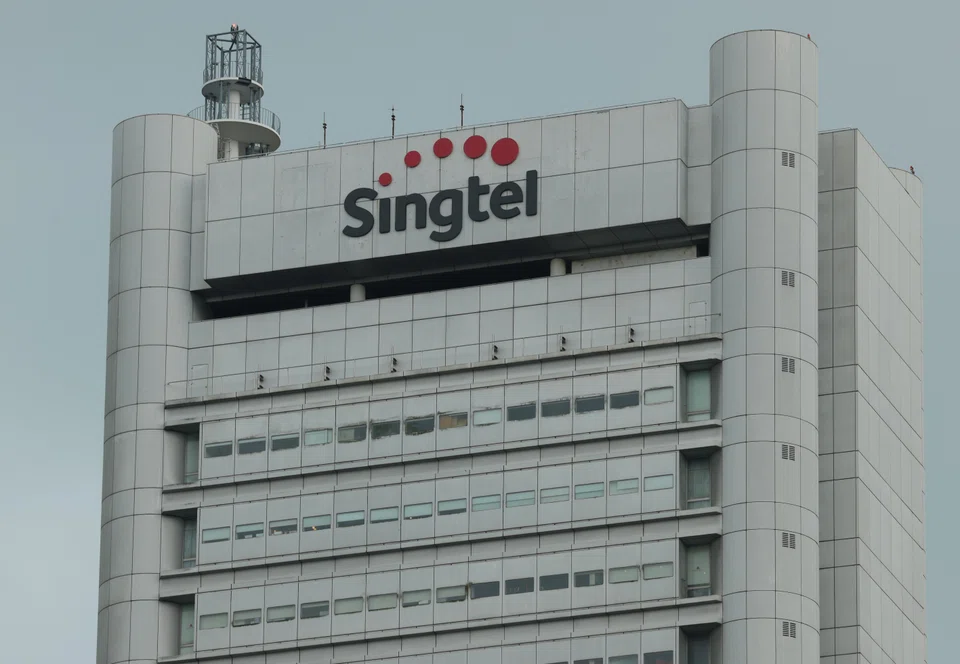
[SINGAPORE] Singtel’s share price volatility offers investors a “re-entry opportunity” into the counter, said RHB analysts on Friday (May 22), even as other brokerages flagged the group’s latest earnings miss.
RHB analysts said the volatility has been amplified by technical selling pressure linked to Singtel’s legacy discounted shares, adding that this overhang is expected to normalise going forward.
They expect “early success” in the telco’s artificial intelligence and cloud initiatives, which generated S$25 million in revenue from an initial 1 megawatt pilot phase.
The pilot marked the initial deployment of the group’s data centre and AI initiative. Singtel’s management plans to scale this capacity further next year, supported by about S$600 million in dedicated growth capital expenditure.
Earlier in 2026, Singtel tied up with KKR to buy ST Telemedia Global Data Centres for almost S$14 billion, with the deal expected to be completed in the second half of the year.
RHB also pointed to the telco’s return on invested capital, which has moved into double-digit territory at 11.1 per cent, alongside a record FY2026 dividend.
The brokerage trimmed its target price by about 1.8 per cent to S$5.40 from S$5.50 to reflect the latest market valuation, though still implying about a 15 per cent upside from current levels.
It also maintained its “buy” call on Singtel.
Singtel’s financial results
On Thursday, the telecommunications giant reported fourth-quarter 2026 core net profit of S$672 million, down 10 per cent quarter on quarter but up 11.8 per cent year on year, bringing its full-year core net profit to S$2.8 billion.


Several brokerages said the results were “slightly below expectations”.
CGSI’s Prem Jearajasingam said the full-year core net profit was in line with its estimates, though he noted that the dividend per share of S$0.185 came in below forecasts.
He added that FY2027 guidance for low-to-mid-single-digit growth in earnings before interest and taxes (Ebit) was “overly conservative” and well below market estimates of about 18 per cent.
Citi analysts similarly said that Singtel’s underlying profit slightly missed expectations, citing a weaker Q4, in which recurring profit fell about 10 per cent sequentially on weaker Singapore operations.
They noted that Singapore Ebit fell 5 per cent to S$795 million for the year, while Q4 earnings before interest, tax, depreciation and amortisation (Ebitda) declined 9 per cent quarter on quarter and 11 per cent year on year amid sustained competition in the consumer segment.
DBS analyst Sachin Mittal said that Singtel’s core net profit was about 6 per cent below consensus forecasts, citing “lower-than-expected” contributions from Singapore and Australia, which dented the operational company’s earnings.
Looking ahead, the analyst expects Optus to stage a “strong recovery”, which could support mid-single digit group Ebit growth for FY2027.
Optus, Singtel’s Australian subsidiary, has previously faced pressure, including accumulated losses since FY2021 and operational disruptions such as a major outage in February that affected about 200,000 customers.
Despite this, Optus has shown some recovery, with operating revenue rising 2.4 per cent to A$4.3 billion (S$3.9 billion) in its second half ended Mar 31, while Ebitda increased 4.8 per cent to A$1.2 billion.
Singtel is exploring the possibility of bringing in a strategic partner for Optus, as part of its broader approach to manage its portfolio of operating companies and associates.
Risks ahead
Brokers are broadly aligned that energy prices remain a key headwind, although some believe Singtel can ride out higher energy costs.
CGSI’s Jearajasingam flagged several downside risks, including prolonged disruption in energy markets that could reduce telecommunications and IT spending; intensifying competition in Singapore and Australia; the risk of large, expensive acquisitions; and potential regulatory changes that could weigh on cash flow and earnings.
DBS’ Mittal said that FY2027 Ebit guidance of low-to-mid-single-digit growth sits below expectations of more than 12 per cent, reflecting sector headwinds including delayed consolidation in Singapore, recent declines in mobile pricing, and the wind-down of cost savings.
He also highlighted continued competitive pressure in the Singapore market.
Meanwhile, Citi analysts flagged foreign-exchange volatility as a drag on regional associate contributions, alongside slowing earnings momentum as FY2027 growth moderates from double-digit levels in FY2026.
RHB noted that it views the second-order impact from higher energy costs as “manageable”, supported by improving returns on invested capital and the scaling of new growth engines such as NCS and Nxera, which operates Singtel’s AI-ready data centres across Asia-Pacific.
Decoding Asia newsletter: your guide to navigating Asia in a new global order. Sign up here to get Decoding Asia newsletter. Delivered to your inbox. Free.
Share with us your feedback on BT's products and services
TRENDING NOW

DBS, OCBC, UOB rout lops billions off STI as inflation, rate concerns spook investors

Grab CEO’s wife Chloe Tong on life with Anthony Tan and finding her purpose

OCBC sheds S$8 billion in value as shares close nearly 6% down; analysts cautious on banks

Deal between tycoon friends sparks scrutiny of Philippine power sector

