Asia’s coal appetite endures as winter looms and supply tightens; Iran war boosts outlook
The Middle East crisis has made ‘the long-term outlook for thermal coal demand more resilient’
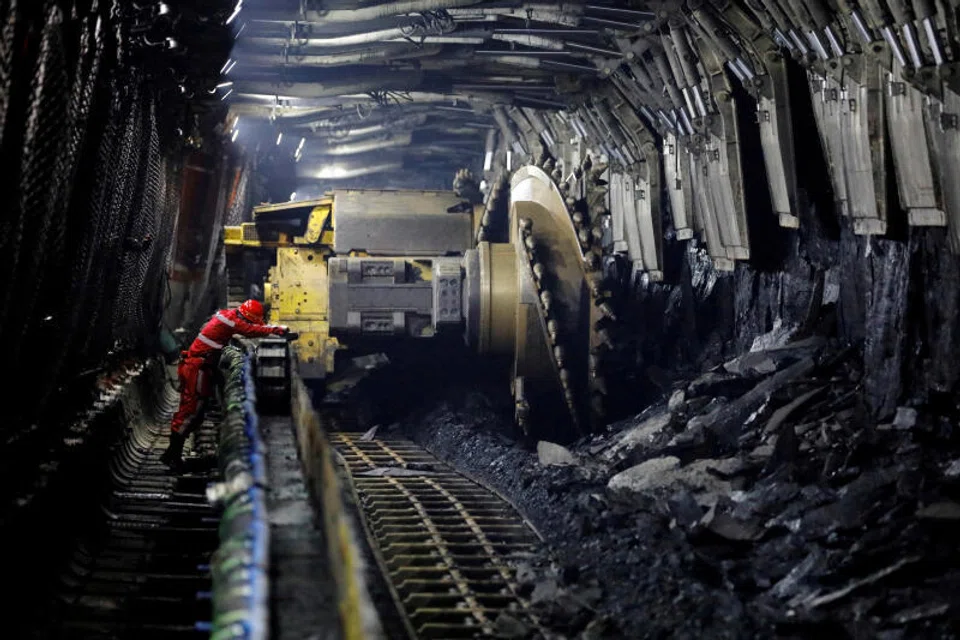
ASIAN thermal coal prices have surged to a two-year high as power plants stockpile fuel for winter, tightening a market already strained by elevated demand and supply disruptions from China to Indonesia.
Coal’s status as the dirtiest fossil fuel has made it a prime target for cuts to output and usage, but those efforts are being thwarted by growing demand linked to energy security.
After expecting global consumption to fall in 2026, the International Energy Agency flipped to forecasting a 1.2 per cent increase to record levels, as the Iran war sent oil and gas prices skyrocketing and raised the power sector’s dependence on coal.
2026’s Middle East energy crisis has made “the long-term outlook for thermal coal demand more resilient”, Morgan Stanley analysts including Amy Gower said in a research note last week, where the bank raised its long-term outlook for Newcastle export prices, an Asian benchmark, by 4 per cent to US$125 a tonne.
Newcastle coal futures have risen over 40 per cent in 2026 so far, and on Tuesday (Oct 13) closed at the highest since August 2024.
The war in Iran has prompted Asian buyers to switch from pricier gas, and demand is now being amplified by the need to secure fuel for heating.
The weather has already taken its toll in India, where drought and scorching temperatures have curbed hydropower, another substitute for coal, while raising demand for air-conditioning.
The spike in oil has fed through to record costs for the diesel that powers equipment at pits, which has forced miners in turn to hike their own prices. But it has also allowed coal to replace oil in industries like chemicals that have typically used crude as a feedstock.
At the same time, output has been constrained in key suppliers.



The top mining region in China saw production drop dramatically after a deadly accident in May set off a round of safety inspections. Indonesia, the biggest exporter, is contending with government production quotas and the impact of drought on the barge traffic that links mines to ports.
In China, which mines and burns half the world’s coal, thermal prices climbed to a three-year high this week after domestic output fell more than 3 per cent in 2026 through August.
While that is less of an issue these days, given the country’s breakneck adoption of renewable energy, rising coal use over the winter is still likely to keep prices on an upward trajectory.
“We expect more mines to gradually win approval to restart after about four months of suspension, but a quick rebound on production in the near-term is unlikely,” said Hangyu Li, research analyst at Wood Mackenzie.
The market for coking coal used by Chinese steel mills faces similar challenges after the Shanxi disaster. Import demand has risen and Dalian futures are near two-year highs, although prices could ease from here as a collapse in steelmaking profits limits the industry’s appetite for higher raw material costs.
In No 2 consumer India, coal-fired power stations have burned through much of their inventories after the hot summer weather. At the same time, the weakest monsoon since 2015 has failed to replenish reservoirs and buoyed demand for farm irrigation.
Unscheduled power cuts have already begun, which could prompt coal buyers to become more aggressive in snapping up foreign cargoes despite high prices.
“There’s no way other than that,” said Subhash Chandra Garg, a former top bureaucrat at the finance and power ministries. Almost half of the power stations monitored by the government have less than a quarter of the inventories they are required to hold, putting them in the “critical” category.
Top supplier Indonesia, meanwhile, has struggled to profit. Exports fell to a five-year low in September, according to research firm DBX Commodities. And while the government has rowed back on some of its earlier output cuts, it will take time for miners to ramp up production again.
Where coal prices go from here very much depends on the weather. Forecasts of a relatively milder winter in much of Asia have been linked to 2026’s supercharged El Niño, a weather pattern that can cause weaker monsoons and warmer temperatures.
Much of China is forecast to see average winter temperatures of 0.5 degree Celsius to 1 deg C above normal, according to the European Centre for Medium-Range Weather Forecasts.
That rises to 1 deg C to 2 deg C for Japan and South Korea. The warmest weather is reserved for mainland South-east Asia, where much of Vietnam and northern Thailand are expected to average 2 deg C or more above normal. BLOOMBERG
Decoding Asia newsletter: your guide to navigating Asia in a new global order. Sign up here to get Decoding Asia newsletter. Delivered to your inbox. Free.
Share with us your feedback on BT's products and services