Crude oil ‘caught up in cautious enthusiasm’ over US-Iran peace deal, but analysts don’t expect further price easing soon
Markets are pricing in a normalisation in Hormuz flows, but observers say the process could take around six months
[SINGAPORE] While the price of Brent crude oil has eased by around 30 per cent in the past month on the back of optimism over the Middle East ceasefire, observers believe that the prospect of a further drop is limited.
Emily Ashford, head of energy research at Standard Chartered (StanChart), said: “Crude oil prices have been caught up in cautious enthusiasm over the memorandum of understanding, but the lag in the return of physical supply will lag the commodity price reaction.”
Between Feb 27 – the day before the US launched strikes on Iran – and Apr 29, Brent crude oil futures spiked 38.6 per cent from US$72.48 to US$118.03 a barrel. It had fallen back by as much as 33.1 per cent to US$78.96 on Jun 16.
Ashford added: “Although price reactions over the past three months have been extreme, we do not expect any real demand destruction, with the return faster than experienced post-Covid.”
She noted that a price floor of around US$10 a barrel above the pre-conflict levels “seems reasonable”.
Sim Moh Siong, commodity strategist at OCBC, suggested that Brent could “briefly overshoot to the downside” following a resumption of flows through Hormuz. But he still expects oil to remain at around US$80 a barrel, even by the year-end, “with risks skewed higher”.
Xavier Tang, senior market analyst at Vortexa, said that if the Strait of Hormuz fully opens – a scenario unlikely in the near-term – oil markets would likely face an oversupply, which would probably send prices down to the pre-conflict levels of US$60 to US$70 per barrel.
Hurdles to bringing Gulf supply back online
But analysts do not expect prices to fall much further any time soon.
While markets are now pricing in a high probability of Hormuz flows returning to normal, observers warned that resuming transit through the vital chokepoint will be no easy feat. Shipowners, insurers, charterers and port operators must first be convinced that transit risks are manageable.
Clearing the mines in the strait could take weeks – even under ideal conditions – and it has been estimated that the full normalisation of flows would take around six months.
Wang Zhuwei, director of global oil trading research at S&P Global, said: “The market consistently underestimates operational friction after a major disruption. Restoring flows isn’t just about reopening a waterway.”
He added: “Restoring the first 50 per cent of flows is considerably easier than restoring the final 50 per cent, which involves the long tail of insurance normalisation, scheduling bottlenecks and crew willingness.”
Vortexa’s Tang also listed the crucial questions that are still unanswered. “Are there mines in the Strait of Hormuz? Are insurance companies willing to insure the vessels? Are vessel owners willing to risk transiting the Strait of Hormuz if there is no insurance coverage?”
Once perceived risks are mitigated, he expects tanker transits to rise gradually over the next few months, potentially restoring 70 to 80 per cent of the oil flows through the strait by late September.
Tang pointed out, however, that oil producers would need three to four months to restore the bulk of their oil production, and that “delays in restoring vessel owners’ confidence would have a knock-on impact on the full resumption of oil flows”.
Following the resumption of flows through the strait, the next challenge lies in returning Gulf supply to the market.
StanChart’s Ashford categorised lost barrels of crude into three main tranches: supply that is offstream due to logistics or export disruptions; supply from lost permanent reservoir or infrastructure, and supply from shut-in wells with limited damage or which may need intervention.
Shut-in wells are those that can produce oil and gas, but have their valves closed to halt output temporarily.
She expects 30 to 40 per cent of lost supply to be available in the first few weeks of the strait being deemed safe for transit, rising to 80 to 90 per cent within a year.
It may take several months, or even years, to restore the last 10 to 20 per cent; a small portion could face longer-term impairment due to reservoir degradation or economic factors, she said.
Longer-term factors affecting demand when supply returns
On the demand front, data from China shows that its crude imports in May slumped 29 per cent year on year to 7.8 million barrels a day, its lowest in eight years.
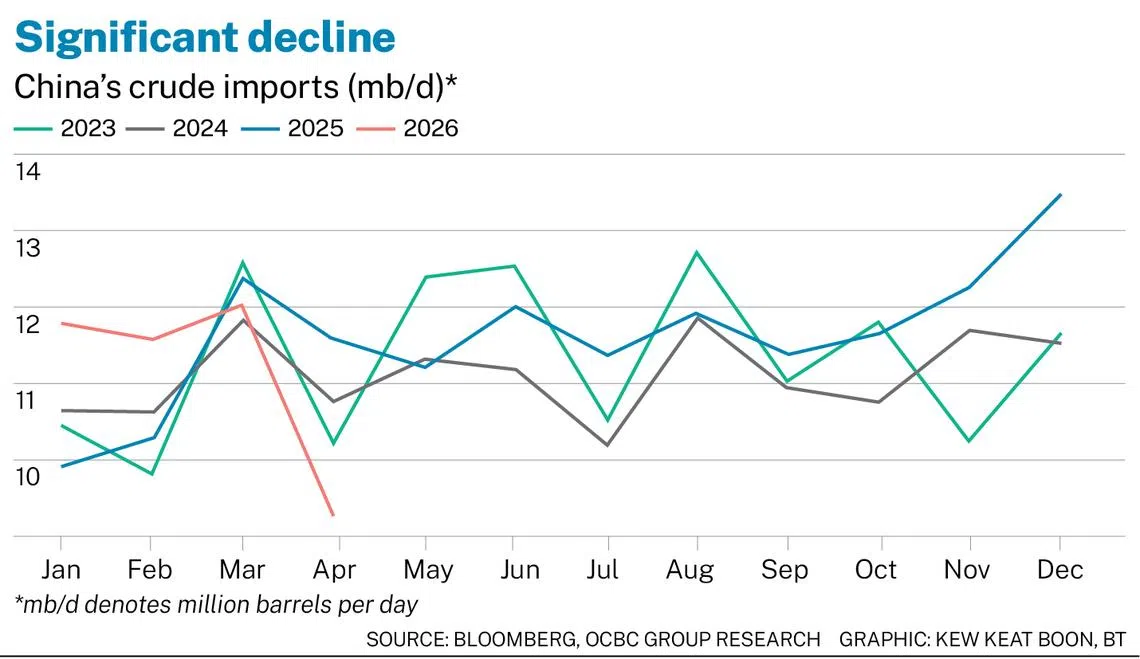
Market observers noted that Chinese refiners were cutting runs, drawing stocks and facing weaker refining margins during the war.
Tang of Vortexa said that for China, “it’s all about prices and margins”.
“If oil prices continue to fall below US$70 a barrel, China’s oil demand will rebound, leading to a return in China’s crude-buying activities.”
Wang of S&P Global noted that even if Gulf exports recover, “that doesn’t automatically translate into stronger Chinese buying” because “China can afford to be selective and wait for attractive pricing”.
In terms of crude oil demand, he added that restored Gulf supply removes the geopolitical risk premium, but does not generate new consumption.
His view is that competition among exporters of Middle East barrels will likely intensify, unless industrial activity and demand for transport fuel improve materially.
He also cited one trend that is further dampening China’s demand ceiling for crude oil – the country’s boom in demand for electric vehicles. “Without considering China’s constant need to refill crude inventory, the nation is on track to structurally purchase less than before.”
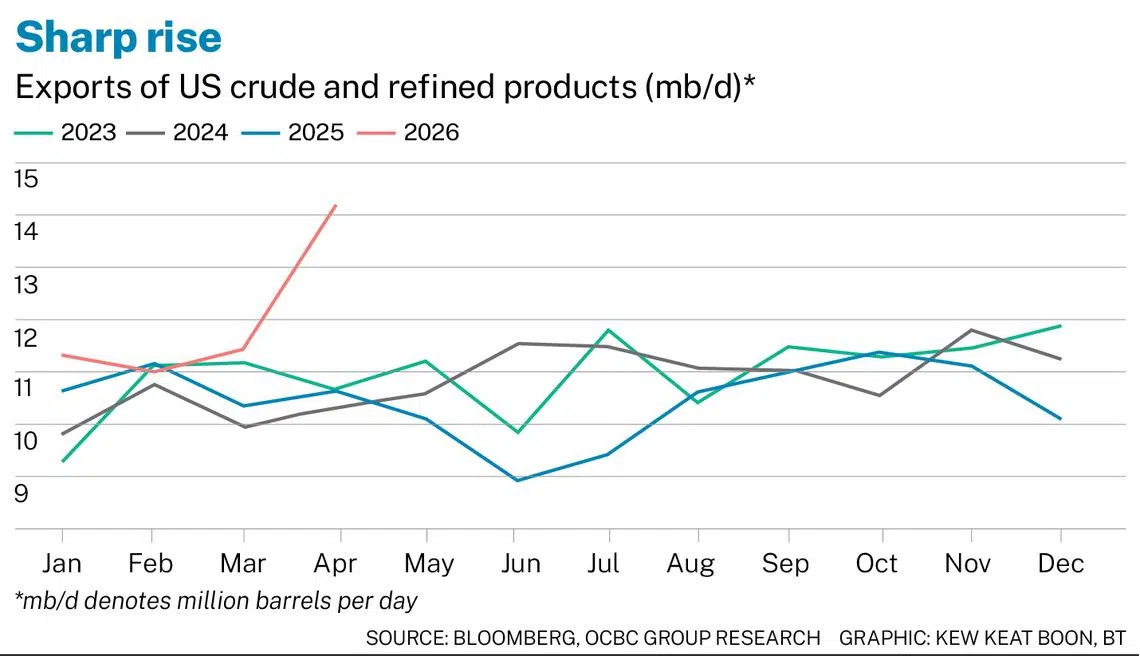
On the supply front, the picture is mixed. Despite a massive reduction in flows through the Strait of Hormuz in the last few months, analysts have noted that crude suppliers in the US and Canada have been sending more barrels to the market.
Following the resumption of oil flows through Hormuz, analysts expect demand to come from countries seeking a strategic stockpiling of their oil reserves.
Ashford of StanChart noted that there could be increased competition for seaborne barrels if the return of China’s demand happens alongside the US’ efforts to replenish its own strategic petroleum reserves. “We also expect a broader expansion of global strategic reserves following the conflict, as more consuming countries look to strengthen energy-security buffers.”
Even as concerns remain over the resumption of supply through the Strait of Hormuz, uncertainty over demand levels also makes it challenging to predict the direction of oil prices further down the road, analysts said.