

Inside Singapore’s new five-year energy plan: S$5.3 billion grid upgrade, trebling of storage capacity
The government is prepared to facilitate the entry of more new power plants if needed

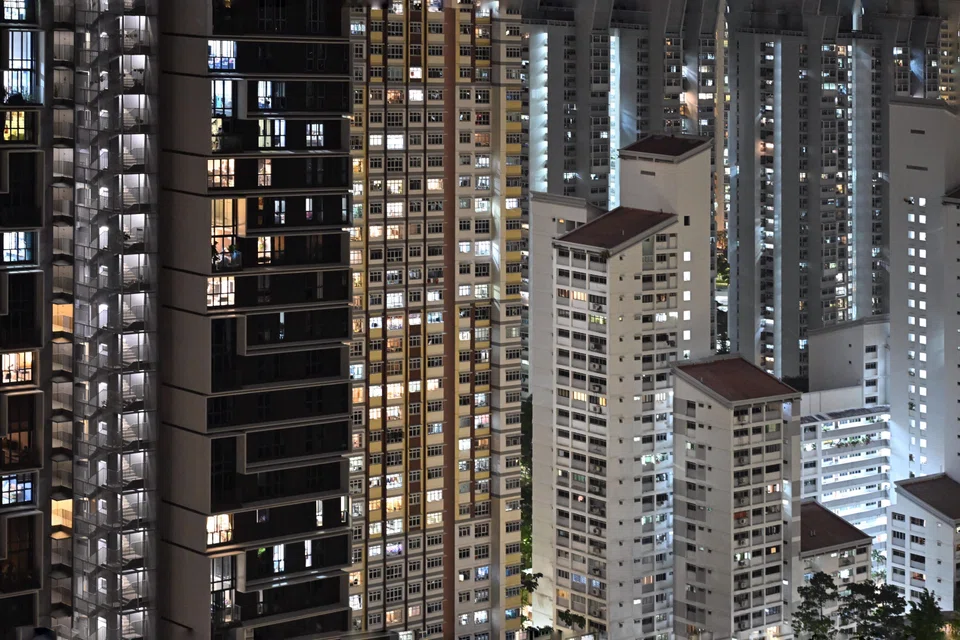
[SINGAPORE] With Singapore’s electricity demand projected to rise as its economy grows, the city-state will be investing in the most significant build-up of its energy infrastructure in decades.
The Energy Market Authority (EMA) on Monday (Oct 26) released its five-year plan, which sets out how the country’s power system will be expanded to meet growing demand.
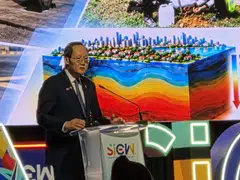
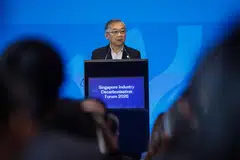
Unveiling the strategic road map, Minister for Energy, Trade and Industry (Energy and Industry) Tan See Leng said that energy needs to be harnessed to bolster Singapore’s economic competitiveness, as it attracts more electricity-intensive investments, such as semiconductor companies and data centres.
“Our ability to scale our generation and grid capacity to meet these needs will be increasingly important. Simply put, the fastest megawatt will be the winning megawatt,” said Dr Tan, who was speaking at the Singapore International Energy Week, an annual energy conference organised by EMA.
Besides the five-year plan – which will cover upcoming infrastructure developments across power generation, natural gas, electricity grid, solar deployment, energy storage and low-carbon electricity imports – Dr Tan announced a slew of other initiatives aimed at meeting Singapore’s growing energy demand while decarbonising its power system and maintaining energy security.
These measures come amid growing concerns over energy security, following reports by Indonesian media that the country is cutting natural gas exports to Singapore as Indonesia President Prabowo Subianto’s government prioritises domestic energy needs.

Expanding the power grid
Between 2025 and 2029, Singapore is projected to invest up to S$5.3 billion to expand the power grid, an amount that is 11 times higher than the investments made in the preceding five-year period, said EMA in a media statement.
This includes:
- Building seven new substations by 2031, up from four in the previous five years;
- expanding the transmission cable network by 18 per cent to 9,100 km by 2030 from 7,700 km today; and
- strengthening the distribution network to support new sources of power supply and demand, such as solar panels and electric vehicle charging.
Singapore is also studying the feasibility of more than trebling the length of Singapore’s cable tunnels from about 50 km currently.
SEE ALSO
These cable tunnels will allow for faster expansion of the grid, easier access to electricity cables for maintenance, and lower frequency and duration of road works for grid upgrades, such as laying new cables, said EMA.
Also under plans to upgrade the grid, Singapore aims to treble its energy storage capacity to over 1 gigawatt-hour (GWh) by 2030 from around 350 megawatt-hour (MWh) currently. This will help to strengthen the resilience of the power system as Singapore integrates more diverse and variable energy sources.
To support this, EMA has launched a consultation paper, calling on the industry to propose practical energy storage technologies, business models and projects that can be commercially deployed at scale.
EMA said it will develop requirements for how energy storage systems will operate, and that it will work with the industry and relevant agencies to improve access to energy market information, review existing rules, and explore ways for energy storage systems to support Singapore’s electricity needs more effectively.
Power generation from natural gas
While five more new natural gas power plants are already scheduled to come online over the next five years following EMA’s previous request for proposals, Dr Tan said that the government is prepared to facilitate the entry of more new power plants if needed to support new economic investments, and even step in, where necessary, to ensure that sufficient capacity is available.
Singapore’s peak demand could increase to between 9.9 and 13 GW by 2031, from the current 8.6 GW, mainly due to new demand from energy-intensive sectors such as semiconductor manufacturing and data centres, as well as the wider use of electric transport, EMA said.
These five new plants would already expand Singapore’s electricity generation capacity by 26 per cent from around 12 GW currently, and EMA has started evaluating proposals from the latest request for proposal which closed last month for additional power plants that will be operational by 2032.
Singapore had also recently announced that it was studying the feasibility of establishing a new energy cluster at Pulau Tekong, where part of the island’s reclaimed land could accommodate hydrogen-ready natural gas-fired power plants, a liquefied natural gas (LNG) terminal and other low-carbon energy technologies.
To ensure these new and existing power plants have enough gas supply, plans have been made earlier to increase Singapore’s LNG regasification capacity to 15 million tonnes per annum from the current 10 million when the second LNG terminal at Jurong Port is operational by 2030.
Low-carbon alternatives
While Singapore continues to rely on natural gas, Dr Tan said it must still pursue every possible low-carbon energy pathway, although this should not come at the expense of Singaporeans’ livelihoods and the country’s system security.
He announced a new target to increase solar deployment – which is Singapore’s most viable domestic renewable energy source – to 4 gigawatt-peak (GWp) by 2035. The country currently has 2.3 GWp of solar capacity and is on track to meet its 2030 target of 3 GWp.
Given Singapore’s limited supply of solar energy, the country is also looking to electricity imports as another potential source for low-carbon electricity
Dr Tan announced that EMA has awarded Sembcorp Utilities, along with its consortium partners, a conditional approval to import 1.3 GW of offshore wind from Vietnam, and solar power from Malaysia.
To expand the range of low-carbon technologies Singapore could tap, EMA and the Advanced Energy and Decarbonisation Office (AEDO) – the decarbonisation platform under the Agency for Science, Technology and Research – has set aside S$75 million to fund the development of such solutions.
The initiative, which is part of a larger S$800 million programme to support research and innovation in low-carbon technologies announced at this year’s Budget debate, will focus on the use of hydrogen, solar and biomass in the power sector.
This S$75 million funding initiative is similar to another S$143 million scheme launched last week, led by AEDO and the Economic Development Board.
While both are meant to fund the R&D and commercialisation of low-carbon technologies, the S$143 million scheme is aimed at supporting the decarbonisation of heavy industries through solutions such as carbon capture and carbon utilisation.
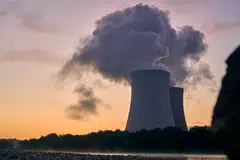
Other nascent decarbonisation pathways that Singapore is studying is the use of nuclear and geothermal energy.
On the nuclear front, the government has rolled out three schemes to build a pipeline of local talent with expertise in nuclear energy.
The first programme will have public-sector officers working to develop Singapore’s energy sector to work with global nuclear organisations. The second programme involves the government providing funding support for staff in selected Singapore-based companies to participate in training programmes and industry attachments with credible international partners.
A fellowship programme will also be set up, which will bring in international energy leaders to provide independent, strategic advice on Singapore’s long-term energy strategy, including energy policy and low-carbon technologies such as nuclear energy.
“Even if Singapore eventually decides not to deploy nuclear energy, the capabilities and expertise we are developing today will continue to serve us well, particularly as interest in nuclear energy grows across South-east Asia and the world,” said Dr Tan.
As for geothermal energy, he said that an earlier study conducted to assess the potential for geothermal power generation found that sizeable geothermal energy is present deep underground in Singapore.
It estimated that this geothermal resource potential is over 60 times the nation’s current annual electricity consumption of around 60 terawatt-hours, which Dr Tan said “is a very good start”.
EMA will now carry out the next phase of studies and has appointed a consortium formed by Surbana Jurong and GLJ to conduct a feasibility study on the potential deployment of next-generation geothermal plants in Singapore.
However, Dr Tan said deploying geothermal energy in Singapore will not be a straightforward process. The geothermal resources are located deep underground and the amount of electricity that can be generated will depend on the cost and technical feasibility of extracting them.
Safety concerns, as well as the number of geothermal power plants that can realistically be deployed in Singapore’s dense urban environment will also affect its feasibility.
“We are at the start of our journey, and have not yet made a decision on whether to deploy geothermal in Singapore. It could take many years before we get to that decision point. Nevertheless, we will explore this option seriously,” he said.
Decoding Asia newsletter: your guide to navigating Asia in a new global order. Sign up here to get Decoding Asia newsletter. Delivered to your inbox. Free.
Copyright SPH Media. All rights reserved.
TRENDING NOW
Government to bring forward raising of retirement age, give employers more financial support to create flexi-load jobs
Former minister Maliki Osman, Revolut chairman join Asia Gulf Holdings advisory board

Is Manila Asia’s new dining hot spot?
Simba at risk of losing operating licence over spectrum misuse

