

Jurong Island energy storage system not part of core power reserves: Tan See Leng
EMA is evaluating how Singapore’s power system can incorporate such energy storage in future planning

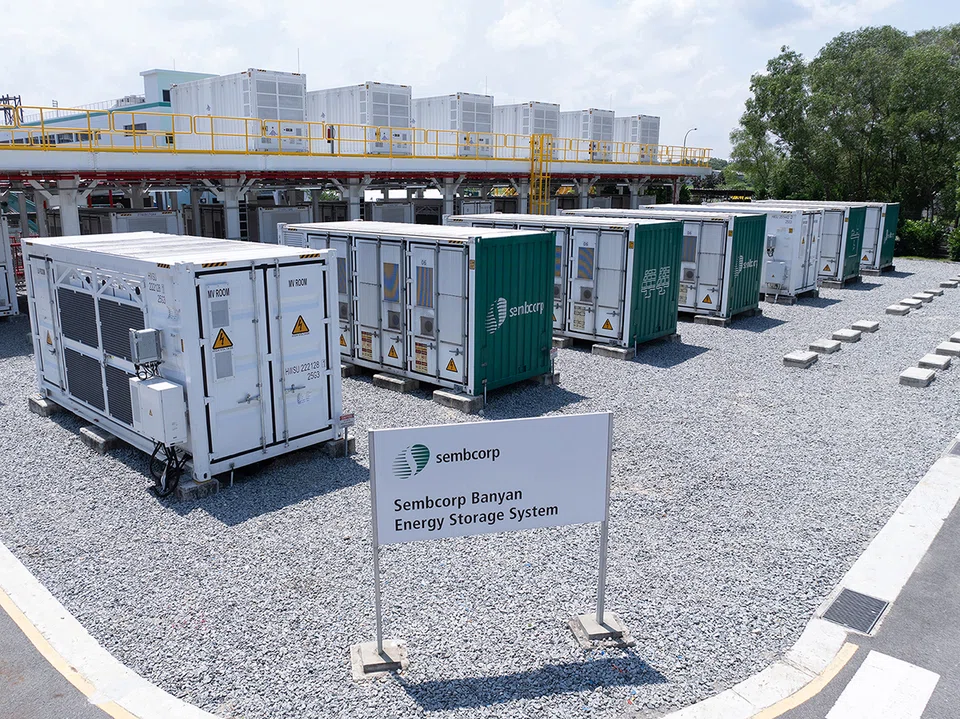
[SINGAPORE] Singapore’s largest utility-scale energy storage system does not count towards required generation reserves, and will serve instead as a rapid-response stabiliser for the power grid.
The 200-megawatt (MW) Sembcorp battery energy storage system (Bess) on Jurong Island does not meet the criteria to offset prolonged power generation outages, said Minister for Trade and Industry (Energy and Industry) Tan See Leng in a written parliamentary reply on Tuesday (Oct 6).
While Singapore mandates a required reserve margin (RRM) for installed generation capacity to sit at least 27 per cent above peak electricity demand, Dr Tan said the Jurong Island Bess does not count towards the RRM, “due to its limited discharge duration”.
Traditional conventional power plants contribute to this buffer because they can continuously supply base load power during emergency maintenance or extended outages.
But Dr Tan noted in his response to People’s Action Party MP Ng Shi Xuan (Sembawang GRC) that the Jurong Island Bess can discharge at its maximum output of 200 MW for only about an hour.
It is designed to support grid stability over a shorter period of time, “by providing fast-response backup that can be activated within seconds when there is an unexpected loss of generation”.
The Jurong Island Bess, which was commissioned to help manage solar intermittency, is aimed at enhancing grid resilience as Singapore transitions away from a pure natural gas power mix.
The city-state has maintained an actual reserve margin of between 35 and 49 per cent in the last five years. There were zero Loss of Load Hours, a measure of prolonged outages in generating capacity.
Meanwhile, as Bess technologies and prices improve, the Energy Market Authority (EMA) is evaluating how Singapore’s power system can incorporate such energy storage in future generation planning assumptions, Dr Tan said.



EMA is also studying whether enhancements to infrastructure processes and market frameworks would be needed to benefit more fully from using Bess.
Decoding Asia newsletter: your guide to navigating Asia in a new global order. Sign up here to get Decoding Asia newsletter. Delivered to your inbox. Free.
Copyright SPH Media. All rights reserved.
TRENDING NOW

S$7 billion wiped off OCBC value as shares slide 5.2% in heavy trade

Grab CEO’s wife Chloe Tong on life with Anthony Tan and finding her purpose
Brookfield denies accusation it cut Soilbuild out of Mapletree deal
8 public officers referred to police over property buys near unannounced MRT stations: Chan Chun Sing

