

Oil eases while tankers openly enter Hormuz after peace deal
Washington and Teheran have both flagged early progress in talks to end the war
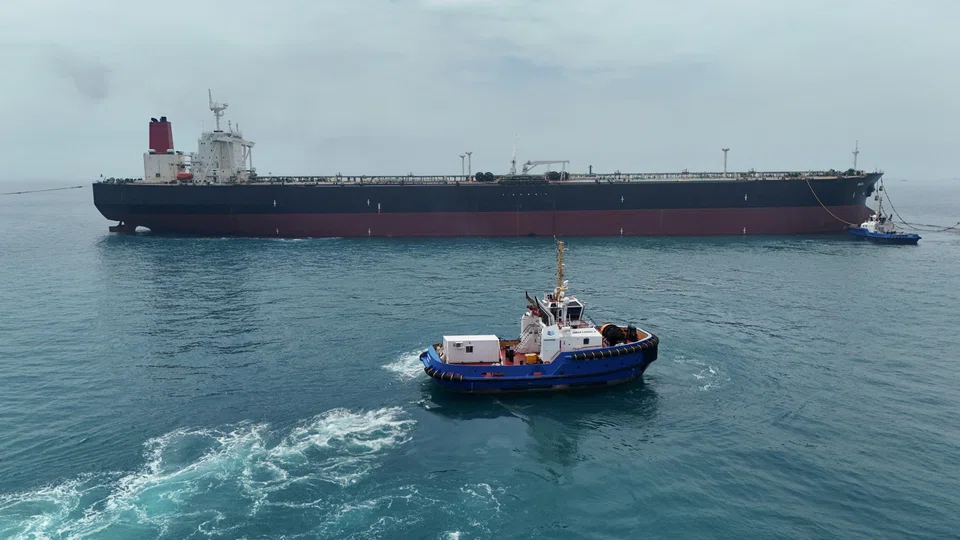
[SINGAPORE] Oil extended declines as more tankers openly cross the Strait of Hormuz, while the US and Iran signal progress towards ending the war.
Brent crude dipped below US$77 a barrel after falling 1.1 per cent in the previous session, and West Texas Intermediate was near US$73.
Vessels are transiting the waterway with their satellite signals switched on, indicating growing confidence among shipowners. The International Maritime Organization also said that it had received safety guarantees allowing hundreds of ships to exit the Persian Gulf.
Washington and Teheran have both flagged early progress in talks to end the war that began in late February, although negotiations are likely to be protracted and claims from the two sides have diverged. Iran and Oman said that they are beginning work on a pact for the administration of Hormuz, including transit costs, with lingering concerns that the Islamic Republic could levy fees.
“I think the market has been waiting for the last of the hopeful bulls to give in and we are finding a bottom close to US$75,” said Carl Larry, an oil and gas analyst at Enverus. “There’s a lot of questions ahead: replacing supply, wait time for loadings, China back on the buy side.”
The Republican-led Senate voted on Tuesday to end the US war with Iran in a rare symbolic rebuke of President Donald Trump. While the resolution is unlikely to force any changes in the administration’s strategy, it represents the latest sign that the president lacks domestic support for the effort.
Oil futures have retreated by more than a third from their wartime highs, driven in part by expectations of an impending increase in crude supply. The US has temporarily allowed purchases of Iranian oil as part of the diplomatic process, aiding efforts by sellers to court Asia’s largest refiners.
Persian Gulf producers, including the United Arab Emirates, are moving to quickly restore exports. The UAE has recovered to almost 85 per cent of pre-war output levels, according to the International Energy Agency, highlighting the region’s ability to ramp supply back up. Kuwait has rolled back its force majeure declarations, while Iraq is also boosting production.
Still, there are signs of tightness in some markets, including the US. The American Petroleum Institute reported crude inventories at the key storage hub of Cushing, Oklahoma, fell by another one million barrels last week, according to a document seen by Bloomberg.
If confirmed by official data later Wednesday, that would mean stockpiles have dropped below the 20-million-barrel mark that’s widely seen as the minimum operating level. BLOOMBERG
Decoding Asia newsletter: your guide to navigating Asia in a new global order. Sign up here to get Decoding Asia newsletter. Delivered to your inbox. Free.
Share with us your feedback on BT's products and services






