Oil heads for 20% monthly advance as Iran war spurs disruptions
Energy markets roar higher in July, with double-digit percentage gains for oil and products such as diesel
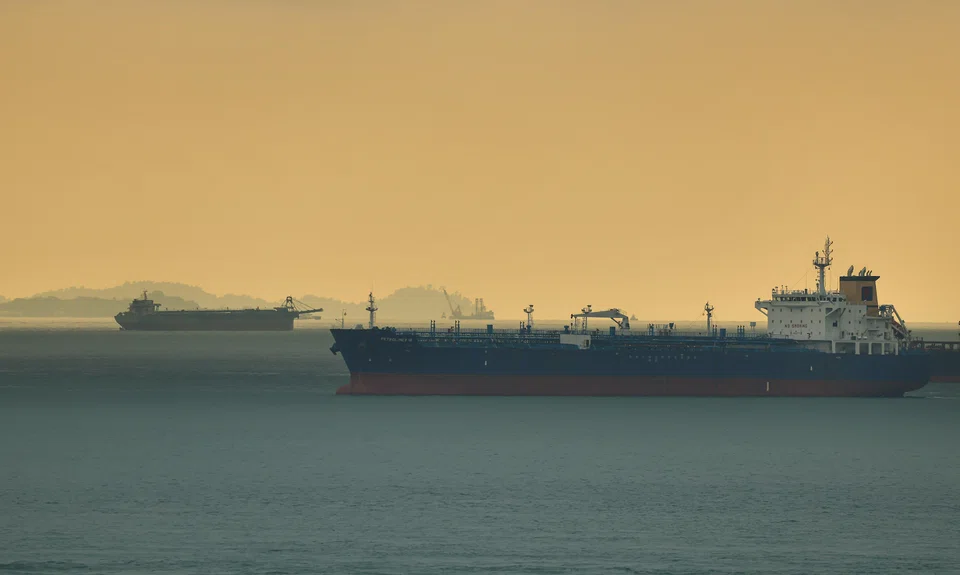
[TOKYO] Oil ticked lower at the end of a volatile week, but remained on track for the biggest monthly gain since March as the US-Iran war escalated.
Brent traded near US$88 a barrel after swinging in a range of about US$11 this week, with the global benchmark up by about a fifth in July. US crude gauge West Texas Intermediate (WTI) was around US$82 a barrel.
While the US and Iran again exchanged strikes on Thursday (Jul 30), shipping through the Strait of Hormuz appears to have picked up in recent days.
Meanwhile, Saudi Arabia discussed with representatives of 43 countries forming an alliance to protect navigation in and around the Red Sea, hoping to counter a blockade the Iran-backed Houthi militants imposed on the kingdom last week.
In a televised speech on Thursday, Houthi leader Abdulmalik al-Houthi said there were indications the Saudis were heading towards “comprehensive escalation”, which he said would be met with a fiercer campaign.
Apart from strikes on tankers, the group recently claimed attacks on oil facilities.
Energy markets have roared higher in July, with double-digit percentage gains for oil as well as products such as diesel.
In July, a fragile pause in hostilities between Washington and Teheran collapsed, the Yemen-based Houthis entered the fray, and Saudi Arabian forces joined the US to strike Iran-backed groups in Iraq.
US stockpiles have continued to draw.

After starting the war alongside Israel in late February to challenge Teheran’s nuclear program, US President Donald Trump is once again facing a conundrum of whether to escalate the conflict further in retaliation for Iran’s attacks on US assets, or focus on calming turmoil in global energy markets.
“It’s a real wait-and-see to see if this is going to expand, and if the US is going to retaliate in the way that Trump is threatening or if this is going to be kind of a tit-for-tat but on a relatively smaller scale,” said Carolyn Kissane, associate dean at New York University’s Center for Global Affairs.
Beyond the Middle East, traders are also concerned about supply snarls in the Black Sea.
Loadings at the terminal vital to Kazakhstan’s crude exports were halted again this week after fresh tanker attacks.
Nine vessels have now been attacked at or bound for the Caspian Pipeline Consortium facility in July, the most since Russia’s invasion of Ukraine in 2022.
The International Monetary Fund still sees a risk the Middle East oil shock could tip the global economy into recession, although the impact would be modest if Hormuz reopens soon, according to managing director Kristalina Georgieva.
“Our prediction is that while the war is going on WTI will be in the US$80 to US$100 range,” said Jay Hatfield, chief executive officer of Infrastructure Capital Management.
“If the war ends, we’ll be kind of US$50 to US$60.”
On the corporate front, US supermajors Chevron and ExxonMobil are due to report earnings later on Friday, offering senior executives a platform to address current conditions and the market outlook.
On Thursday, rival Shell reported its second-highest quarterly profit on record, as the conflict in the Middle East fuelled a boom in trading as well as refining. BLOOMBERG
Decoding Asia newsletter: your guide to navigating Asia in a new global order. Sign up here to get Decoding Asia newsletter. Delivered to your inbox. Free.
Share with us your feedback on BT's products and services