

Oil settles lower as recovering Middle East exports bolster surplus outlook
Oil benchmarks closed lower for the day
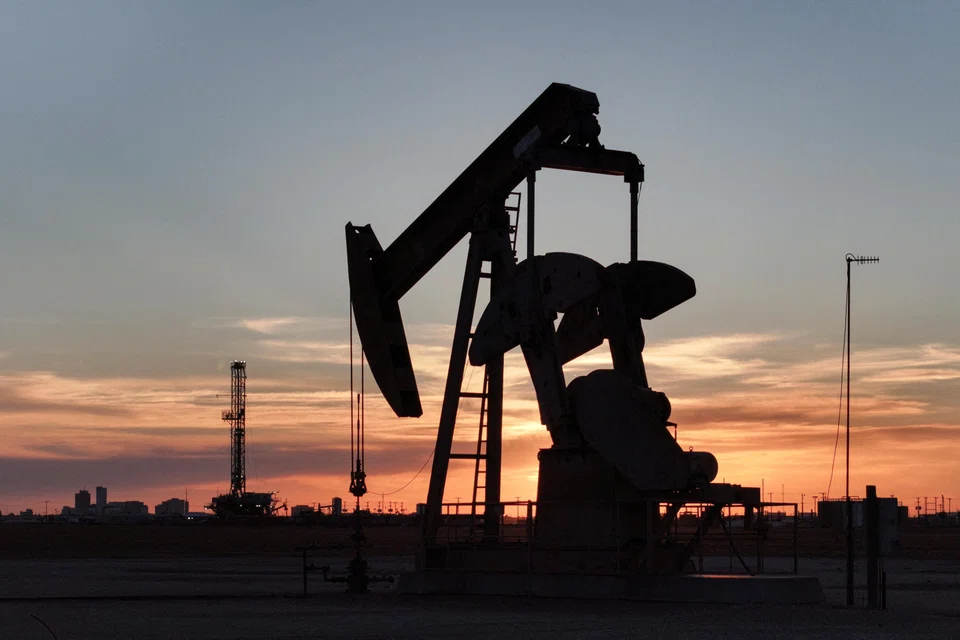
[HOUSTON] Oil prices settled more than 3 per cent lower on Monday (Nov 16) as signs of recovering oil flows through the Strait of Hormuz reinforced expectations of a supply surplus, though fresh tanker incidents underscored risks to Middle East exports.
Brent crude futures closed down US$3.40, or 3.6 per cent, at US$92.44 a barrel, while US West Texas Intermediate (WTI) crude dropped US$2.84, or 3.2 per cent, to US$85.72.
The global oil market will return to a surplus in the fourth quarter of this year, the International Energy Agency said on Friday, as exports from the Middle East recover faster than global oil demand despite continued attacks on shipping.
“While the elevated geopolitical tensions seem to have become the new norm, global oil supplies appear to be remaining relatively stable and the US is also running at near-record production,” said Dennis Kissler of BOK Financial.
Oil supply will average 105 million barrels per day (bpd) in the fourth quarter, 1.7 million bpd higher than forecast demand, the IEA said. The agency had previously forecast a fourth-quarter supply deficit.
The IEA also gave more details of remaining volumes from a record release of oil reserves pledged by its members last March, saying 71 million barrels would be made available by the end of February, including 15 million barrels of diesel to ease market tightness.

About 15 million bpd of crude oil moved through the Strait of Hormuz in 2025, IEA data shows.
Goldman Sachs said on Sunday that it expects Brent crude to average US$88 a barrel next year and slip to US$78 by December 2027 as a return to surplus weighs on markets, but in the near term it sees upside risks to prices because of shipping attacks in the Middle East.
China refinery throughput falls

Middle East supply and oil demand have adapted remarkably well to heightened shipping risks and higher prices, the investment bank said in its note.
Signs of lower demand in China, the world’s second-largest oil consumer, also pressured prices.
The latest data from the country’s National Bureau of Statistics on Monday showed refinery throughput for October fell 2 per cent from a month earlier and was down 8.1 per cent from a year ago.
The throughput drop, along with an increase in domestic output and overseas imports, indicated a build in Chinese crude inventories of 492,000 bpd last month, according to Reuters calculations based on government data.
Opec said on its official X page that it held an online meeting on Monday to discuss its review of the maximum sustainable oil production capacity of its members and the wider Opec+ producer group.
Iran’s Revolutionary Guards said on Monday that two oil tankers struck mines in the Strait of Hormuz, causing explosions. Six tankers caught fire in similar incidents on Sunday and Monday, the Revolutionary Guards’ statement added. Reuters could not independently verify the report.
The recovery of oil export flows from Opec+ remains fragile, with regional supply still vulnerable to fresh disruptions, BMI analysts said in a client note.
“As such, physical constraints on production and exports, alongside fluctuations in the geopolitical risk premium, will continue to dominate price action until a settlement is reached between Washington and Teheran.” REUTERS
Decoding Asia newsletter: your guide to navigating Asia in a new global order. Sign up here to get Decoding Asia newsletter. Delivered to your inbox. Free.
Share with us your feedback on BT's products and services
TRENDING NOW

South-east Asia has lost Nvidia’s best salesman

Higher rates, weaker spending: Is the Philippines entering stagflation?

Who is Leo KoGuan, the Singapore-based billionaire backing Nvidia’s Jensen Huang?

Demand, tech capabilities position Apac and AI as Skyscanner’s next growth frontiers: CEO Bryan Batista

