

Oil set for weekly surge as US seeks to throttle Iran’s economy
Bessent says US controlled Hormuz, and ships could exit via a southern lane
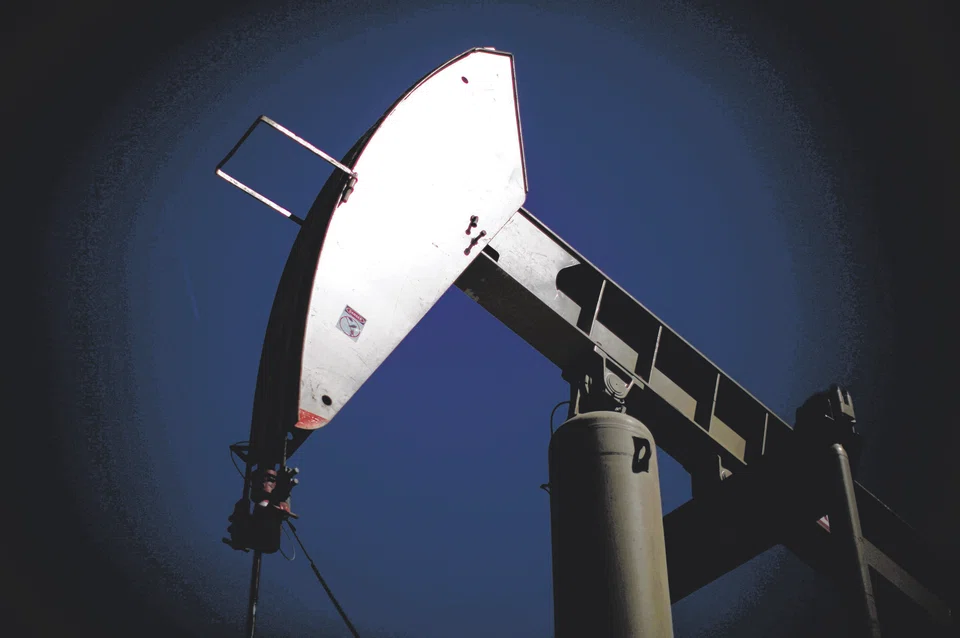
OIL headed for a substantial weekly gain, as a US push to isolate Iran’s economy raised the spectre of further market disruption.
Global crude benchmark Brent traded near US$94 a barrel, on pace for a weekly advance of around 6 per cent. West Texas Intermediate for October was steady below US$87 a barrel following a five-session run of gains.
US Treasury Secretary Scott Bessent said the administration would give details of the initiative next Monday (Aug 24) after US President Donald Trump described the push as an “economic D-day”. The measures will target Teheran, and could also ensnare countries that deal with the Islamic Republic, possibly including China.
Oil has rallied more than 50 per cent in 2026 as the US-Iran war threw the Middle East into turmoil, with the two sides battling over the Strait of Hormuz.
Bessent said Washington controlled the waterway, and ships could exit via a southern lane, according to an interview on CNBC. Still, Teheran has repeatedly insisted it retains authority over the conduit, which saw more vessel attacks this week.
“The prospect of adding sanctions on Iran to cripple its economy does carry a degree of risk,” said Chris Weston, head of research at Pepperstone Group. “It certainly doesn’t seem like a straightforward exercise.”
Beijing – which is by far the largest importer of Iranian oil – said that sanctions and pressure would not work, and called for a diplomatic resolution. In his remarks, Bessent noted that China got much of its energy from the region, while adding that “it would do them a big service to get with the programme.”
“It is unclear to me how we are going to choke off Iran more than we have financially without triggering immense blowback from China,” Josh Lipsky, vice-president of international economics at the Atlantic Council, told Bloomberg TV.
The intensified wave of economic pressure comes as Washington has imposed a naval blockade of Iranian ports in a bid to choke off Teheran’s crude exports. The cordon appears to have been effective, with Iranian Central Bank governor Abdolnaser Hemmati saying on Wednesday that flows “have virtually stopped”.


Beyond the Middle East, dozens of Ukrainian attacks on Russian refineries and ports have disrupted the country’s energy industry, triggering fuel shortages in some regions. That has contributed to tightness in the global diesel market, with price gains far outpacing the rises seen in crude oil.
In the US, average nationwide retail diesel prices surged to almost US$5.55 a gallon this week, the highest since late May, according to figures from the American Automobile Association. Meanwhile, the margin for making diesel from crude oil in the country recently topped US$100 a barrel to hit a record. BLOOMBERG
Decoding Asia newsletter: your guide to navigating Asia in a new global order. Sign up here to get Decoding Asia newsletter. Delivered to your inbox. Free.
Share with us your feedback on BT's products and services
TRENDING NOW

GCash parent Mynt rises in market debut after South-east Asia’s top 2026 IPO

In the age of AI, what is a university education for?

Singapore to use ‘every legal and regulatory lever’ against companies linked to haze: Shanmugam

‘IPOs are not the only vehicle’: KKR heads for record exits even as firms stay private for longer

