Oil slumps as Trump holds off Iran attack, says talks to resume
Brent for October declines up to 7.3% in early Asia trade
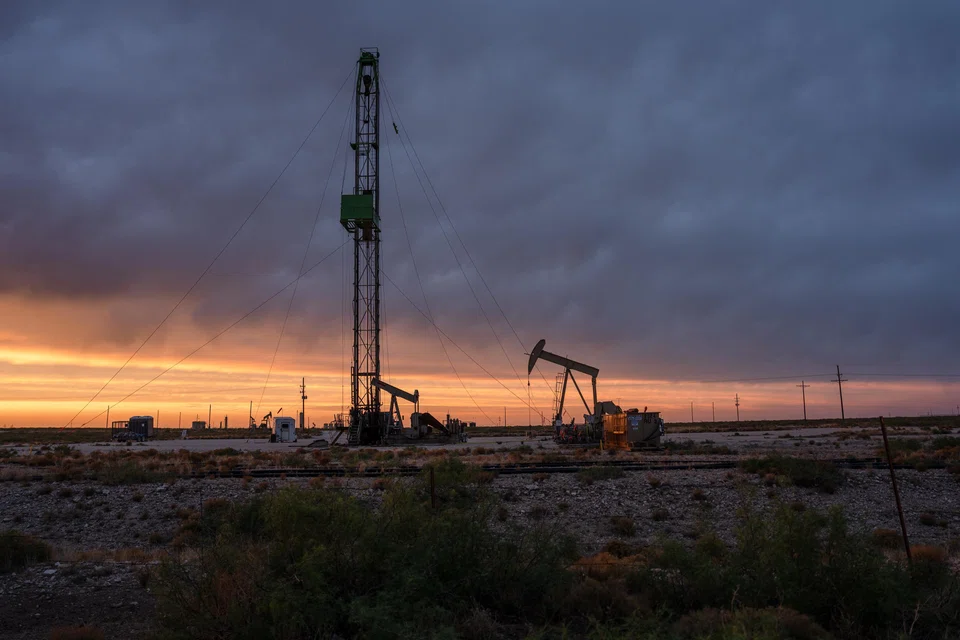
[TOKYO] Oil fell after US President Donald Trump said new talks with Iran would begin on Monday after he called off a planned attack on the Islamic Republic.
Brent for October declined as much as 7.3 per cent in early Asia trade, after futures surged almost a quarter in July, their biggest monthly gain since March. West Texas Intermediate was below US$81.
Trump said on Sunday on Air Force One that he called off a massive attack on Iran after allies in the Middle East, including Saudi Arabia, asked him to pursue a deal instead.
Trump said he would agreed to cancel the attack, “subject to being able to rapidly make a DEAL” to quickly reopen the Strait of Hormuz, according to an earlier post on Truth Social.
“Get to work, everybody, and get it DONE.”
Brent swung through a roughly US$32 range last month as fighting resumed following the collapse of a June truce.
That saw the conflict spreading to the Red Sea and Jordan before another pause in late July to allow diplomatic efforts to continue was shattered.
European natural gas fell as much as 6.3 per cent in early Asian trading.
Oil futures pared some of their declines after UK Maritime Trade Operations said a tanker off Oman reported an explosion in close proximity on Sunday.

That highlighted the persistent risks for shipping through Hormuz – which carried about a fifth of the world’s crude oil and liquefied natural gas (LNG) in peacetime – after an LNG vessel was struck by a projectile late last week.
Meanwhile, Gulf producers continue to seek alternative export routes.
Turkey and Iraq agreed to extend an expired oil pipeline deal by one year that would be able to export as much as 750,000 barrels a day, according to Iraq’s oil ministry.
Iranian Foreign Minister Abbas Araghchi said on Sunday on Telegram that negotiations between Iran and Oman are in the final stages.
The two countries that flank the strait are discussing a new route through it, but the talks do not cover whether the waterway will be closed or open, a ministry spokesman said on Iranian state-run TV.
Elsewhere, major Opec+ nations approved the latest small increase to their production quotas, a move that will complete the theoretical revival of supplies halted in 2023 and give them scope to add more barrels once the Middle East war ends.
In addition, Kazakhstan’s energy ministry said the Caspian Pipeline Consortium (CPC) continues to operate with oil intake at 100,000 tonnes a day from Saturday, after a temporary suspension on Friday.
While the CPC will allow vessels to load, the pace of exports will also depend on whether tankers are willing to risk the journey.
A series of attacks on tankers loading at or near the Black Sea facility has disrupted flows from the CPC, a major export route for Kazakh crude. BLOOMBERG
Decoding Asia newsletter: your guide to navigating Asia in a new global order. Sign up here to get Decoding Asia newsletter. Delivered to your inbox. Free.
Share with us your feedback on BT's products and services