Trump says Iran talks to begin on Monday after scrapping attack
A deal to reopen the Strait of Hormuz may be close, the US president suggests
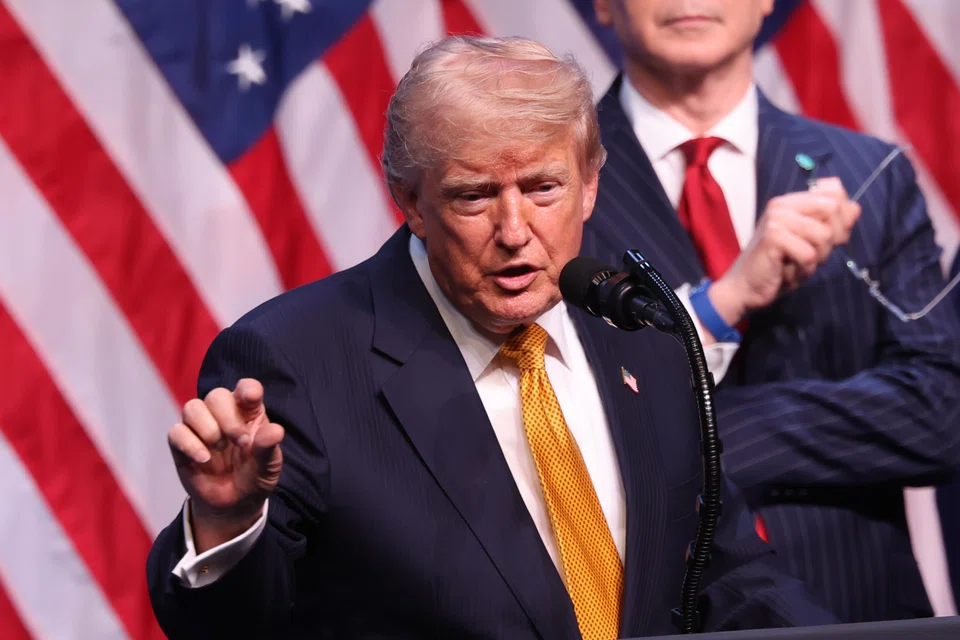
[WASHINGTON] US President Donald Trump said new Iran talks would begin Monday (Aug 3) afternoon after he called off a planned attack on Iran partially in response to pleas from US allies in the Middle East, including Saudi Arabia.
“It would have been the biggest attack since World War II,” Trump said on Sunday to reporters on Air Force One. “We’re just going to see whether or not we can make a deal.”
He added, “I’m not looking to kill people”.
Brent oil for October fell as much as 7.3 per cent to US$81.55 a barrel in early trading on Monday, after futures surged almost a quarter in July.
Trump suggested a deal on reopening the Strait of Hormuz may be close, and said he would also continue to pursue a path to end Iran’s nuclear program.
The US president said that Saudi Arabian Crown Prince Mohammed bin Salman told him over the weekend that he preferred continued talks to the planned strikes.
“They said we would much prefer a deal as opposed to an attack because you don’t know where these attacks lead,” Trump said.
“I mean, will they be flooded with people pouring into their country and disaster. A lot of better things can happen.”
Iranian Foreign Minister Abbas Araghchi said earlier on Sunday on Telegram that negotiations between Iran and Oman are in the final stages.

The two countries that flank the strait are discussing a new route through it, but the talks do not cover whether the strait will be closed or open, Araghchi spokesman Esmail Baghaei said in an interview on Iranian state-run TV.
Baghaei blamed the US for the waterway being closed to shipping traffic.
Waves of tit-for-tat Iranian attacks on American allies have targeted countries across the Middle East, while Teheran’s effective closure of the Strait of Hormuz – a global shipping chokepoint – has driven sharp swings in energy prices.
Israel, which launched the war alongside the US but was not party to an initial Washington-Iran peace deal in June, is waiting out the latest diplomatic push, according to a member of Prime Minister Benjamin Netanyahu’s security cabinet, Zev Elkin.
There is “some kind of vector (towards) an agreement between Iran and Oman”, he told local Army Radio on Sunday. The two nations held discussions in July that sought to reopen the Hormuz strait.
US embassies across the region on Saturday had warned Americans to be prepared for flight cancellations, periodic airspace closures and other travel disruptions as tensions remained elevated.
A US-Iran truce brokered in June collapsed in July, though the two sides paused strikes again in late July to give diplomacy another chance.
That lull ended on Tuesday night when Teheran carried out what Trump described as a surprise attack, firing multiple ballistic missiles at a US military base in Jordan. BLOOMBERG
Decoding Asia newsletter: your guide to navigating Asia in a new global order. Sign up here to get Decoding Asia newsletter. Delivered to your inbox. Free.
Share with us your feedback on BT's products and services