

Singapore updates renewable energy certificate standard to tackle greenwashing; unveils new solar efforts
The updated standard is aimed at strengthening trust in corporate sustainability reporting

[SINGAPORE] Singapore is updating its standard for renewable energy certificates (RECs) to tackle greenwashing risks, while rolling out fresh efforts to “harness solar energy wherever we can”, Minister of State for Trade and Industry Gan Siow Huang announced on Tuesday (Oct 27).
These efforts include innovative solutions such as solar carports and laying solar clay tiles on the roofs of heritage state buildings.
The Republic is updating the Singapore Standard 673 (SS673) to specify that companies claiming to use clean power in the country with RECs should ensure these instruments are linked to green electricity supplied directly to the local power grid – either from domestic sources, such as solar installations, or from clean power imports.
RECs are market-based instruments originating from clean energy projects – such as solar and wind farms – that companies can purchase to offset their electricity consumption from fossil fuels, to meet corporate sustainability targets.
Singapore Standards are locally-developed business standards that can be voluntarily adopted to build consumer trust or access new markets.
The update means that companies adopting SS673 should not claim to use clean power in Singapore based on RECs tied to renewables supplied to other countries.
“The updated SS673 will strengthen trust in corporate sustainability reporting and reduce the risk... of greenwashing concerns,” said Gan during her keynote address at the Asia Clean Energy Summit, held alongside the Singapore International Energy Week.
The move is “in line with international efforts to ensure that renewable electricity claims are supported by credible evidence”, and follows feedback from businesses for more clarity on RECs, she added.
It also comes as Singapore aims to import 6 gigawatts (GW) worth of low-carbon electricity by 2035 from its neighbouring countries.

The updated standard could make companies more willing to pay more for imported electricity with credible RECs, and thus improve the commercial viability of import projects, said Gan.
Stepping up on solar
Gan also announced new initiatives in “pushing all boundaries” to harness solar.
These efforts are in line with Singapore’s new solar deployment target of 4 gigawatt-peak by 2035 announced on Monday – even as solar power can only meet at most 10 per cent of its electricity needs in 2050.
First, the Energy Market Authority (EMA), has launched a solar demand aggregation framework for the public sector, to accelerate solar deployment across government-owned premises, create economies of scale and open up new locations beyond rooftops.
For instance, agencies can explore developing solar carports, parking spaces fitted with solar panel canopies, EMA said on Tuesday.
Second, industrial landlord JTC is launching two new innovation challenges to similarly explore new locations for solar installations.
One challenge calls for solar projects that can be installed directly onto building facades – with the selected solution to be installed on at least 200 square metres of façade at JTC’s YS-ONE industrial building in Yishun and tested over 12 months.
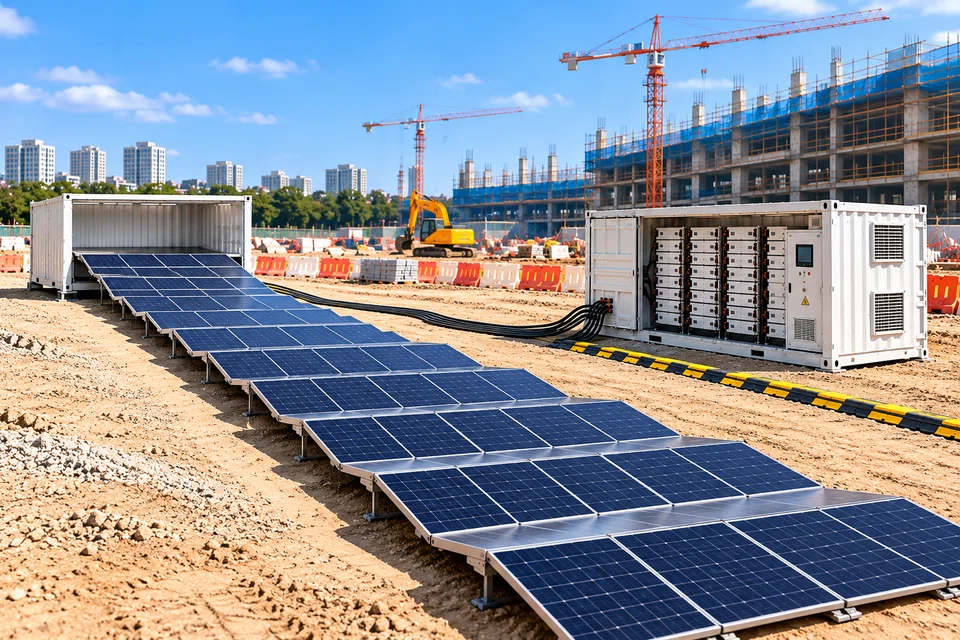
The other challenge seeks off-grid power systems that pair containerised solar panels with mobile battery energy storage systems.
The latter “will help many temporary worksites that have limited or no access to the power grid and currently rely heavily on noisy and pollutive diesel generators”, said Gan.
Thirdly, JTC is advancing efforts for overhang solar, where solar panels are suspended across the void between two existing buildings.
It has awarded the first such project at 15 Woodlands Loop to to renewables company EDP Apac, which will build and test the overhang solar structure over 15 months from October.
Once commissioned, the system will operate for 10 years, exporting the electricity to the national grid, JTC announced on Tuesday.
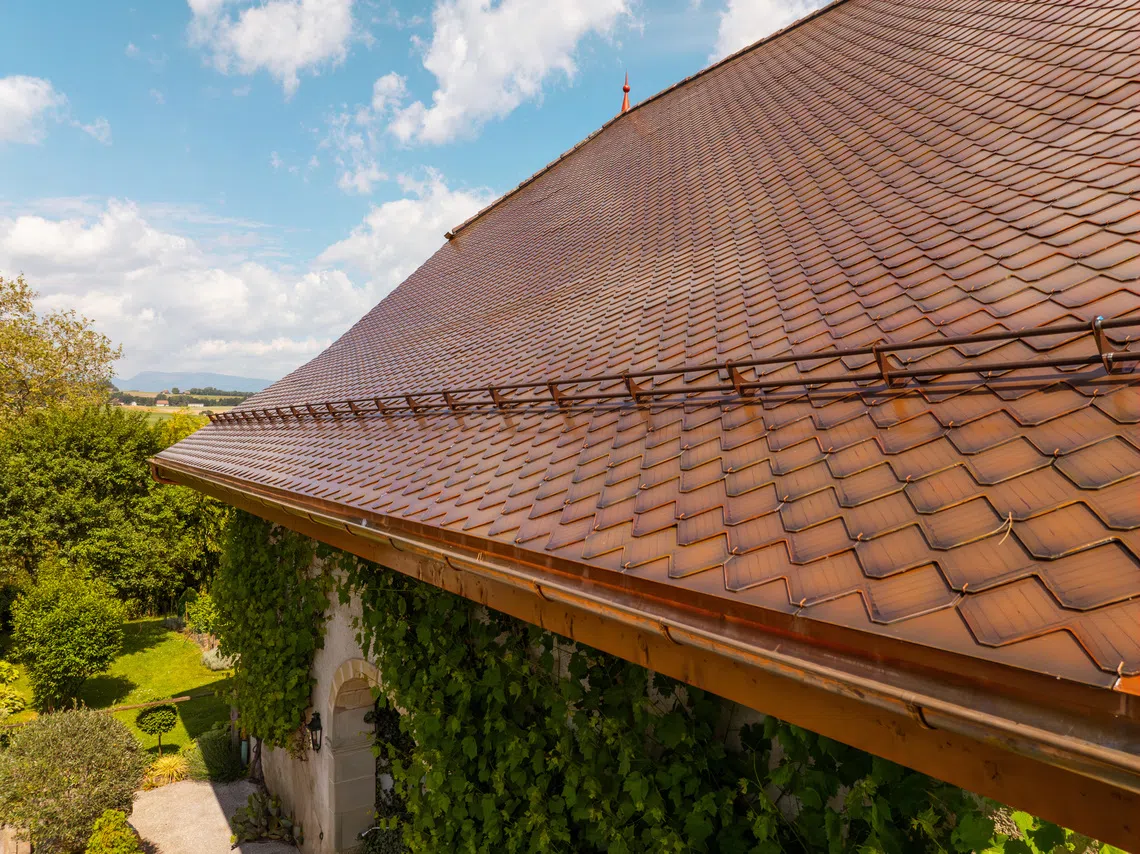
A fourth effort flagged by Gan involves innovative solar roof tiles that resemble traditional clay roof tiles.
EMA, the Singapore Land Authority (SLA) and the Swiss technology innovation centre CSEM plan to pilot these tiles on heritage state buildings – allowing clean power generation without affecting architectural features.
EMA on Tuesday also announced that it is taking steps to encourage solar adoption at private residential landed properties.
It is working with the Sustainable Energy Association of Singapore (SEAS) to explore developing a digital portal to aggregate solar-related information and services, help homeowners connect with solar installers, and explore group purchase opportunities.
Other efforts by EMA include:
- Mapping the capacity of Singapore’s electrical networks to accommodate more solar in landed residences and ensure the grid keeps pace, working with the Energy Research Institute @ NTU
- Updating Singapore’s Solar Photovoltaic road map from its 2020 version, in collaboration with the Solar Energy Research Institute of Singapore
Endorsing guidelines for subsea cables
Separately, Gan said that as Singapore takes up the Asean chair role next year, it will work with member states to endorse the Asean Regulatory Guidelines for Facilitating Submarine Power Cable Activities, as a key step towards regional electricity trade.
The guidelines aim to establish best practices for subsea surveys and the laying, maintenance, repair, and protection of subsea power cables.
Gan noted that clear rules are essential for South-east Asia’s cross-border electricity trade projects to be bankable, and that the bloc’s energy ministers had expressed support for the guidelines earlier in October.
Decoding Asia newsletter: your guide to navigating Asia in a new global order. Sign up here to get Decoding Asia newsletter. Delivered to your inbox. Free.
Copyright SPH Media. All rights reserved.
TRENDING NOW
Director of PR firm sacked for secretly recording internal meeting loses wrongful dismissal claim
Indonesia says gas export cuts to Singapore remain within contract terms
Time for MAS, SGX to scrutinise issue managers
Singapore announces S$150 million investment in new materials discovery, schemes to support businesses in AI journey

