
Family offices cheer MAS’ lifting of precious metals cap, but do not expect a gold rush

Industry players say higher holdings of physical precious metals can supercharge Singapore’s gold hub ambitions
Summarise
Published Tue, Aug 25, 2026 · 08:44 PM
    • Historical portfolio allocation to gold among family offices generally ranges from 5 to 10%, notes a market player.
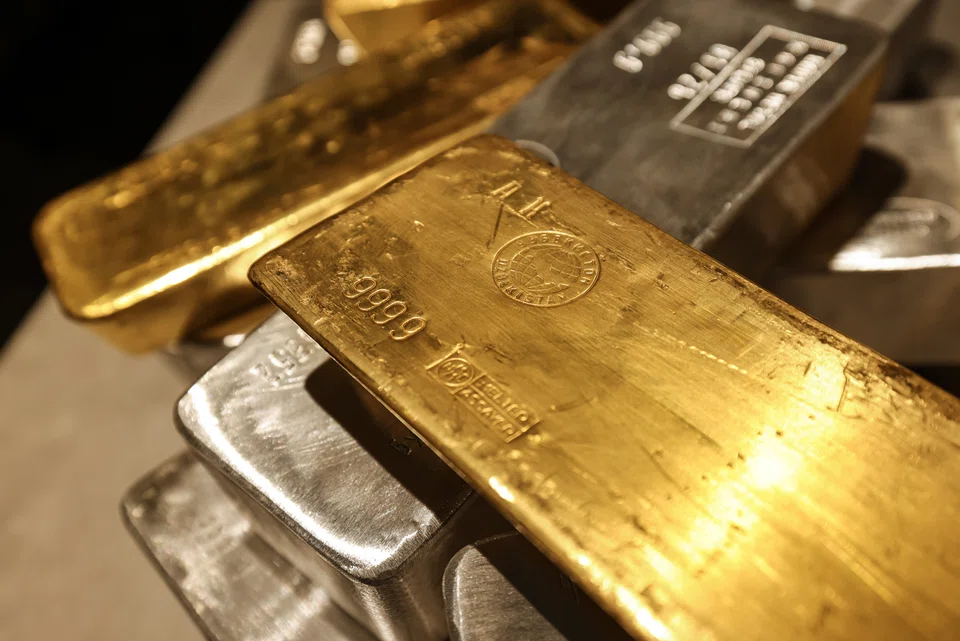
    • Historical portfolio allocation to gold among family offices generally ranges from 5 to 10%, notes a market player. PHOTO: YEN MENG JIIN, BT

    [SINGAPORE] When gold prices hit a record high of around US$5,500 an ounce in January, certain family offices and fund managers were forced to reduce their holdings in order to continue enjoying tax incentives. 

    Since Aug 1, they have no longer faced such a constraint.

    The Monetary Authority of Singapore (MAS) announced the removal of the 5 per cent cap on holdings of physical precious metals for investment funds and family offices who come under the Section 13O and Section 13U tax-exemption schemes.


    While some funds and family offices are targeting to raise their precious metals holdings above 5 per cent, others are not yet planning a significant increase.  

    However, they noted that the removal of the cap is likely to improve investment flexibility amid geopolitical uncertainty, and boost Singapore’s competitiveness as a regional gold-trading hub. 

    William Chow, deputy group CEO at Raffles Family Office (RFO), noted that the multi-family office keeps gold at around 5 per cent as a natural hedge.

    “That thinking does not change. What (the removal of the cap) really does is if the market calls for it, we can go heavier and keep the whole position tax-efficient. It does not move our base case, but it will give us more flexibility,” he said. 

    Garett Lim, a partner and chief marketing officer at multi-family office Moiq Capital, noted that the firm has been advising its clients who took profit at higher gold price levels to rebuild their positions for the long term. 

    He added that building gold to a 10 per cent weight in portfolios is “prudent” for some clients who have a “very long-term view for wealth preservation”, with such investments generally intended for intergenerational transfers. 

    Christopher Irwin, head of FX and precious metals trading Asia at Julius Baer, concurred that the change “is likely to encourage investors to revisit the role of physical precious metals within a strategic portfolio context”. 

    “We have long held the view that if Asian investors begin to meaningfully increase their exposure to gold, it could have a significant impact on regional investment demand over time,” he said, adding that the scale of wealth in Asia could influence broader market dynamics.

    However, he noted that overall, family offices allocations to gold have been “relatively modest”, typically in the range of up to 3 per cent of total assets under management. 

    He added that this is below the broader historical portfolio allocation to gold, generally ranging from 5 to 10 per cent, depending on an investor’s objectives and risk profile. 

    Meanwhile, Asia-Pacific family offices surveyed in the UBS Global Family Office Report 2026 had a strategic asset allocation of 2 per cent in precious metals, with plans to increase it to 3 per cent in 2026.

    “We may not see an immediate and dramatic reallocation, but the change removes a structural hurdle, allowing clients greater flexibility to hold physical gold where they see value,” said Irwin. 

    The bigger picture

    In June, Hong Kong proposed a Bill enhancing its tax breaks for funds and family offices by adding precious metals to its list of qualifying investments, capped at 20 per cent of a portfolio.

    “The competition for Asian wealth management and institutional bullion flows has reached a high watermark,” said Jamie Turnough, CEO of Hong Kong-based precious metals retailer Bullion Beasts. 

    He cited Hong Kong “aggressively pushing to build a world-class international gold trading centre”.

    Likewise, Singapore announced its intention in June to launch an over-the-counter gold-clearing system and central bank gold vaulting by end-2026, among other measures.

    Meanwhile, gold prices have gained about 15 per cent in August, supported by exchange-traded fund inflows, fading US Federal Reserve hike expectations, and the US Treasury’s unexpected bond buybacks.

    The yellow metal was trading 0.2 per cent lower at US$4,643.68 an ounce as at 7.38 pm on Tuesday (Aug 25). 

    “Singapore recognised that some family offices, variable capital companies and fund managers were feeling constrained by an arbitrary 5 per cent physical cap, when trying to hedge macro risks with tangible assets,” said Turnough. 

    Julius Baer’s Irwin noted: “While it may appear to be a relatively targeted policy adjustment, it sends a clear signal that Singapore remains committed to creating an attractive environment for precious metals investors and institutions.” 

    Against this backdrop, Anulekha Samant, partner and co-head of real estate and asset management and tax at KPMG in Singapore, noted that the removal of the cap “(broadens) the ambit of the tax exemption to cater to funds with a greater portfolio diversification”.  

    MAS has indicated that 13O/13U fund vehicles may only serve investment objectives and purposes. 

    In this context, Trevina Talina, partner for financial-services tax at PwC Singapore, noted that these fund vehicles would not be expected to carry out commercial activity such as merchandising or taking retail orders.

    Instead of imposing additional restrictions, she expected MAS to adopt a “substance-over-form stance” to identify cases in which commercial bullion trading is presented as a qualifying fund activity.  

    Why hold physical gold? 

    Family offices and wealth managers noted that rising geopolitical tensions have underscored the importance of physical gold, with the Republic’s push to be a gold-trading hub providing further support.

    PwC’s Talina said that investment funds now have the flexibility to convert some of their holdings in paper products to physical investments.

    Previously, they had to invest through derivatives and financial instruments.

    “The physical holding in vaults can help funds in managing their derivative-related risk exposure, such as basis risk, (the price disconnect) between paper and physical exposures and settlement management, as well as in achieving operational simplicity,” she said. 

    “This gives rise to more opportunities for funds focused on physical bullion to be established in Singapore.”

    Julius Baer’s Irwin noted that physical ownership often makes more sense, as it removes counterparty risk and provides direct exposure to a hard asset that has preserved wealth through multiple economic and geopolitical cycles. 

    “The removal is a piece of a broader, long-term strategy,” said Kendrick Lee, Singapore CEO at RFO.

    “The backdrop is a structural shift: Gold has been re-emerging as a strategic reserve asset, as central banks diversify their holdings, and a growing share of global wealth moves towards Asia.”

    Meanwhile, RFO’s Chow said that there is a role for both physical and paper gold in portfolios. 

    “If what you want is the real hedge, something that sits outside the financial system when markets get stressed, then physical is what does that job properly,” said Chow. 

    “Paper gold and ETFs are useful too, for liquidity and for moving quickly, so it’s not a case of one replacing the other.”

    This, RFO noted, allows for a family office based here to hold, store and settle gold locally, instead of relying on London or Zurich.


