

Lawsuit risk, president’s scorn: Why US companies are tiptoeing into the Trump tariff-refund race
COMPANIES in the US are wary of saying too much about one particular nugget of good news for their bottom line and inflation.
Only about 5 per cent of the 3,000 largest publicly traded US companies mentioned refunds in the context of US President Donald Trump’s now-illegal tariffs in recent comments and regulatory filings, according to a Bloomberg analysis of firms in the Russell 3000 Index.
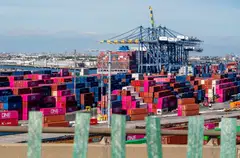
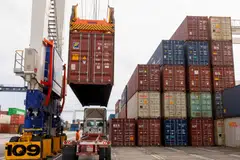
The US Customs and Border Protection (CBP) agency opened a refund portal on Apr 20 for more than 330,000 firms that paid import taxes under Trump’s use of the International Emergency Economic Powers Act, or IEEPA. The first batch of payments came unexpectedly quickly, and some companies have already logged those benefits. Others acknowledged they may have to wait at least another quarter or two to offer details.
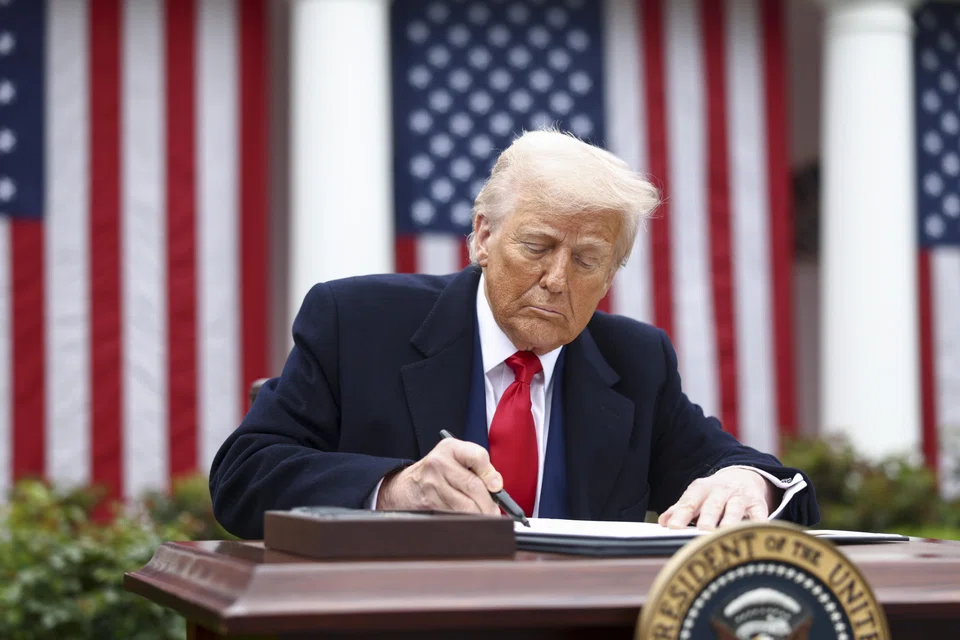
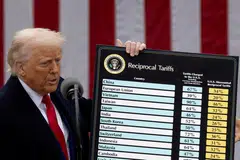
There is reason for discretion: The scramble for as much as US$166 billion in refunds – plus interest – comes with the risk of political and legal jeopardy. Trump often says it is foreign firms that pay his import taxes – though studies show otherwise – and he is now painting refund backers as unpatriotic after the US Supreme Court struck down his IEEPA authority.
“You’re talking about the people in many cases that hate our country, giving them back money,” the president told reporters at the White House on Thursday (May 21). “It was a terrible decision.”
Recent disclosures from some of America’s most well-known businesses, ranging from Cardinal Health to Walmart challenge Trump’s assertion and offer a glimpse into the refund effort.
Among those S&P 500 companies presenting amounts, the documents indicate they either paid IEEPA tariffs, or are expecting to receive IEEPA-related refunds, totaling about US$7.3 billion, according to calculations by Bloomberg.
That is only the beginning. US Customs now has the complicated task of refunding the 330,000 importers that paid the IEEPA levies over the past year, and early filers are already seeing US$35.5 billion flowing into their bank accounts.
Still, issues with electronic filings stemming from the chaotic tariff rollout can lead to rejections, and many importers remain sceptical that the system will work for their more complex entries.
SEE ALSO
According to the first flurry of analyst calls and other earnings announcements, executives are balancing the need to answer Wall Street’s financial questions against their uncertainty about the amount and timing of reimbursements.
Saying too much about refunds invites not just Trump’s scorn but also legal challenges from consumers clamouring for a piece of the payout.
Lawsuit risk
“I counsel against public statements regarding impacts of the tariffs or tariff refunds due to the risk of class-action suits as well as other customer and supplier considerations,” said Angela Santos, who leads the customs practice at ArentFox Schiff in New York.
Companies including Nike, Lululemon Athletica and Amazon.com have been hit recently by lawsuits from customers who allege they are owed a refund because they paid higher prices as a result of tariffs that were ultimately deemed unlawful.
A lawsuit filed on May 15 accused Amazon of profiting off “hundreds of millions of dollars in unlawful tariff costs” and of forgoing refunds in order to “ingratiate itself with Trump.” The class action is a bid to force the e-commerce giant to seek, and pass along, refunds. The company has not publicly stated whether it has or will pursue reimbursements.
Costco Wholesale is one of thousands of companies that sued the Trump administration over IEEPA refunds, but did not indicate whether it had applied for reimbursements via the customs portal in a court filing submitted May 18. The retailer argued that a consumer class-action lawsuit should be dismissed and stated that “Costco has received no tariff refunds yet.”
US households struggling with higher gasoline and food costs may see some indirect benefits even though refunds are not flowing straight to consumers, according to Stephen Juneau, an economist at Bank of America.
“Importers that receive refunds will likely use the money to offset rising energy and shipping costs,” Juneau wrote in a May 20 note to clients. “They may also offer some type of consumer relief, which surveys suggest is more likely to come in the form of slower price hikes rather than a direct benefit to consumers. Therefore, the refunds could be a modest disinflationary force in ahead of midterms,” he said, referring to November congressional elections.
Many of America’s largest corporations are pursuing refunds, even if they are not sharing much.
Refund seekers
“I haven’t heard anybody say they weren’t going to file,” said Tony Gulotta, leader of Ryan’s national tax practice in New York.
Apple is one of the largest companies so far to confirm it is going after refunds. Chief executive officer Tim Cook said the iPhone maker is “following the established processes, and we plan to reinvest any amount we receive back into US innovation and advanced manufacturing.”
Gene-sequencing giant Illumina, whose CEO Jacob Thaysen joined Trump and more than a dozen other executives including Cook on a trip to China earlier in May, said in a May 4 filing it intends to seek refunds after incurring “significant costs under IEEPA-related tariffs,” while noting the uncertainty surrounding later phases of the CBP’s refund plan.
Home Depot chief financial officer Richard McPhail said on Tuesday he expected refunds to provide “significant offsets” to increased fuel and transportation costs. While McPhail did not say how much the company was expecting, he did say the first refunds had already been received.
TJX Companies CFO John Klinger confirmed on Wednesday the parent of cut-price retailer TJ Maxx had filed for refunds, but demurred on providing numbers.
According to an April estimate from Citigroup, Home Depot could recover about US$540 million, while TJX may be due US$400 million.
Walmart on Thursday said it is seeking refunds for goods estimated to be worth “less than half of 1 per cent of our US annual sales,” without offering more specifics.
Some companies have already incorporated expected refunds into earnings, boosting profits and outlooks in ways that have drawn scrutiny from investors.
General Motors raised its full-year outlook to reflect about US$500 million in expected tariff refunds, though shares fell after the automaker warned costs tied to the Iran conflict would rise. Ford Motor’s shares also declined after analysts noted its earnings beat was driven largely by claims of a US$1.3 billion tariff refund.
Similarly, Netherlands-based Stellantis booked a one-time gain of around €400 million (US$465 million) for expected future tariff refunds, but saw its shares slide.
More cautious
Several companies said they plan to file for refunds while pointing to uncertainty around when they will get them.
Toymaker Hasbro told investors on Wednesday it has roughly US$50 million in IEEPA claims that are disqualified from Phase 1 refunds, because they are tied up in a process with CBP called reconciliation.
“We’re still waiting to understand when the government is going to get to that piece of the rebate process,” Hasbro CFO Gina Goetter said.
Weyco Group, the owner of Trump’s favoured shoe company Florsheim, told investors on May 6 that it applied for refunds as soon as the portal opened and that IEEPA tariffs had led to reduced margins and forced the company to raise consumer prices.
‘Working hard’
Polaris, the maker of off-road vehicles and boats, is seeking about US$125 million of IEEPA refunds. “We’ll be working hard to get that money that’s rightfully ours,” CEO Michael Speetzen said Apr 28.
Funko said it was taking steps to obtain refunds from the government on about US$20 million, while also considering selling the rights to its IEEPA claims.
“There is also a market to monetise tariff claims, and we’re kind of exploring all of our options at this point,” the toymaker’s CFO, Yves LePendeven, said earlier in May.
Tesla, founded by Trump administration ally Elon Musk, acknowledged it may be eligible for refunds, but “there is still a lot of uncertainty around the final outcome,” CFO Vaibhav Taneja said on Apr 22. The electric-vehicle maker also said it was tracking whether it will have to issue its own refunds to certain battery-storage customers.
In the meantime, billions of dollars owed to importers will remain in the US Treasury Department while some struggle to file claims before their entries time out of Phase 1 eligibility, Ryan’s Gulotta said. Others must wait while CBP builds out new capabilities in the refund portal and irons out some legal issues surrounding older and more complex entries.
While there is no cost to file for refunds with CBP, the administrative burden for companies can be expensive. “One dollar of IEEPA refund does not truly equate to US$1 recovery, so companies may not be able to pass the full recovery back,” said Santos of ArentFox. BLOOMBERG
Decoding Asia newsletter: your guide to navigating Asia in a new global order. Sign up here to get Decoding Asia newsletter. Delivered to your inbox. Free.
Share with us your feedback on BT's products and services
TRENDING NOW

DBS, OCBC, UOB rout lops billions off STI as inflation, rate concerns spook investors

Grab CEO’s wife Chloe Tong on life with Anthony Tan and finding her purpose

OCBC sheds S$8 billion in value as shares close nearly 6% down; analysts cautious on banks

Deal between tycoon friends sparks scrutiny of Philippine power sector

