The lucrative business of cooling off in a hotter world
The constant struggle to stay alive and functioning in higher temperatures will become the new normal
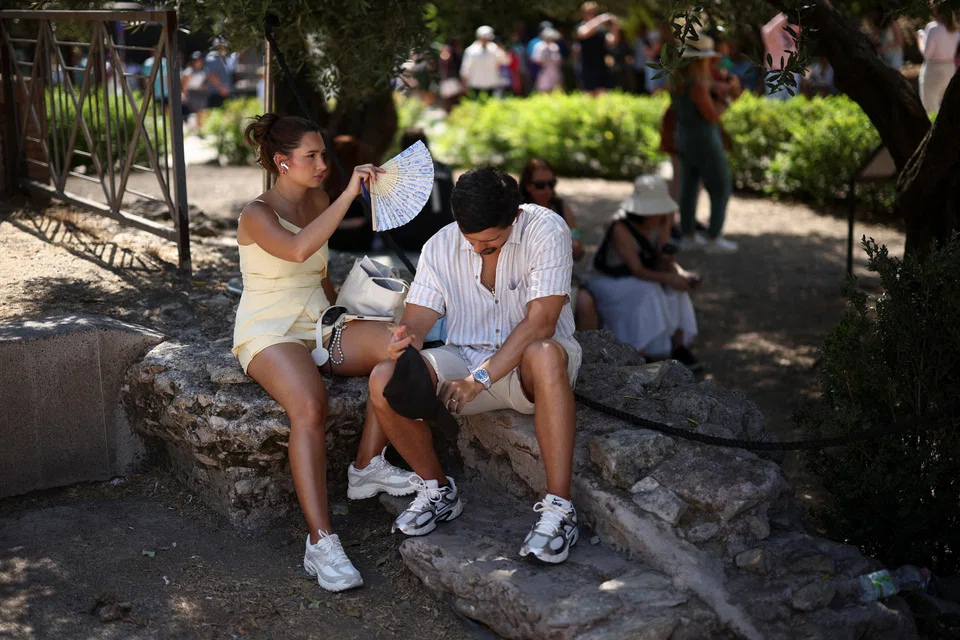

[SINGAPORE] “Don’t come to Korea,” I’d texted a friend from a scorching pavement in Seoul at the height of summer this year.
My water bottle had long been drained and I was starting to see double, my overheated brain threatening to seep out through my ears. “It is hot like you will not believe.”
“Don’t come to Austria,” she’d texted back. “It’s just as bad.”
It wasn’t just as bad – it was worse. I learnt later that the summer of 2026 was the hottest one on record for Austria and many of its European neighbours as temperatures breached 40 deg C.
It wasn’t much better in Seoul where I’d been. As a heatwave ground down on the city, my phone vibrated constantly with emergency alerts about high temperatures.
As the sun beat down on my head during a 200 m trip between a subway station and a bus stop, I had the sudden and distinct suspicion that I was not going to make it. I would either have to turn back for shelter or sink into an undignified heap on the pavement.
It did not matter, at that point in time, whether I believed in climate change. As dots filled my vision, climate change clearly believed in me.
I was in good company, apparently. Everywhere, the affluent and the fortunate are finding it increasingly more difficult to insulate themselves from a world that is on fire.
During the summer, some river cruises had to be suspended as the heat and drought caused European rivers to dry up. Operators in Paris cancelled walking tours and the Eiffel Tower curtailed its opening hours.
Even marathon runners are training for a hotter world, shelling out US$234 for a cooling headband.
Until artificial-intelligence agents spend less time hacking government websites and more time solving climate change, this constant struggle to stay alive and functioning in higher temperatures will become the new normal.
Now that the summer is behind us and our noggins have cooled down, it is worth thinking about who wins in a world where ever more money has to be spent on remaining comfortable and productive as the temperature climbs.
A lot more cooling
Firstly, we are going to need more air-conditioners. You would think this is staggeringly obvious, but tell that to the Europeans, with their hotels that have no air-conditioners and their windows that don’t fully open.
The market penetration of air-conditioners in Europe is surprisingly low, with total ownership at about 20 per cent, according to the International Energy Agency.
Now that the continent’s summers are tarmac-meltingly hot, cooling will be less like luxury and more like infrastructure with each passing year. Already, air-con makers from Samsung Electronics to Mitsubishi Electric have seen demand soar for their products thanks to the European heatwave.
Also, man and machine alike need to stay cool, and if there’s something we’ve been building like the dickens this year, it’s those machines in all those data centres.
Carrier Global, the US-listed heating, ventilation and air-conditioning (HVAC) giant, has been seeing particularly strong demand too. In the second quarter, its commercial HVAC orders rose about 65 per cent, while data-centre orders surged more than 300 per cent.
A lot more electricity
The problem with cooling is that it can be an energy-hungry business.
Compounding matters, extreme heat also puts additional strain on infrastructure, spiking electricity demand further.
Earlier last month, Malaysia’s data centres guzzled more energy as temperatures rose. By 2032, the Malaysian government will have a 9 gigawatt gas-fired capacity gap to fill, it reckons.
“With the hotter weather, the cooling system requires a lot more energy,” Malaysia’s Energy Commission CEO Siti Safinah Salleh had said.
This is why the climate-adaptation trade is also an electrification trade. Someone has to provide the switchgear, distribution equipment, power-management systems and other infrastructure required to deliver all that electricity reliably.
Eaton Corp, a power-management company, occupies a chunk of the electrification and data-centre build-out, supplying equipment that helps to move and manage electricity. The company, which is more than 100 years old, has paid dividends every year since 1923, it says.
Paris-based Schneider Electric offers similar exposure, making power equipment, server racks and cooling systems. Why, just recently, a survey of Singapore businesses by Schneider found that 94 per cent of respondents said they intend to increase their energy investments over the next 12 months. Their decision might not be explicitly climate-related, but extreme heat will only exacerbate existing anxieties about energy security.
A lot more water
Like a horseman of the apocalypse, heat often brings company – drought, emptying aquifers and agricultural disruption, among them.
The scarcer the resource, the more valuable the infrastructure for managing it becomes. So, water infrastructure ought to become one of the key beneficiaries of climate adaptation if it isn’t already.
US-listed company Ecolab, for instance, provides water treatment, purification and hygiene services to industrial and commercial clients. In July, it raised its earnings forecast for 2026, citing “strong underlying performance”, among other things.
A caveat
It goes without saying, but I’ll say it anyway, that none of the companies mentioned constitute a stock recommendation. Just because these firms are in promising sectors does not mean that they are themselves stellar companies.
Rather, they are meant to be a jumping-off point, a catalyst for your next bout of stock-picking research – which I sincerely hope you will do from a strongly air-conditioned room.
This article first appeared in the subscriber-only Big Money newsletter.