

Travellers are reckoning with the ultimate disrupter: climate change
The question now is what they’ll do about this new inescapable fixture of summer holidaying
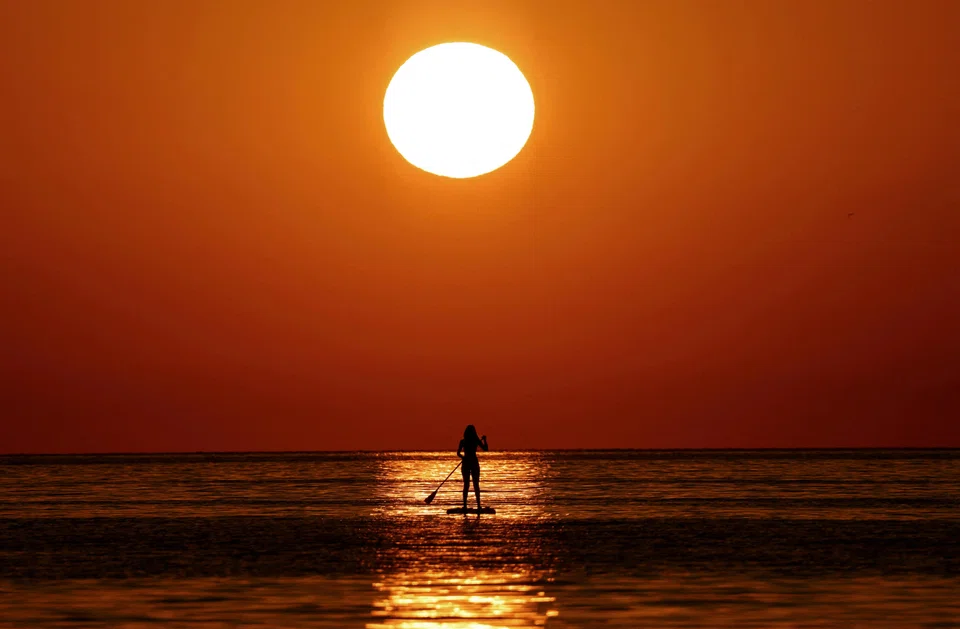
IT WAS a summer defined by climate disasters.
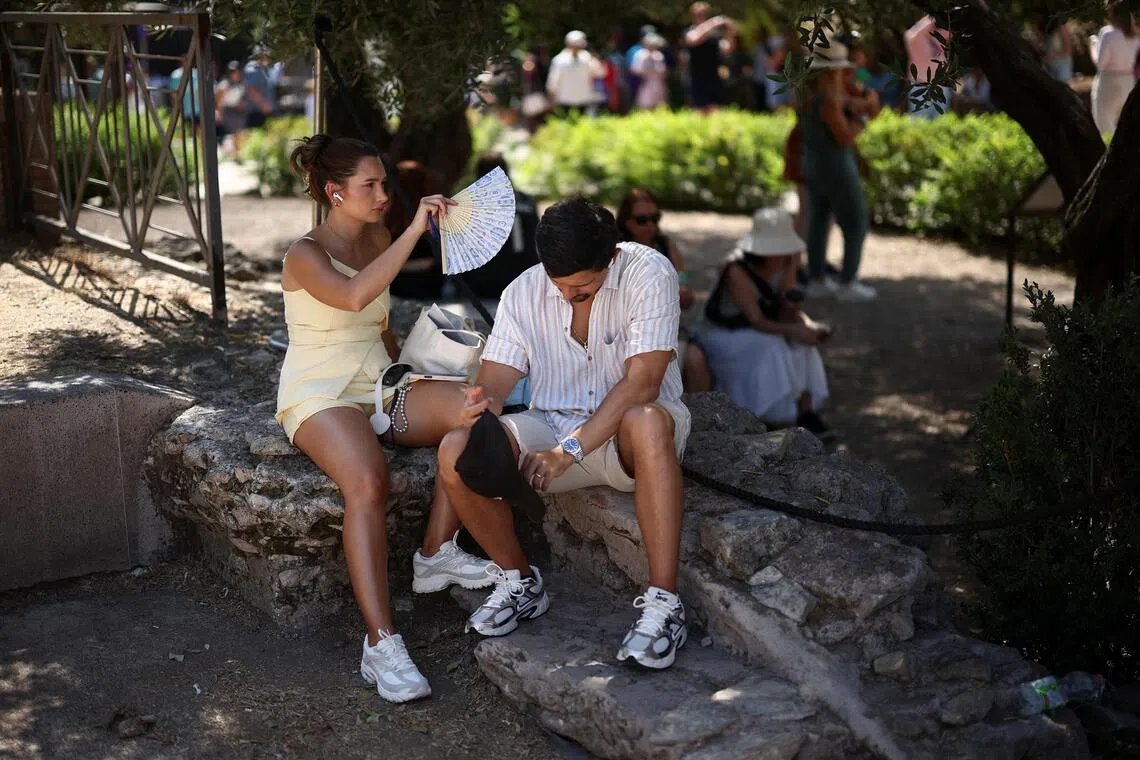
In May, travellers expecting mild shoulder-season weather across Western and Central Europe were instead greeted by scorching heat topping 35 degrees Celsius in parts of France, Spain, Switzerland and Britain.
In Paris, operators cancelled daytime walking tours, and attractions such as the Louvre and the Eiffel Tower restricted their hours.
A second heatwave struck two weeks later. The extreme temperatures strained infrastructure and triggered storms, grounding flights and suspending rail services across France, Britain and Germany.
At least 40 people drowned while trying to cool off in France’s canals, and in one scorching week in June, around 16,000 more people died than usual. As the heat spread across Eastern and Southern Europe through July, wildfires ravaged the continent.
Heat records were also shattered across North America in July, fuelling hundreds of blazes in Canada. Smoke from those fires engulfed the mid-west and north-east US, creating orange skies and hazardous air in cities including Chicago, Detroit and New York.
Once dismissed as occasional inconveniences, climate-related disruptions are now an inescapable fixture of summer travel, leaving holidays increasingly unpredictable and dangerous. For many people, the act of travelling has transformed the concept of “climate change” from an abstraction into something very real.

“Climate change is becoming something travellers personally experience rather than something they read about,” said Jenny Southan, founder of Globetrender, a travel trend-forecasting agency.
“The hotel room that is too hot to sleep in, the hiking trail closed because of wildfire risk, the lake affected by drought, or the afternoon sightseeing that becomes exhausting or potentially unsafe in extreme heat.”


The question is what they’ll do about it.
Lara Thornton, a nutritionist based in Toronto, spent years buying carbon credits to offset her carbon footprint, but she stopped after they came under scrutiny for being largely ineffective.
“I know travelling is part of the problem, but I don’t know the solution,” she said. “With the world burning every summer, it really feels like we are too late and the damage is already done.”
Elisabeth Beckenbauer, 55, a social worker from Portsmouth, England, decided to stop flying four years ago after looking at a flight-tracking app that showed tens of thousands of planes in the sky worldwide.
“Flying is one of the worst things you can do to the planet,” she said, “and I realised that I don’t need to do it anymore.”
Despite growing climate concerns and a contribution of around 7.3 per cent of total global greenhouse gas emissions, the travel industry has remained resistant to change.
Global travel and tourism are on track to grow by 3.2 per cent this year, outpacing the global economy, according to the World Travel & Tourism Council, an industry group.
While at least two-thirds of travellers express an interest in lowering their carbon footprint, environmental impact is consistently ranked as having the least influence on destination choices, according to the 2025 Europ Assistance Holiday Barometer, a study conducted with the market research firm Ipsos that examines global vacation trends and consumer behavior.
“People just love going on holiday and getting a break from the daily grind,” said Caroline Bremner, a data insights specialist at Travel Forward, a nonprofit organisation that focuses on sustainable tourism. “Even though we have this lived experience of climate change, which has brought awareness, there is still an enormous gap between what people say and do.”
After fleeing wildfires in Crete, Greece, in 2025, Lauren Flanagan and her family originally planned to stay at their home on the outskirts of London this summer. She hoped to save their beach trip for the cooler October school holiday.
But as record-breaking heat waves hit Britain, Flanagan booked a last-minute getaway to Sardinia, hoping for respite with an air-conditioned hotel room and a sea breeze. Instead, she and her two daughters were greeted with temperatures as high as 48 deg C.
“I’ve never experienced this level of heat; it felt like my face was burning even in the shade,” Flanagan said. “The pools and sea were hot, so we spent most of our time taking refuge in our hotel room.”
Until recently, heatwaves caused only temporary declines in travellers’ interest, with demand rebounding once temperatures cooled. But repeated and unusually early heatwaves are beginning to leave an impact, according to a recent study by Data Appeal, which provides insights on travel demand.
France, for example, was perceived as being less attractive to visit because of the heat than destinations such as Portugal, Italy, Spain and Greece, even though those countries are better known for high summer temperatures.
One of the biggest shifts has been an increase in shoulder-season bookings and interest in cooler destinations including Norway and Finland. The tour operator Intrepid noted a 25 per cent increase in Americans traveling to Northern Europe in September and October compared with the same period last year.
But consumer behaviour can be stubborn.
“The reality is that people will put up with some of the climate impacts to make the once-in-a-lifetime trip to Italy or Paris,” said Leigh Barnes, president of the Americas for Intrepid Travel.
Last summer, Edward Lancon, a lawyer based in London, traveled to Scandinavia to escape the heat, but returned “with an itch to lie on a beach in Greece or Spain”. So this year, he booked a September trip to Greece, hoping that the temperatures would be warm enough to swim and not too hot to go sightseeing.
While the increasing popularity of shoulder season puts less pressure on destinations during the summer, experts say the onus to take meaningful climate action falls largely on governments and tour operators, because consumers show little interest.
“It’s not necessarily that they don’t care,” said Bremner of Travel Forward. “It’s more that they don’t know what to do.”
Koray Arslan, 72, a retired data analyst who lives in Chicago and Istanbul, said that he had donated in recent years to climate-disaster causes, such as the wildfires in Turkey, but that he was unsure how to contribute to prevention measures that will have a real impact.
Changing weather patterns continue to astound Arslan. On a June river cruise through the Rhine valley, he said that he and his girlfriend “were not prepared” for soaring temperatures in Germany and Switzerland.
“I’ve visited Germany many times in my life, and I didn’t know it could get that hot, he said, adding that he did not feel safe walking under the sun in the sweltering heat during the excursions.
The excessive heat and drought this summer caused several European rivers to dry up in July, wreaking havoc on river cruises with ships running aground and passengers being shuttled to other vessels on hours-long bus rides.
Southan of Globetrender said that factoring the effects of climate change into travel decisions was the beginning of what is likely to be a fundamental change in travel behaviour.
“Increasingly, climate adaptation will become embedded in travel planning in the same way that people currently think about price, flight time or seasonality,” she said, adding that “climate comfort will become a new dimension of luxury, alongside space, privacy and service”. NYTIMES
Decoding Asia newsletter: your guide to navigating Asia in a new global order. Sign up here to get Decoding Asia newsletter. Delivered to your inbox. Free.
Share with us your feedback on BT's products and services
TRENDING NOW

Once staunchly pro-China, Malaysian Chinese businesses are now distancing themselves from Beijing

Looking beyond looming CEO succession, should UOB potentially pursue a transformative merger?

Could stablecoins be the future of money?

Grab CEO’s wife Chloe Tong on life with Anthony Tan and finding her purpose

